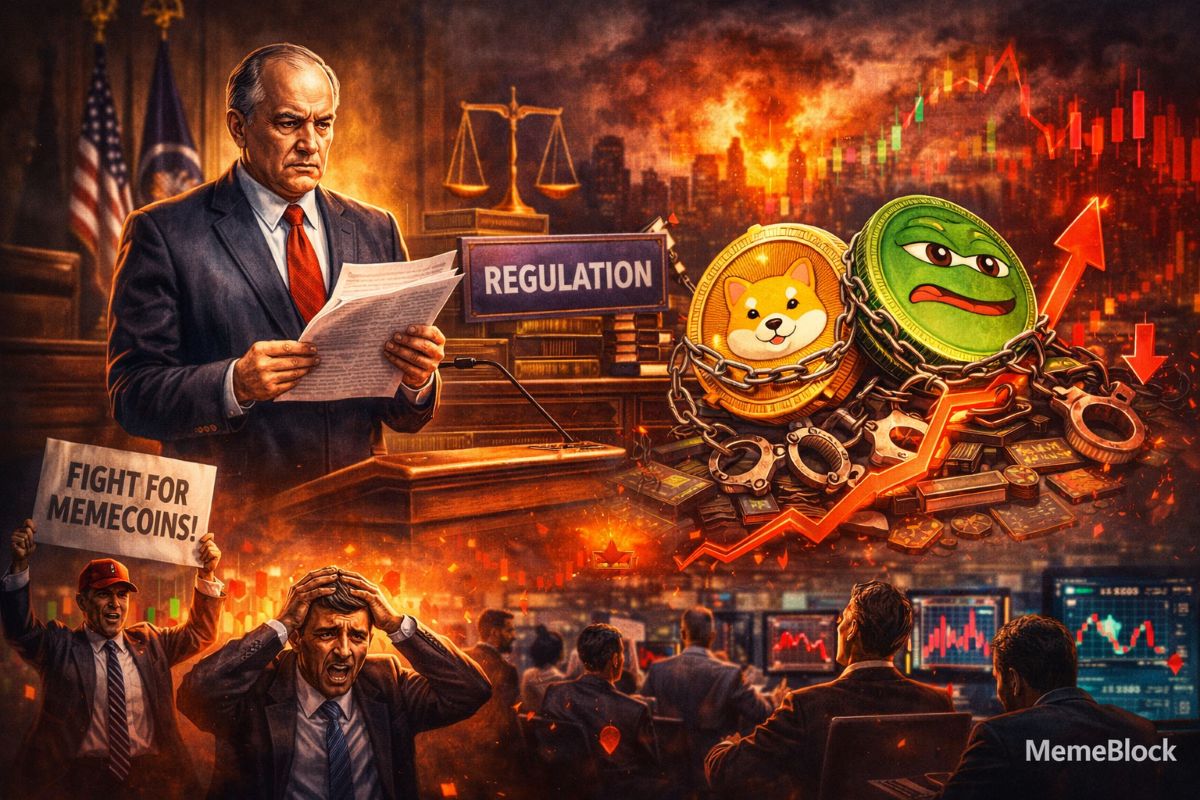
New York’s top financial regulator is putting “sentiment-based” virtual currencies, better known as memecoins, under a brighter spotlight. This signals closer scrutiny as retail interest and on-chain experimentation keep pushing joke tokens into the mainstream.
The New York State Department of Financial Services (NYDFS), which oversees the state’s BitLicense regime and supervises certain crypto businesses operating with New York residents, has warned about sentiment-driven tokens. These can carry “exceptional” risks tied to volatility, fraud, and ownership concentration.
What NYDFS means by “sentiment-based” tokens
NYDFS has used the phrase “sentiment-based virtual currencies” to describe tokens whose price is influenced by online hype, community mood, memes, or celebrity attention. This is rather than fundamentals like revenue, cash flows, or clearly defined utility. In its consumer-facing alert, NYDFS highlighted that these assets can swing hard and may be dominated by a small number of holders. They are often created and promoted via platforms not licensed by NYDFS.
That framing matters for market structure. As token creation has gotten easier, especially on faster, lower-fee chains, more memecoins can appear overnight. They can build traction on social platforms and get traded before most investors understand supply, holder concentration, or who controls the smart contract.
Why this hits memecoin adoption right now
Memecoin adoption isn’t just “people buying Dogecoin again.” It’s also wallets spinning up new tokens in minutes, communities coordinating liquidity, and trading activity migrating to venues. Here meme momentum travels faster than disclosures. NYDFS’s message is essentially: if your business touches New York, don’t treat hype coins like harmless fun. Rather, treat them like high-risk exposure.
Legal and compliance analysts have noted NYDFS’s posture is two-track: consumer warnings on fast-proliferating memecoins, paired with growing expectations. Regulated entities should use stronger monitoring and analytics to spot fraud, sanctions exposure, and other illicit finance risks.
What “sentiment-based monitoring” can look like for regulated firms
NYDFS hasn’t published a single “meme coin rulebook.” However, its broader guidance and public messaging point to a tighter supervisory approach around detection and risk controls.
For BitLicensees and New York-chartered institutions with virtual-currency exposure, NYDFS has emphasized blockchain analytics as a key tool. This is essential for customer due diligence, transaction monitoring, and sanctions screening.
In practice, compliance teams often translate that into:
- Listing and onboarding controls that weigh token concentration, smart-contract risk, and suspicious promotion patterns
- Enhanced transaction monitoring for wallets and flows linked to scams, rug pulls, or sanctioned entities
- Ongoing ecosystem monitoring to understand counterparty and VASP exposure is crucial. Not just what happens inside a single platform, NYDFS’s consumer alert also underscored a key point for New York users. A token can be popular without the platform behind it being licensed or supervised in the state.
Market impact: fewer “anything goes” moments
The immediate market impact is hard to quantify because NYDFS’s consumer warning doesn’t ban memecoins outright. But the direction is clear. If a regulated company wants to keep operating cleanly in New York, it may need to show it can detect meme-driven risk spikes, manipulation attempts, and fraud signals faster than the meme cycle moves.
That could mean stricter token risk reviews, more cautious marketing policies, and better internal playbooks for volatility events. This is especially when social media buzz appears to be the main driver of flows.
What happens next
As of January 2026, NYDFS appears focused on two things at once. Warning consumers about “sentiment-based” meme tokens is one focus. Reinforcing that regulated entities must have modern controls is another, especially those with analytics-driven monitoring when crypto exposure is material.
For traders and builders, the takeaway is straightforward: memecoin adoption can keep growing. However, in New York’s regulatory backyard, the bar for monitoring hype-driven risk is rising. NYDFS sentiment-based virtual currencies, New York BitLicense meme coin compliance, and sentiment-based crypto monitoring are likely to show up more often in 2026 compliance conversations.