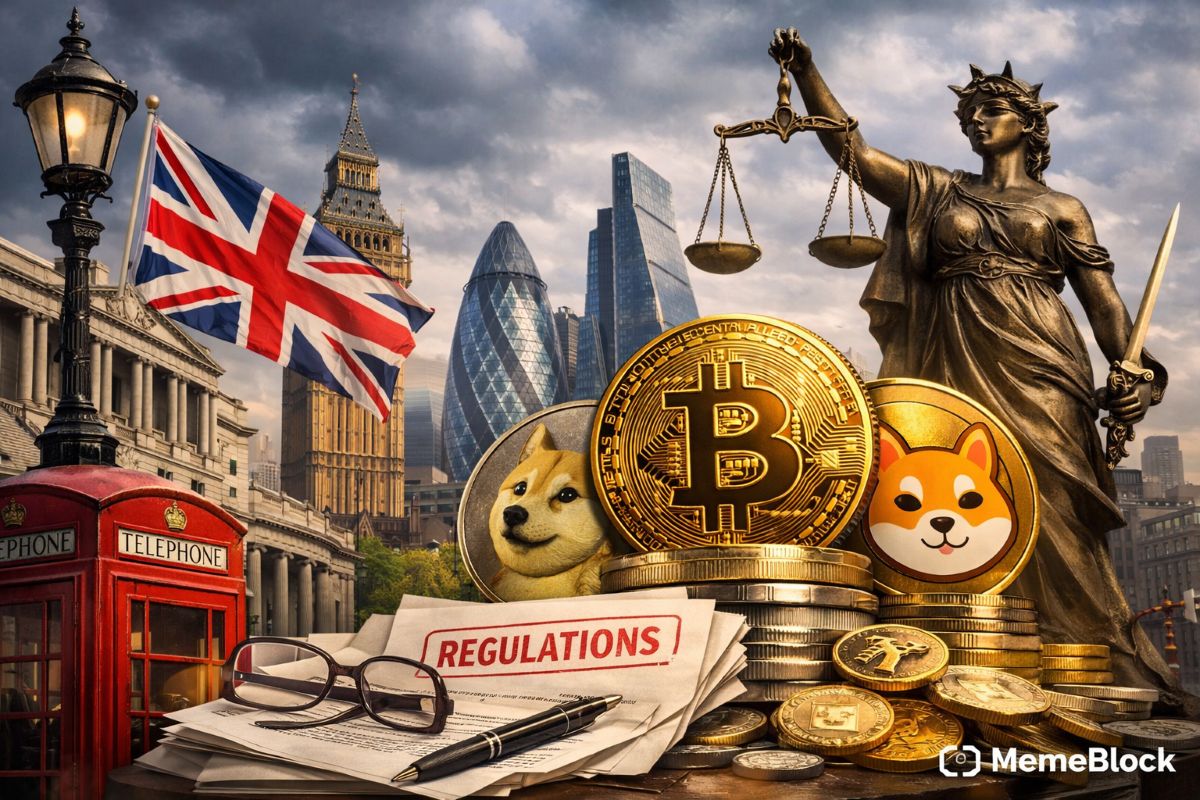
The Financial Conduct Authority (FCA) has launched a major consultation that could reshape how cryptocurrencies, including memecoins, are interpreted and regulated in the United Kingdom. Importantly, the move marks a critical step toward formal oversight of a sector long criticized for volatility, speculation, and lack of transparency.
FCA Seeks Clarity on Crypto and Memecoin Classification
At the heart of the consultation is the FCA’s effort to define the regulatory “perimeter” for crypto assets. This includes clarifying which activities fall under financial regulation. This is an issue particularly relevant to memecoins, which often blur the line between entertainment-driven tokens and speculative investments.
The FCA is asking industry stakeholders to provide feedback on how it interprets regulated activities such as crypto trading, custody, staking, and issuance.
Memecoins, typically driven by social media hype rather than utility, have become a focal point in this discussion. Meanwhile, regulators are increasingly concerned about whether these tokens should be treated as financial instruments, especially given their role in retail speculation and frequent price manipulation.
Timeline for UK Crypto Regulation Framework
The consultation is part of a broader roadmap that will bring crypto assets fully under UK financial regulation by October 2027. Firms will be able to apply for authorization starting September 2026. This will give them a transition window to comply with the upcoming rules.
Currently, the crypto sector in the UK remains largely unregulated except for financial promotions and anti-money laundering requirements.
This regulatory gap has allowed memecoins to flourish with minimal oversight, often exposing retail investors to high-risk, speculative assets.
Key Areas Covered in the FCA Consultation
The FCA’s consultation outlines several crypto-related activities that may soon fall under regulation:
- Operating crypto trading platforms
- Issuing stablecoins
- Safeguarding digital assets
- Staking and investment services
- Dealing with and arranging crypto transactions
While memecoins are not explicitly singled out in all cases, they fall within these broader categories, particularly in trading and investment contexts.
Why Memecoin Regulation Matters Now
The explosive growth of memecoins like Dogecoin and Shiba Inu has demonstrated both the power and risks of community-driven assets. These tokens often lack intrinsic value and are heavily influenced by online sentiment, making them highly volatile.
Recent research highlights that memecoins are especially prone to price swings, concentrated ownership, and sentiment-driven shocks. These factors increase financial risk for investors.
The FCA’s consultation suggests that regulators are now taking these risks seriously. They aim to introduce clearer rules that protect consumers while maintaining innovation.
Industry Impact and Market Reactions
The consultation is expected to have wide-ranging implications for crypto firms operating in or targeting the UK market. Companies may need to restructure operations, enhance compliance frameworks, and seek formal authorization to continue offering services.
Industry experts believe the move will bring much-needed clarity. However, it could also impose stricter requirements that smaller projects, including many memecoin initiatives, may struggle to meet.
At the same time, the UK government continues to position itself as a global crypto hub. It balances regulatory oversight with innovation-friendly policies.
Conclusion
The FCA’s latest consultation represents a pivotal moment for the crypto industry, particularly for memecoins operating in a gray regulatory area. By defining how these assets are classified and regulated, the UK aims to create a safer and more transparent digital asset ecosystem.
For investors and developers alike, the message is clear. The era of loosely regulated memecoin markets in the UK may soon be coming to an end. It will be replaced by a structured framework designed to balance risk, innovation, and consumer protection.