Key Takeaways
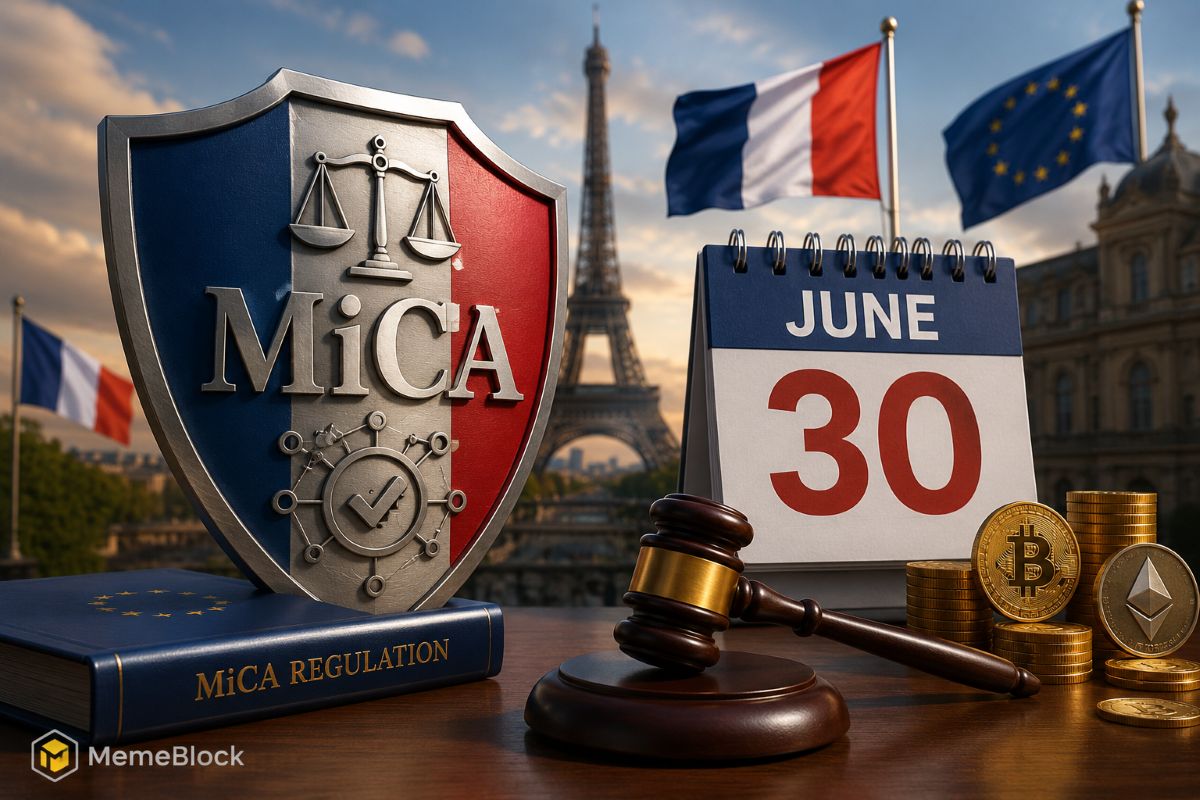
- As of December 30, 2025, the EU’s Markets in Crypto-Assets Regulation (MiCA Regulation) completes its phased rollout across the European Union.
- Uniform regulatory framework now binds issuance, trading, and service providers of crypto-assets across all member states.
- Crypto-asset service providers (CASPs) must meet licensing and compliance requirements to operate legally in the EU.
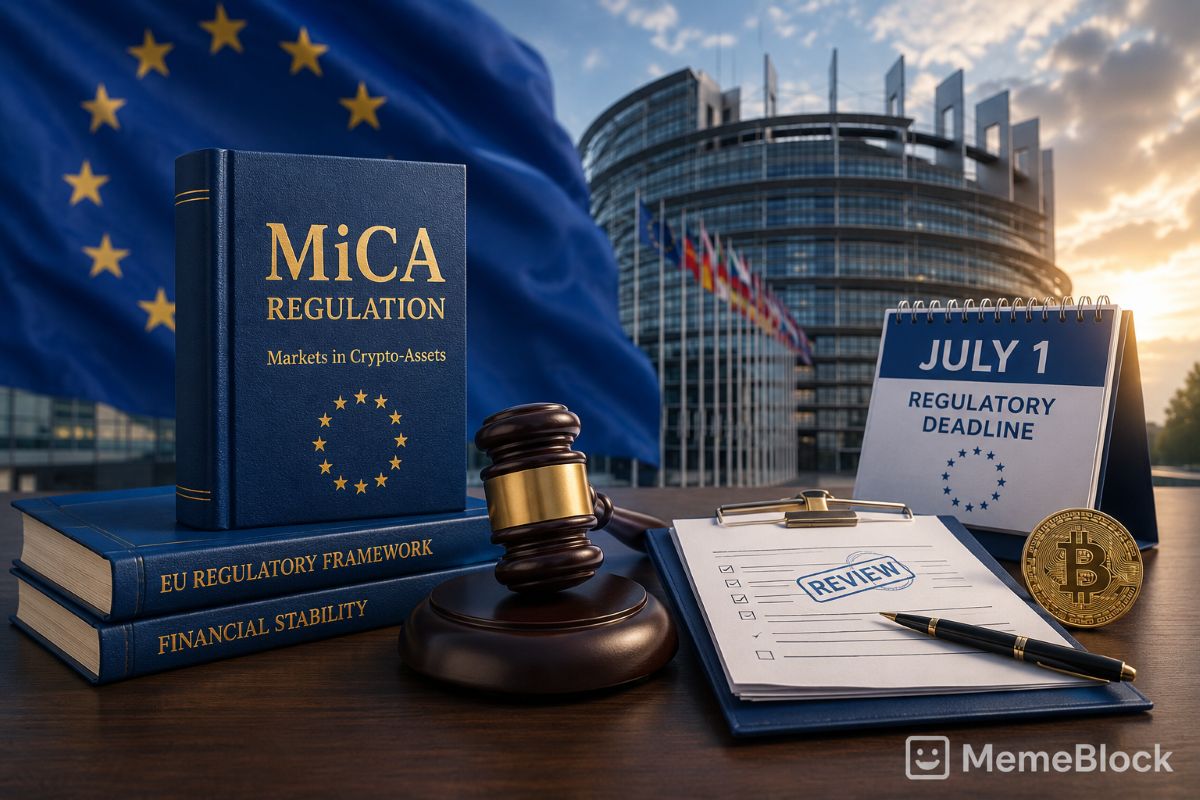
Brussels (MemeBlock): The European Union’s landmark MiCA Regulation enters full legal force today. This marks the completion of a multiyear effort to establish a comprehensive regulatory regime for crypto-assets across all 27 member states. The regulation’s full applicability is designed to replace a patchwork of national rules. It aims for cohesive EU-wide standards aimed at investor protection, market integrity, and legal certainty for digital asset firms.
Context and Background
The Markets in Crypto-Assets Regulation (MiCA Regulation, formally Regulation (EU) 2023/1114) was adopted by the European Parliament and Council in mid-2023. It is part of the EU’s broader digital finance strategy. It is the first major jurisdictional attempt to comprehensively regulate crypto-assets outside traditional financial instruments.
MiCA’s provisions were rolled out in phases. Stablecoin-focused portions (asset-referenced tokens and e-money tokens) came into force in June 2024. Subsequent phases, including rules for other crypto-assets and service providers, took effect on December 30, 2024. Transitional regimes granted legacy operators additional time to align with the framework. This culminated in today’s full applicability date for all entities and services within the EU.
Key Developments and Timeline
- June 2023: EU Parliament and Council adopt the MiCA text, aiming to harmonize rules across member states.
- June 30, 2024: Initial provisions regulating stablecoins (asset-referenced tokens and e-money tokens) enter into force.
- December 30, 2024: Broader MiCA requirements governing CASPs and additional classes of crypto-assets become applicable.
- December 30, 2025: Full enforcement of MiCA’s regulatory regime across the European Union concludes transitional phases and solidifies compliance expectations.
Under MiCA, crypto-asset service providers must obtain authorization from a national competent authority. This includes exchanges, custodians, trading platforms, and issuance platforms. They must also meet governance, capital, anti-money-laundering (AML)/know-your-customer (KYC), and operational standards to serve EU clients. A license obtained in any one EU state now confers “passporting” rights to operate across the entire single market.
Market and Industry Impact
The full application of MiCA alters the compliance landscape for both EU and international firms. Exchanges and service providers that previously functioned under national regimes now fall under common licensing and supervisory expectations. Firms that fail to secure authorization face restrictions or potential market exit.
Several notable license awards under MiCA have already been reported. Companies such as KuCoin have received MiCA authorization in Austria, enabling operation across multiple European Economic Area (EEA) markets. Other firms have pursued or completed licensing processes in jurisdictions including Lithuania and Ireland.
Industry responses to the regulatory environment have varied. Some firms cite regulatory clarity and harmonization as factors enabling EU expansion. On the other hand, others note compliance costs and evolving supervisory expectations as operational challenges.
Industry and Regulatory Perspectives
EU regulators have framed MiCA as a mechanism for enhancing investor protection and market stability. They aim to preserve innovation in digital finance. By harmonizing rules across member states, regulators aim to embed standards for governance, disclosures, and risk controls. In this way, they reduce fragmentation that historically complicated crypto operations in Europe.
At the same time, supervisory bodies such as the European Securities and Markets Authority (ESMA) continue to refine and publish technical standards. They also provide guidance to support consistent implementation. There are ongoing discussions at the EU level about the scope of oversight. This includes the interplay between MiCA and broader financial market regulation, and potential expansions of EU-wide supervisory authority.
What Happens Next
With MiCA fully in force, crypto-asset firms planning to operate or continue operations in the EU must ensure they are licensed and compliant with all regulatory requirements. National authorities will enforce ongoing obligations. These span client protection, capital adequacy, and reporting regimes.
The EU framework also sets a de facto benchmark for international regulators aiming to shape their own digital asset rules. Observers across global markets, including in the U.K., U.S., and Asia, are watching MiCA’s implementation. Its influence on market behavior, investment flows, and cross-border compliance approaches is under scrutiny.
Conclusion
The full entry into force of the MiCA Regulation marks a significant regulatory milestone for the European crypto sector. After years of phased rollout, the EU now enforces a harmonized legal framework. designed to bring regulatory coherence to crypto-asset markets, This framework brings regulatory coherence to crypto-asset markets. It is a development likely to shape business strategies, compliance priorities, and investor protections across the continent.