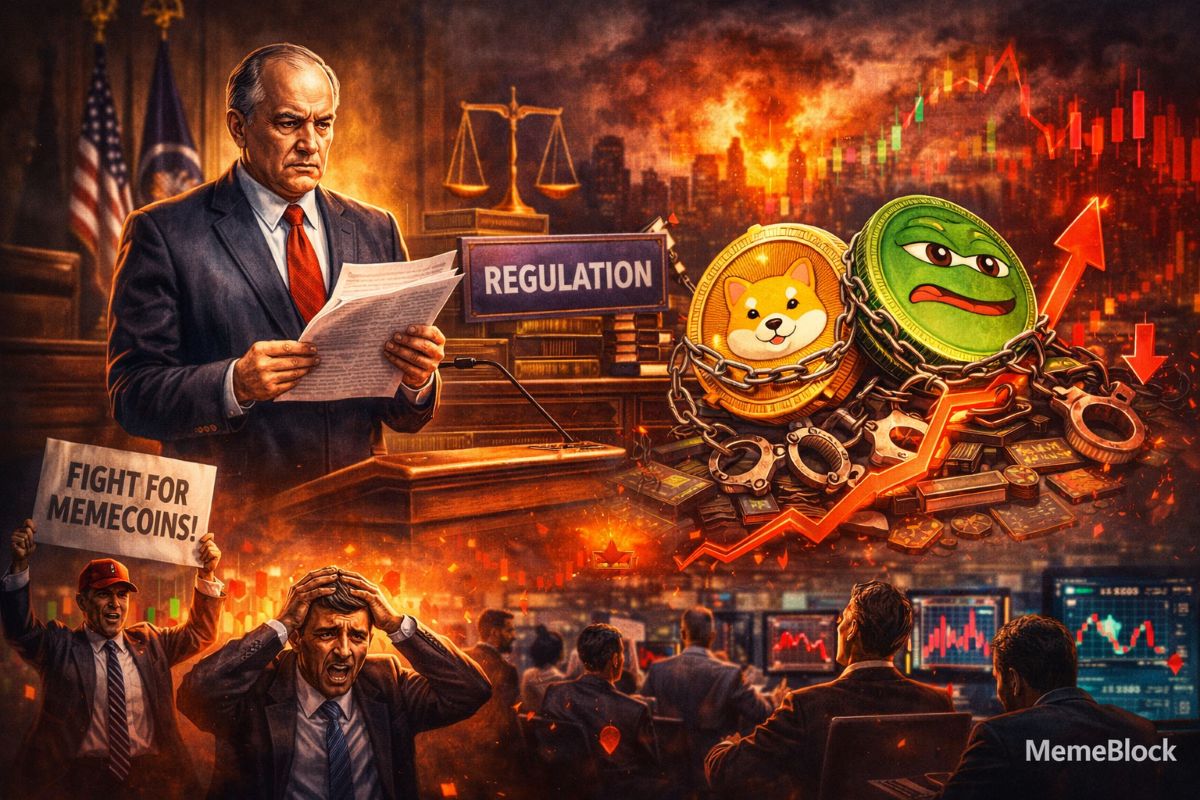
The U.S. Senate Agriculture Committee, which oversees the Commodity Futures Trading Commission (CFTC), has released its long-anticipated draft of the Digital Commodity Market Structure Act (DCMSA), introducing the most comprehensive federal framework to date for decentralized finance (DeFi), digital assets, and decentralized autonomous organizations (DAOs).
The proposal, developed over nearly two years of bipartisan collaboration, aims to provide legal clarity on which digital assets qualify as commodities versus securities, how decentralized protocols are regulated, and the operational obligations of DAOs and DeFi platforms under U.S. law.
The release represents a watershed moment in U.S. digital asset legislation, one that could redefine how blockchain-based entities operate, innovate, and comply within the country’s evolving financial system.
CFTC Positioned as Lead Regulator for Digital Commodities
Under the new draft, the CFTC would assume primary oversight of digital commodities, including Bitcoin, Ethereum, and other sufficiently decentralized tokens. The SEC, meanwhile, would continue to regulate tokens or networks that are deemed securities due to centralized governance or profit-sharing structures.
The legislation introduces a clear “decentralization threshold”, a criteria-based assessment used to determine whether a digital asset can transition from being a security to a commodity as its governance becomes more distributed.
“The goal of this bill is to bring fairness, clarity, and consistency to the digital asset market,” said Senator Debbie Stabenow (D-MI), Chair of the Senate Agriculture Committee. “It ensures that innovation thrives while maintaining consumer protection and market integrity.”
Defining DeFi: New Standards for Protocol Accountability
The draft directly addresses one of the most contentious areas in digital asset law, decentralized finance (DeFi). It classifies DeFi platforms as “digital commodity trading facilities” when they facilitate trading or lending of digital commodities through smart contracts.
To remain compliant, DeFi protocols that exceed defined transaction or liquidity thresholds would need to:
- Register with the CFTC as a digital commodity facility;
- Disclose code audits, governance procedures, and token distribution metrics;
- Implement anti-money-laundering (AML) and Know Your Customer (KYC) provisions, adapted for autonomous systems;
- Provide transparency on liquidity providers and validators who maintain economic control of the protocol.
Smaller or experimental protocols could qualify for a “sandbox exemption,” allowing limited operations under lighter reporting obligations for innovation testing.
Industry experts see this as a pragmatic approach that legitimizes DeFi without stifling its open-source foundation.
“This is the first federal draft that acknowledges DeFi as a legitimate market participant rather than a regulatory anomaly,” said one blockchain policy researcher. “It brings accountability to large-scale protocols while preserving a runway for startups.”
DAO Recognition: Legal Entity Status for the First Time
The DCMSA also formally defines Decentralized Autonomous Organizations (DAOs) as “unincorporated digital entities” with legal standing, a long-awaited development that grants DAOs recognition akin to limited liability organizations, provided they register with the CFTC and maintain transparent governance ledgers.
Under the draft, DAOs would:
- Be subject to limited liability protections similar to LLCs;
- Maintain publicly accessible governance logs and treasury records;
- Designate a U.S.-based “responsible agent” for compliance correspondence;
- Be taxed as pass-through entities, aligning them with small business structures.
Legal experts view this as a game-changing inclusion that could bring DAO operations firmly into regulatory legitimacy while protecting contributors from personal liability.
Market and Policy Implications
The draft’s release has been widely praised by institutional players, legal scholars, and policy analysts who have long sought a unified framework balancing innovation and oversight. If enacted, it could attract major financial institutions into the DeFi space by providing clearer regulatory guardrails and risk definitions.
However, the proposal still faces negotiations between the Senate Banking Committee and the House Financial Services Committee, where the SEC’s jurisdictional boundaries remain a point of contention.
Nevertheless, analysts expect bipartisan support given the growing recognition that regulatory fragmentation has driven innovation overseas to regions like the UK, Singapore, and Hong Kong.
“This is the most significant step yet toward a modern digital asset economy,” said one Washington-based fintech lobbyist. “The Senate Agriculture Committee has built a bridge between DeFi’s autonomy and America’s regulatory architecture.”
FAQs
Q1: What is the Digital Commodity Market Structure Act (DCMSA)?
It’s a proposed U.S. law establishing regulatory clarity for digital assets, assigning oversight of commodities to the CFTC, and defining DeFi and DAO compliance standards.
Q2: Who regulates DeFi under the new draft?
Large-scale DeFi protocols would register as “digital commodity facilities” with the CFTC, ensuring operational transparency and AML compliance.
Q3: How does the bill define a DAO?
DAOs are recognized as unincorporated digital entities with limited liability, provided they register and maintain public governance records.
Q4: How does it impact developers and startups?
Startups may qualify for sandbox exemptions, allowing innovation without full-scale compliance burdens during early testing phases.
Q5: When could the bill become law?
The Senate will hold hearings later this year, with a potential full vote expected in early 2026, depending on committee negotiations.