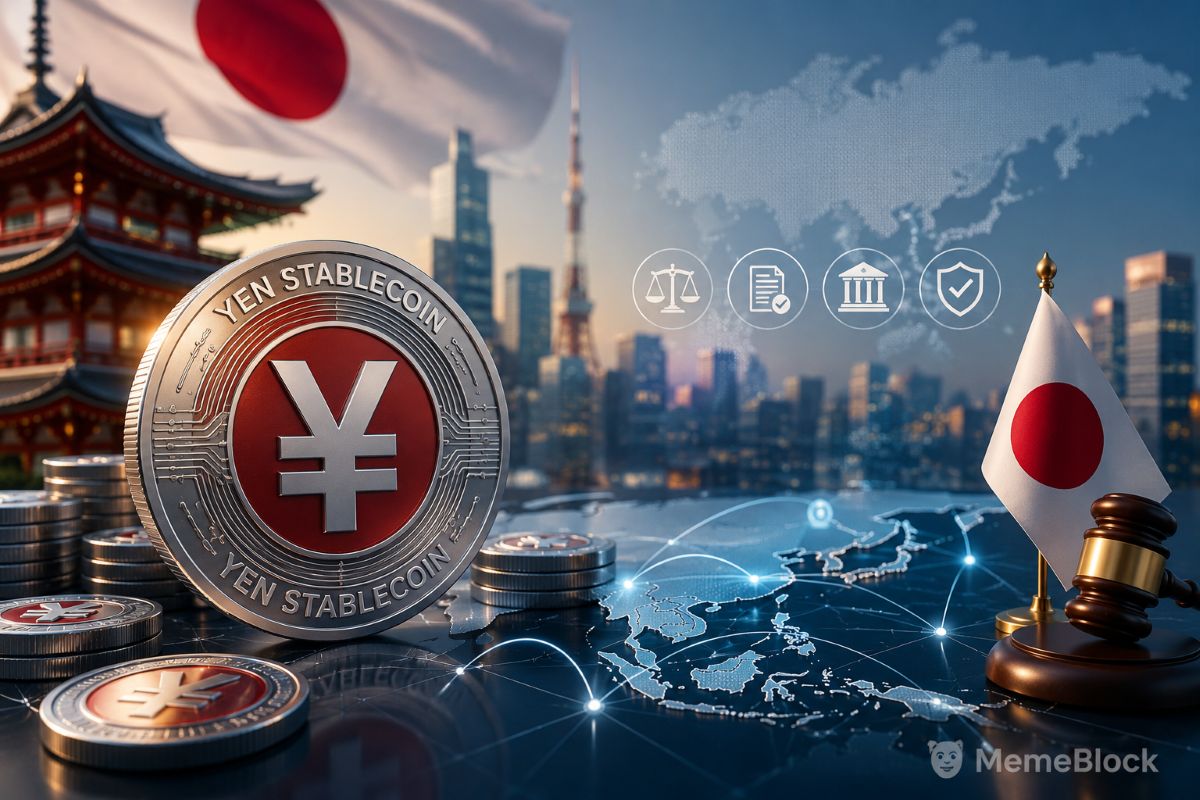
Japan’s cryptocurrency market is entering a new phase of regulated expansion. Authorities formally recognize more than 100 digital tokens across 28 licensed platforms. This move signals a major shift in how one of the world’s most compliance-driven economies is shaping the future. In particular, the shift pertains to memecoins and broader crypto assets under strict regulatory oversight.
Japan’s Regulatory Framework Drives Market Legitimacy
According to the latest data from Japan’s Financial Services Agency (FSA), over 100 unique crypto tokens are now approved within the country’s regulated ecosystem. These tokens span 28 registered crypto exchange service providers.
This framework operates under the Payment Services Act. It requires every listed token to be individually registered and vetted before being offered to users. As a result, there is a tightly controlled environment where innovation and compliance coexist. While there are over 500 token listings across exchanges due to duplication, the actual number of distinct approved assets remains just above 100.
For memecoin investors, this level of scrutiny is significant. It reduces the risk of scams and unverified token issues that have historically plagued the memecoin sector globally.
Memecoins Enter a More Structured Era
The recognition of a wide variety of tokens, including DeFi, gaming, AI, and community-driven ecosystems, suggests memecoins are no longer dismissed as purely speculative assets.
Japan’s approach differs from less regulated markets by emphasizing quality over quantity. Instead of allowing thousands of tokens to flood exchanges, regulators prioritize projects that meet compliance, transparency, and investor protection standards.
This shift could redefine how memecoins evolve. Rather than relying solely on hype, successful projects may need to demonstrate utility and governance structures. Furthermore, they must show long-term viability to gain approval in regulated jurisdictions like Japan.
Stricter Compliance Signals Future Growth
Japan is also tightening its regulatory grip through expanded frameworks such as the crypto “travel rule,” which enhances transaction traceability. This also improves cross-border monitoring.
Additionally, policymakers are working toward classifying crypto assets as financial products under updated laws, aligning them with traditional financial instruments.
This evolution introduces stricter requirements, including enhanced disclosures, anti-money laundering compliance, and potential insider trading restrictions. While this may seem restrictive, it is designed to attract institutional investors and increase overall market trust.
Impact on Global Memecoin Regulation Trends
Japan’s model is increasingly being viewed as a blueprint for balancing innovation with investor protection. Globally, regulators are grappling with how to handle memecoins, which often lack intrinsic value but command massive community-driven market caps.
By integrating memecoins into a regulated framework, Japan is effectively legitimizing the sector while filtering out low-quality projects. This could influence other jurisdictions to adopt similar approval-based systems rather than outright bans or laissez-faire approaches.
Moreover, Japan’s collaboration with industry bodies like the Japan Virtual and Crypto Assets Exchange Association (JVCEA) has streamlined token approvals. Initiatives such as the “green list” have accelerated compliant listings.
Market Expansion With Controlled Innovation
The recognition of over 100 tokens across 28 platforms reflects a balanced growth strategy. It allows market expansion while maintaining strict oversight, an approach that could stabilize the notoriously volatile memecoin sector.
For traders and developers, this means operating in Japan requires adherence to high regulatory standards. However, the payoff is access to a secure, transparent, and institution-friendly market.
The Road Ahead for Memecoins in Regulated Markets
As global crypto regulation continues to evolve, Japan stands out as a leader in creating a sustainable framework for digital assets, including memecoins. The country’s emphasis on compliance, investor protection, and structured growth could redefine how memecoins are perceived. In fact, they may shift from speculative internet trends to regulated digital assets with real market presence.
For investors, the takeaway is clear: the future of memecoins may depend less on viral hype. Instead, it may hinge on regulatory approval and long-term credibility.