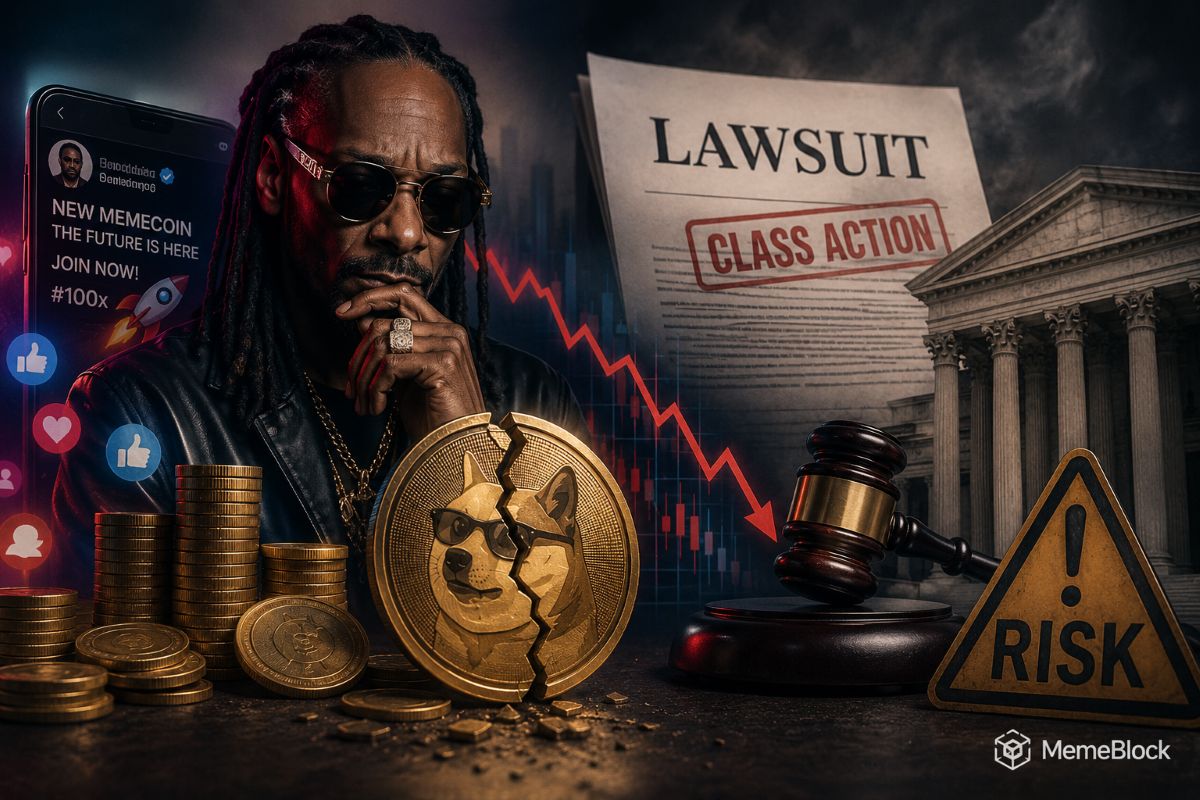
The latest legal battle surrounding the MOTHER memecoin has intensified concerns about celebrity-backed cryptocurrencies. There is also growing regulatory scrutiny facing the memecoin market. Australian rapper Iggy Azalea is now facing a class-action lawsuit. The suit is over allegations that investors were misled by promises tied to the Solana-based MOTHER token.
The lawsuit, filed in Manhattan federal court, claims the MOTHER memecoin was marketed with promises of real-world utility, business integrations, and long-term ecosystem development. However, these improvements allegedly failed to materialize. Plaintiffs argue that these promotional claims encouraged retail investors to buy into the token. This happened during the peak of the celebrity memecoin craze.
MOTHER Memecoin Utility Claims Under Legal Fire
According to court filings, the lawsuit alleges that the MOTHER token was promoted as part of a broader ecosystem involving telecom services, casino platforms, and luxury marketplace integrations. However, investors claim many of these promised use cases were never launched. Alternatively, they operated without meaningful reliance on the MOTHER token itself.
One of the central accusations involves “Motherland,” a casino project allegedly promoted as powered by the MOTHER token. Plaintiffs argue the platform instead relied heavily on stablecoins like Tether. This shift happened rather than the memecoin that investors were encouraged to support.
The complaint further alleges that promotional statements regarding ongoing development and commercial adoption created unrealistic expectations for long-term token value. Moreover, investors now argue that those claims contributed to significant financial losses. This happened after the token’s market capitalization collapsed from its early highs.
Celebrity Crypto Promotions Facing Regulatory Pressure
The MOTHER lawsuit reflects a broader trend of regulators and investors increasingly targeting celebrity-endorsed crypto projects. Over the past two years, several high-profile memecoin launches linked to celebrities and influencers have sparked lawsuits. They have also led to fraud allegations and regulatory investigations.
The celebrity memecoin boom accelerated throughout 2024 and 2025. Public figures leveraged massive social media audiences to drive speculative crypto investments. However, many of these projects faced criticism for lacking transparency, utility, or sustainable tokenomics.
Legal experts believe the MOTHER case could become an important test for how courts interpret utility-based marketing claims in the memecoin sector. If plaintiffs succeed, the lawsuit may establish stronger accountability standards for influencers. It could also affect celebrities promoting digital assets.
The case also follows growing international concern over politically connected and celebrity-backed memecoins. Projects linked to public figures, including the controversial $LIBRA and $TRUMP tokens, have already drawn scrutiny. Critics cite market manipulation risks, conflicts of interest, and investor protection failures.
Memecoin Investors Warned About High-Risk Speculation
Crypto analysts say the MOTHER lawsuit highlights a recurring issue in the memecoin market. Hype-driven investing is often fuelled by celebrity influence rather than underlying technology or revenue models.
Recent academic research on memecoin fragility found that many meme-based crypto assets experience extreme volatility due to social media momentum, concentrated token ownership, and sentiment-driven speculation.
Researchers studying Solana memecoin launches also discovered that a large percentage of newly launched tokens exhibit high-risk characteristics. These risks are tied to speculative trading patterns and liquidity manipulation.
While celebrity involvement often attracts massive retail attention, experts warn that investors should carefully evaluate whether advertised utility claims are technically verifiable and operationally active before investing.
What the MOTHER Lawsuit Means for the Crypto Industry
The MOTHER memecoin lawsuit could become a defining moment for memecoin regulation in the United States. Regulators worldwide are already debating whether celebrity-backed token promotions should face stricter disclosure requirements similar to traditional financial advertising.
If courts determine that exaggerated utility promises influenced investor decisions, future crypto promotions may require clearer disclosures. These would concern token functionality, partnerships, and commercial adoption.
For the broader crypto industry, the case reinforces the growing divide between speculative memecoins and blockchain projects focused on measurable real-world utility. As regulators tighten oversight, celebrity-endorsed crypto tokens may face increasing pressure. They must prove that their ecosystems deliver more than viral marketing and social media hype.