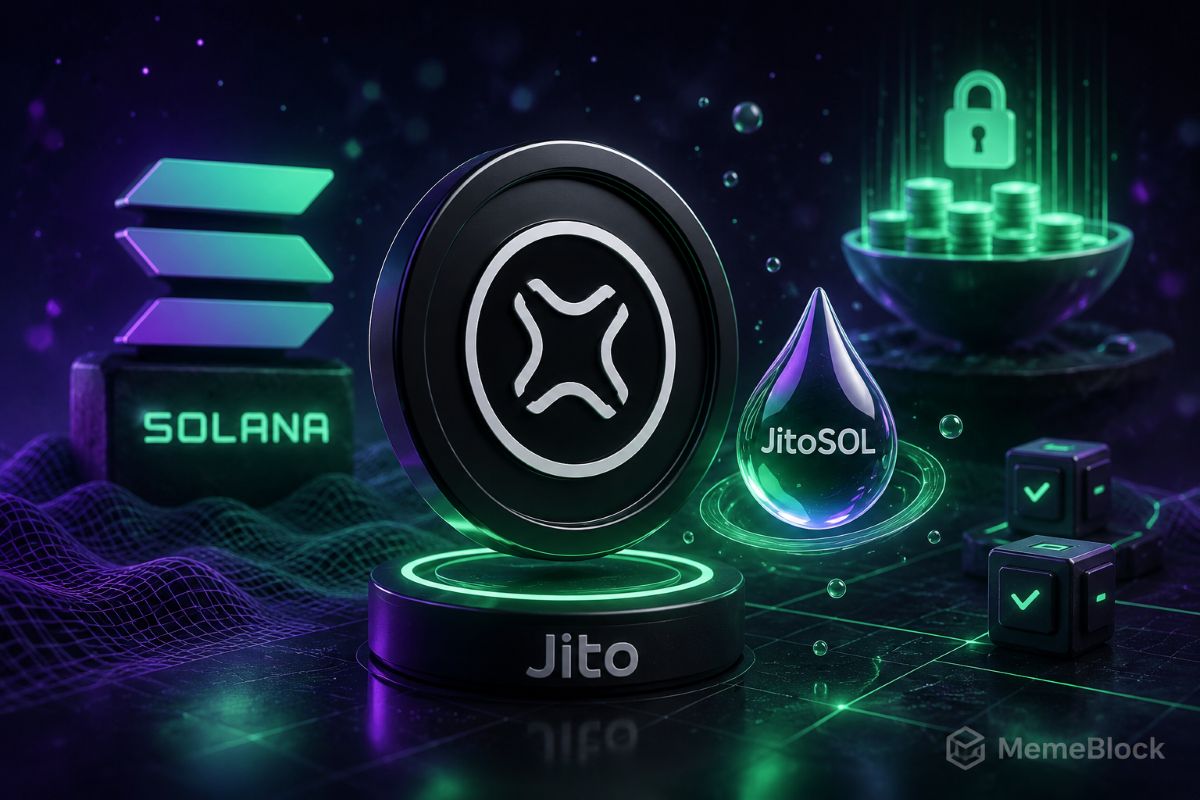
As decentralized finance (DeFi) continues to evolve, liquid staking has become one of the fastest-growing sectors in crypto. Among the leading projects in this space is Jito (JTO), a governance token powering one of Solana’s largest liquid staking ecosystems. Unlike traditional staking, Jito allows users to earn staking rewards while keeping their assets liquid for use across DeFi applications.
Whether you’re new to cryptocurrency or looking to understand the Solana ecosystem, this beginner’s guide explains what Jito is, how it works, and why it has become an important protocol for Solana users.
What Is Jito (JTO)?
Jito is a decentralized liquid staking and Maximum Extractable Value (MEV) infrastructure protocol built on the Solana blockchain. It enables users to stake their SOL tokens and receive JitoSOL, a liquid staking token that continues earning staking rewards while remaining usable in decentralized finance applications.
The JTO token serves as the governance asset of the Jito ecosystem. Rather than functioning as a staking token itself, JTO allows holders to vote on important protocol decisions, including treasury management, protocol upgrades, validator policies, and fee structures.
How Does Jito Work?
Jito combines two important blockchain concepts:
Liquid Staking
Normally, staking SOL locks your assets while they generate rewards. With Jito, users deposit SOL into the protocol and receive JitoSOL in return. JitoSOL represents the staked SOL and can be traded, lent, borrowed, or supplied as liquidity in various Solana DeFi protocols while continuing to earn staking rewards.
MEV Optimization
Jito also improves staking returns through Maximum Extractable Value (MEV) optimization. MEV refers to additional revenue generated by optimizing transaction ordering within blocks. Jito’s infrastructure captures a portion of this value and distributes additional rewards to validators and stakers instead of concentrating them with a few participants.
What Is the JTO Token Used For?
Unlike JitoSOL, which represents staked SOL, JTO primarily focuses on governance.
Its major utilities include:
- Voting on protocol upgrades
- Managing DAO treasury allocations
- Adjusting staking pool fees
- Influencing validator and delegation policies
- Participating in future ecosystem governance decisions
As the protocol expands, governance becomes increasingly important in determining the network’s long-term direction.
Key Features of Jito
Liquid Staking Flexibility
Users maintain liquidity while earning staking rewards, allowing greater capital efficiency across Solana’s DeFi ecosystem.
Enhanced Yield Opportunities
By incorporating MEV rewards alongside traditional staking income, Jito aims to increase overall returns for participants.
Community Governance
JTO holders collectively influence the protocol instead of relying on centralized decision-makers.
Strong Solana Integration
Jito has become one of the most widely used liquid staking protocols within the Solana ecosystem, integrating with numerous decentralized finance applications.
Benefits of Using Jito
For beginners and experienced investors alike, Jito offers several advantages:
- Earn staking rewards without locking liquidity
- Access DeFi opportunities using JitoSOL
- Receive additional MEV-generated rewards
- Participate in decentralized governance through JTO
- Help strengthen Solana’s staking ecosystem
These features make Jito attractive for users seeking both passive rewards and active participation in decentralized finance.
Risks to Consider
Like every cryptocurrency project, Jito carries certain risks.
Liquid staking protocols depend on smart contracts, which may contain vulnerabilities despite security reviews. The value of JitoSOL may fluctuate slightly relative to SOL under certain market conditions. In addition, JTO’s market price can experience significant volatility due to broader cryptocurrency market movements.
Governance participation also depends on community engagement, and concentrated voting power may influence protocol decisions.
Is Jito a Good Long-Term Project?
Jito has established itself as one of Solana’s leading liquid staking providers by combining staking rewards, MEV infrastructure, and decentralized governance into a single ecosystem. As liquid staking continues expanding across proof-of-stake blockchains, protocols offering efficient capital use and transparent governance could remain important components of decentralized finance.
However, like any crypto investment, JTO should be evaluated based on its fundamentals, adoption, governance activity, and the overall health of the Solana ecosystem.