Kaspa (KAS) is quickly becoming one of the most talked-about cryptocurrencies in the blockchain space, thanks to its innovative approach to scalability and speed. As crypto adoption continues to rise in 2026, understanding emerging technologies like Kaspa is essential for investors, developers, and everyday users looking to stay ahead of the curve.
What Is Kaspa (KAS)?
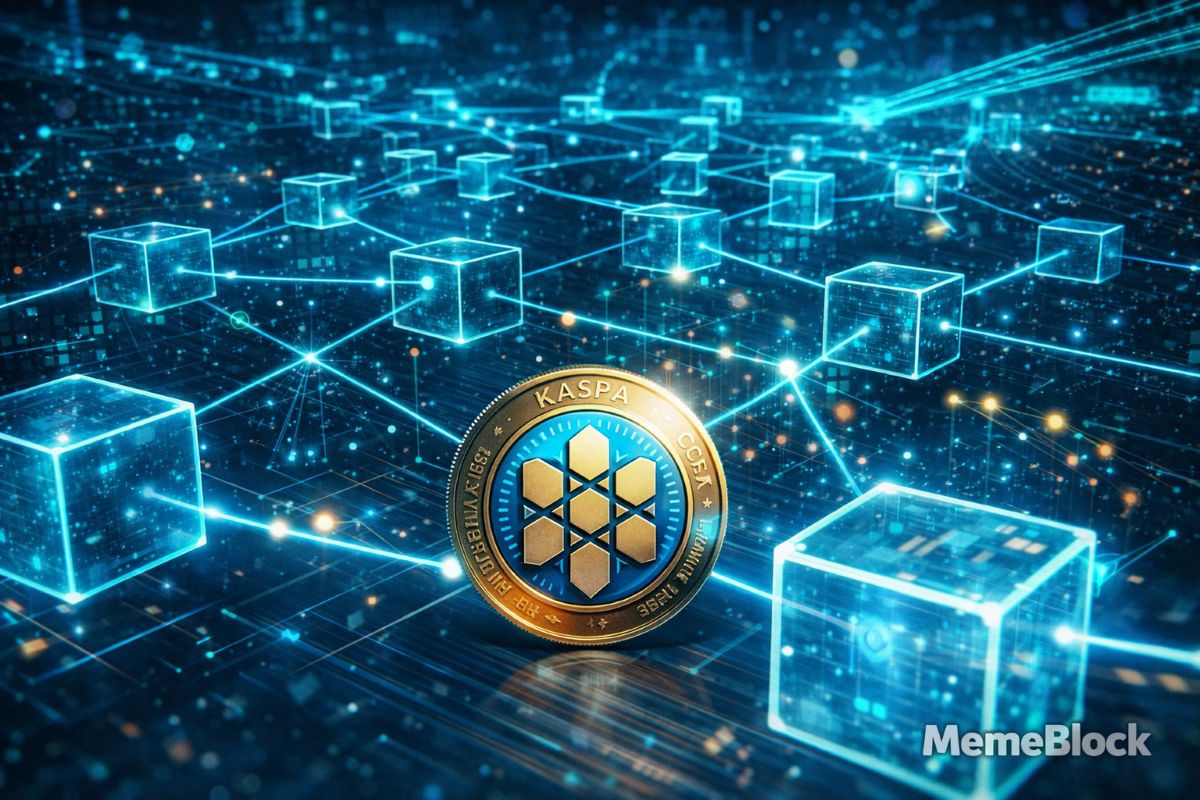
Kaspa is a decentralized, open-source cryptocurrency that operates on a unique BlockDAG (Directed Acyclic Graph) architecture instead of the traditional linear blockchain. Launched in November 2021, Kaspa was designed to solve one of crypto’s biggest challenges: achieving high transaction speed without compromising decentralization or security.
Unlike Bitcoin or Ethereum, where blocks are added one at a time, Kaspa allows multiple blocks to be created and confirmed simultaneously. This results in near-instant transaction confirmations and significantly higher throughput.
How Kaspa’s BlockDAG Technology Works
Kaspa’s core innovation lies in its BlockDAG protocol, often referred to as GHOSTDAG. This system allows parallel blocks to coexist and be ordered efficiently, rather than being discarded as “orphans” like in traditional blockchains.
In simple terms, Kaspa doesn’t wait in line; it builds multiple lanes of traffic at once.
This structure enables:
- Faster block production (about one block per second)
- High transaction capacity
- Reduced network congestion
Because of this, Kaspa is often labelled as one of the fastest proof-of-work (PoW) cryptocurrencies currently available.
Why Kaspa Is Gaining Popularity in 2026
Kaspa’s rise in popularity is driven by a mix of performance, fairness, and community-driven development. Unlike many newer projects, Kaspa had a fair launch, meaning there were no pre-mines, no initial coin offerings (ICOs), and no insider allocations.
This transparency has attracted a strong grassroots community and miners who prefer decentralized ecosystems.
Additionally, Kaspa’s low transaction fees and lightning-fast confirmations make it ideal for real-world use cases like:
- Peer-to-peer payments
- Microtransactions
- Decentralized applications (future potential)
Kaspa vs Bitcoin: Key Differences
While both Kaspa and Bitcoin use proof-of-work consensus, their architectures differ significantly.
Bitcoin relies on a linear blockchain, producing one block roughly every 10 minutes. This ensures security but limits scalability.
Kaspa, on the other hand, uses BlockDAG to produce multiple blocks per second, offering:
- Faster confirmations
- Higher scalability
- Better user experience
However, Bitcoin still dominates in terms of adoption, institutional trust, and store-of-value status.
Is Kaspa (KAS) a Good Investment?
Kaspa has caught the attention of crypto investors due to its cutting-edge technology and rapid ecosystem growth. Its focus on scalability without sacrificing decentralization positions it as a potential competitor in the next wave of blockchain innovation.
That said, like all cryptocurrencies, KAS is highly volatile. Investors should consider:
- Market risks
- Regulatory developments
- Competition from other Layer-1 projects
How to Buy and Store Kaspa (KAS)
Kaspa is available on several major cryptocurrency exchanges. To buy KAS, users typically:
- Create an account on a supported exchange
- Deposit funds (USD, USDT, or another crypto)
- Purchase KAS tokens
For storage, users can choose:
- Official Kaspa wallets
- Hardware wallets (for added security)
- Exchange wallets (less recommended for long-term holding)
Always prioritize security by enabling two-factor authentication and using trusted platforms.
Final Thoughts
Kaspa (KAS) represents a new generation of blockchain technology focused on speed, scalability, and decentralization. Its BlockDAG architecture sets it apart from traditional cryptocurrencies, offering a glimpse into the future of digital transactions.
As the crypto market evolves in 2026, Kaspa is definitely a project worth watching, especially for those interested in fast, efficient, and community-driven blockchain solutions.