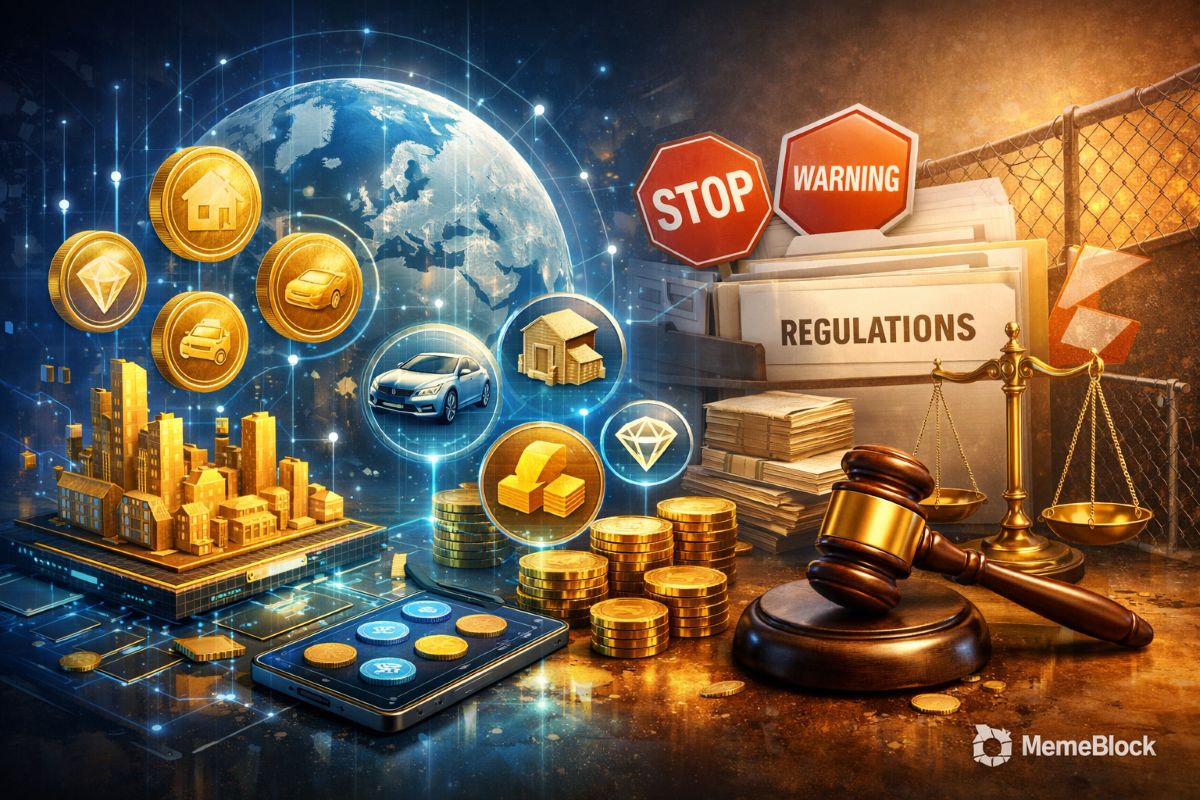
The financial world is buzzing as tokenization of real-world assets (RWAs) moves from niche experiment to serious market trend. From real estate and fine art to bonds and commodities, blockchain-based tokenization is reshaping how ownership is recorded, traded, and transferred. While the upside is massive, think increased liquidity and fractional ownership, the road ahead comes with real hurdles, especially around regulation and trust.
What Is Tokenization of Real-World Assets?
Tokenization is the process of converting ownership rights of physical or traditional financial assets into digital tokens on a blockchain. These tokens represent a share or claim on the underlying asset, allowing investors to buy, sell, or trade them much like cryptocurrencies.
In simple terms, instead of needing millions to invest in a commercial property, tokenization lets you own a fraction of it with just a few hundred dollars. This opens the door to a broader pool of investors and introduces new levels of accessibility in traditionally exclusive markets.
Why Tokenization Is Gaining Momentum in 2026
The rise of tokenized RWAs isn’t happening in a vacuum. Several factors are driving adoption:
Increased Liquidity in Illiquid Markets
Assets like real estate or private equity are notoriously hard to sell quickly. Tokenization changes that by enabling faster, 24/7 trading on blockchain platforms.
Fractional Ownership Opportunities
Investors can now diversify portfolios by owning smaller portions of high-value assets. This is a game-changer for retail investors who were previously priced out.
Reduced Transaction Costs
By cutting out intermediaries like brokers and clearinghouses, blockchain reduces fees and settlement times. Transactions that once took days can now settle in minutes.
Global Accessibility
Tokenized assets can be accessed by investors worldwide, breaking down geographical barriers and expanding market reach.
Key Opportunities in Tokenized Assets
Democratizing Investment Access
Tokenization levels the playing field. Whether it’s luxury real estate in New York or rare collectibles, more people can participate in wealth-building opportunities.
Enhanced Transparency and Security
Blockchain technology provides an immutable record of ownership and transactions. This reduces fraud risks and increases investor confidence.
Programmable Assets
Smart contracts allow for automation of dividends, interest payments, and compliance rules. This adds efficiency and reduces human error.
Challenges Slowing Down Adoption
Despite the hype, tokenization isn’t all smooth sailing. Several key challenges remain:
Regulatory Uncertainty
Different countries have different rules regarding digital assets. This creates confusion for companies and investors alike. Without clear frameworks, large-scale adoption may stall.
Legal Ownership Questions
Owning a token doesn’t always guarantee legal ownership of the underlying asset. Bridging the gap between digital and legal systems is still a work in progress.
Market Fragmentation
There’s no universal standard for tokenized assets. Multiple platforms with varying protocols can lead to inefficiencies and a lack of interoperability.
Security Risks
While blockchain itself is secure, platforms and smart contracts can be vulnerable to hacks or bugs. High-profile breaches have made investors cautious.
Real-World Use Cases Gaining Traction
Tokenization is already making waves across industries:
- Real Estate: Fractional property ownership platforms are attracting global investors.
- Fixed Income: Governments and institutions are experimenting with tokenized bonds.
- Commodities: Gold and other assets are being digitized for easier trading.
- Art and Collectibles: High-value items are being split into tradable shares.
What’s Next for Tokenized RWAs?
Looking ahead, the tokenization market is expected to grow rapidly as infrastructure improves and regulations become clearer. Major financial institutions are stepping in, signalling confidence in the long-term potential.
However, mainstream adoption will depend on solving regulatory challenges and building trust among investors. Education will also play a big role many people still don’t fully understand how tokenized assets work.
Summary
Tokenization of real-world assets is reshaping finance in a big way. It’s unlocking liquidity, expanding access, and bringing innovation to traditional markets. But let’s be real, the space still needs to iron out regulatory kinks and security concerns before it hits full stride.
For now, it’s a high-potential sector worth watching closely, especially for investors looking to get in early on the next wave of financial evolution.