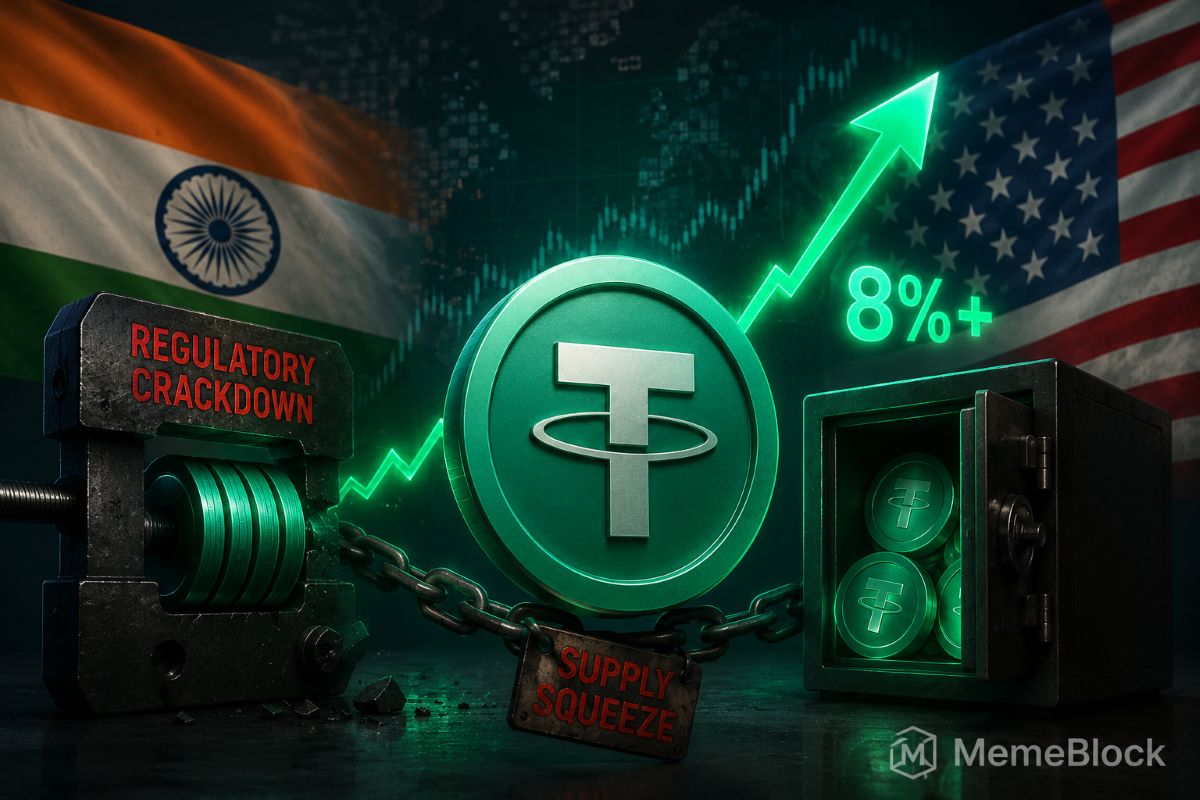
A sharp collapse in the USDT premium across Indian crypto markets has disrupted remittance flows for Non-Resident Indians (NRIs) who rely on the stablecoin to transfer money back home quickly and cost-effectively. The premium, which typically reflects the difference between the local price of USDT and its global market value, plunged rapidly, catching traders, payment aggregators, and informal remittance channels off guard.
For years, USDT has served as a convenient bridge asset for NRIs, particularly in regions where traditional banking systems involve delays, high fees, or restrictive currency controls. The sudden premium correction has led to transaction delays, pricing confusion, and liquidity bottlenecks across several over-the-counter (OTC) platforms.
Why the USDT Premium Matters in India
India’s capital controls and banking regulations often make cross-border transactions slower and more expensive compared to crypto-based alternatives. As a result, the USDT premium plays a critical role:
- High premium → stronger demand for USDT as a remittance tool
- Low or negative premium → reduced incentive to use stablecoins for transfers
With the premium collapsing, spreads on OTC desks tightened sharply, reducing the profitability of intermediaries who facilitate offshore-to-onshore transfers using stablecoins. This resulted in widespread disruptions in both exchange liquidity and remittance execution.
NRI Remittances Face Delays and Price Uncertainty
As the premium dropped, many NRIs reported difficulties in achieving expected conversion rates. Because informal crypto-based remittance channels adjust pricing dynamically, USDT volatility led to:
- Unexpectedly lower INR payouts
- Delayed settlements until prices stabilized
- Higher spreads imposed by OTC brokers to hedge risk
- Increased use of traditional banking rails as a fallback
Some traders temporarily paused USDT-INR settlements altogether, citing severe market imbalance and fears that rapid fluctuations could trigger losses.
Regulatory Environment Adds to Market Sensitivity
The Indian crypto ecosystem remains highly sensitive to regulatory signals, ranging from compliance warnings to taxation changes. Even minor policy discussions often cause fluctuations in USDT pricing due to traders anticipating tighter controls.
The recent collapse in premium appears driven by a combination of factors, including improved, INR liquidity in certain markets, shifts in cross-border capital demand, and speculative unwinding by traders expecting further volatility. Without a clear regulatory framework, stablecoin markets in India frequently respond disproportionately to even routine policy commentary.
Impact on Crypto Exchanges and OTC Desks
Domestic exchanges saw a drop in stablecoin trading volumes as arbitrage opportunities diminished. OTC desks, the backbone of India’s NRI remittance pipeline, faced:
- Reduced margins
- Thin liquidity
- Sharp changes in demand timing
- Difficulty quoting consistent rates
Some platforms moved to fixed-spread models or temporarily halted large-volume transfers until volatility eased.
What This Means for NRIs Going Forward
Market analysts expect volatility in the USDT premium to continue in the short term, especially as global macro conditions influence stablecoin demand. NRIs relying on crypto-based remittances may need to adjust expectations and consider timing transfers more carefully.
If the premium remains low, many may shift back to official remittance channels like SWIFT, UPI-linked NRI accounts, or licensed money exchangers, although these options come with higher fees and slower settlement.
FAQs
Q: What caused the USDT premium to collapse in India?
Market volatility, reduced arbitrage demand, shifting liquidity conditions, and speculative selling contributed to the sudden drop.
Q: How does USDT affect NRI remittances?
USDT is widely used for fast, low-cost offshore-to-India transfers. Changes in the premium directly affect INR payout rates.
Q: Why are remittances being disrupted?
The premium collapse caused pricing uncertainty, delayed settlements, and liquidity shortages on OTC desks that facilitate remittance flows.
Q: Are traditional banking channels affected?
No, but more NRIs may temporarily shift back to official channels due to stablecoin instability.
Q: How long will disruptions last?
It depends on market stabilization. Volatility in the USDT premium may remain until liquidity and demand rebalance.