The memecoin market woke up to fresh turbulence this week after a key creative force behind Pudgy Penguins’ ecosystem abruptly exited to launch a competing token. The sudden move has rattled investor confidence in PENGU, highlighting just how fragile narrative-driven crypto assets can be when core contributors walk away.
Lead Artist Exit Sparks Immediate Market Reaction
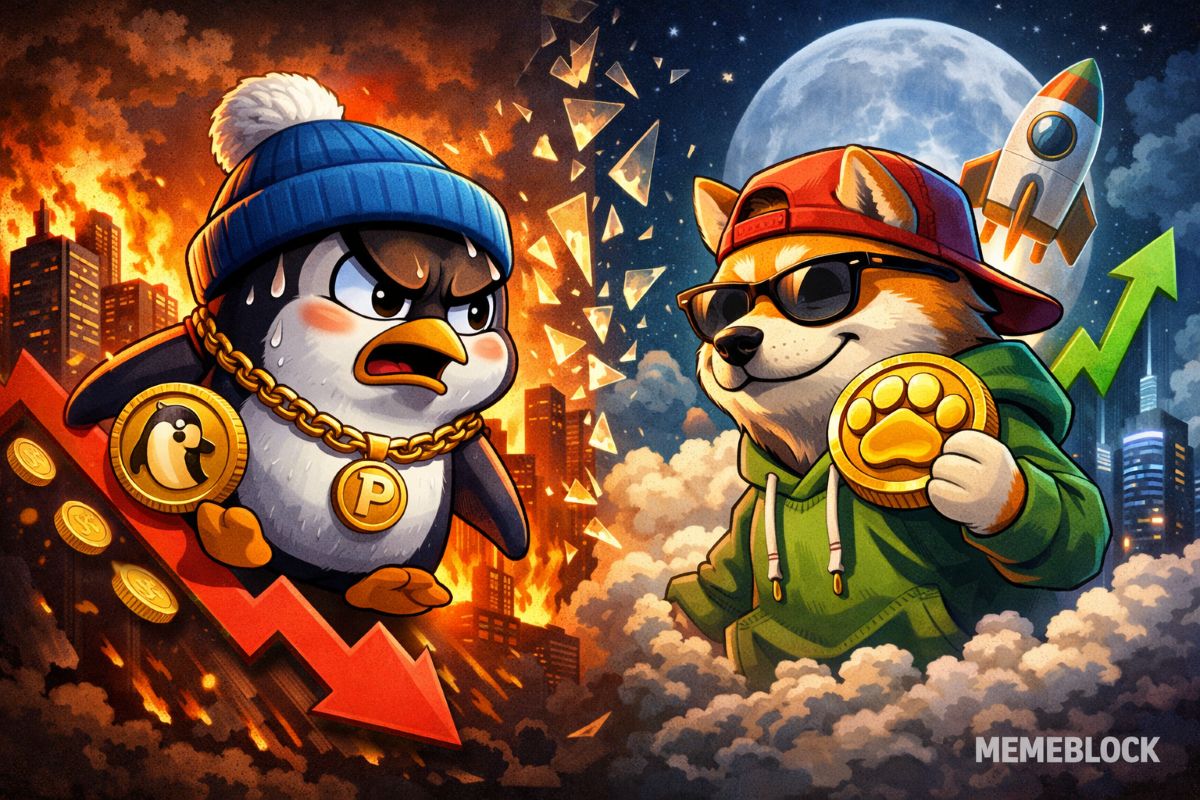
PENGU, the token tied to the Pudgy Penguins ecosystem, saw short-term volatility after its original lead artist publicly announced his departure. The artist revealed plans to launch a rival token called “PAWDGY,” positioning it within the same memecoin and NFT culture space.
Within hours of the announcement, PENGU experienced a noticeable price swing of around 3.4%, driven largely by social media buzz rather than by any fundamental update, such as exchange listings or protocol changes.
In a market where branding and storytelling are key drivers, the exit of a high-profile creative contributor raises serious concerns. Investors are now questioning whether the project can maintain its identity without one of its original artistic architects.
Narrative Clash: PENGU vs PAWDGY
The emergence of PAWDGY introduces direct competition within an already crowded memecoin landscape. Unlike traditional crypto projects, memecoins thrive on community loyalty, viral momentum, and cohesive storytelling.
By launching a rival token, the departing artist is effectively splitting attention and potentially liquidity between two closely related ecosystems. This creates what analysts call a “narrative fork,” where communities divide, and speculative capital follows hype rather than fundamentals.
The artist’s own statement suggested that PAWDGY had been in development for months, indicating this wasn’t a sudden decision but a planned transition.
PENGU’s Broader Market Context
Despite the recent shakeup, PENGU remains one of the more established memecoins with real-world integrations. The token is linked to a broader ecosystem that includes merchandise, gaming, and retail partnerships.
As of April 2026, PENGU trades around $0.006–$0.007, significantly down from its 2025 highs but still maintaining a market capitalization above $400 million.
The project has also expanded beyond NFTs into physical products, with millions of toy units sold and partnerships with major retailers.
However, recent trading data shows increased volatility and speculative activity, with high trading volumes suggesting that traders are reacting quickly to narrative shifts rather than long-term fundamentals.
Community Sentiment Turns Uncertain
Community reaction has been mixed. Some holders view the artist’s departure as a major red flag, fearing dilution of brand identity and creative direction. Others see it as short-term noise in a project that has already proven its ability to evolve beyond its original creators.
Memecoins are uniquely sensitive to sentiment shocks. Unlike utility-driven tokens, their value is heavily tied to perception, memes, and influencer narratives. The introduction of PAWDGY adds a new layer of uncertainty that could either fragment the community or fuel renewed competition and innovation.
What This Means for Memecoin Investors
The PENGU-PAWDGY situation is a textbook example of how quickly things can change in the memecoin sector. Key takeaways for investors include:
- Creator influence matters: Founders and artists play a major role in shaping narrative value.
- Narrative fragmentation is risky: Competing tokens in the same ecosystem can split liquidity.
- Volatility is inevitable: Price swings often follow social sentiment, not fundamentals.
While PENGU still holds strong brand recognition, the coming weeks will be crucial in determining whether it can maintain momentum or lose ground to its emerging rival.