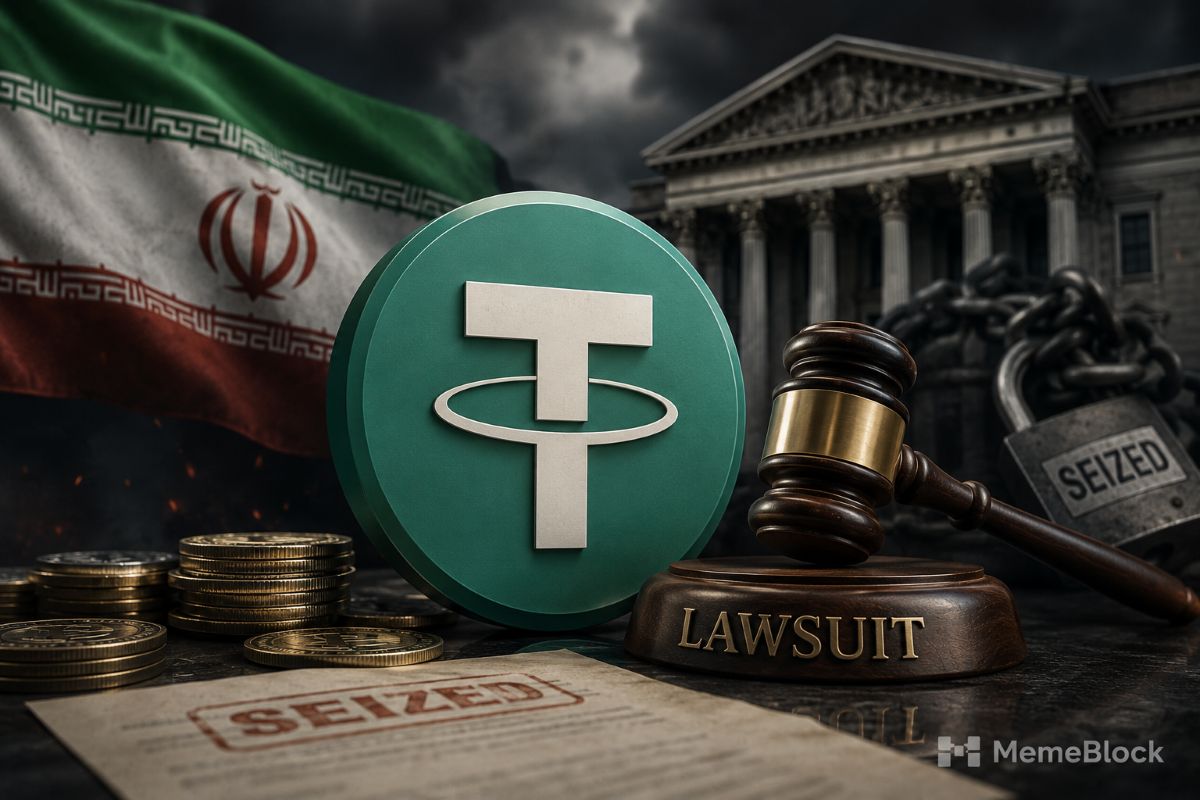
In a major enforcement move, the U.S. Department of Justice (DOJ) has filed to forfeit over US$15.1 million in the stablecoin Tether (USDT) that was stolen by a hacking group aligned with APT38, the North Korean state-sponsored cyber-threat actor.
In parallel, the DOJ announced that five individuals have admitted guilt for their roles in a scheme that aided North Korean IT workers to infiltrate U.S. companies and facilitate the crypto thefts
What Happened
According to the filing, U.S. law-enforcement authorities traced stolen USDT, valued at about $15.1 million, to activity by APT38, which has been linked to multiple high-profile virtual-currency thefts.
The seized funds are part of a broader DOJ campaign to disrupt North Korea’s illegal revenue generation via cybercrimes, including stablecoin heists.
Separately, five defendants (four U.S. citizens and one Ukrainian national) pleaded guilty to conspiring to facilitate the employment of North Korean IT operatives in more than 136 U.S. companies. These operatives then used stolen U.S. identities and company-issued laptops to give the appearance they were U.S.-based, while aiding North Korea in funneling illicit funds.
According to DOJ disclosures, the employment-fraud scheme alone generated about US$2.2 million for North Korean interests and compromised the personal data of more than 18 U.S. citizens.
Why It Matters
- Stable-coin theft & forensic tracing: The seizure of USDT marks a noteworthy instance of law-enforcement tracing crypto assets, even “stable” ones, to sanctioned actors. It highlights the growing capacity of regulators and agencies to disrupt illicit crypto-flow pathways.
- North Korea’s revenue model: North Korea has increasingly turned to cyber-theft and cryptocurrency laundering to circumvent sanctions. This action underscores the United States’ commitment to holding facilitators (not just end-actors) accountable.
- Corporate vulnerability & insider risk: The employment scheme shows how companies, even legitimate ones, can be unwittingly used as fronts for state-sponsored cyber-revenue operations. The infiltration of U.S. firms by masked North Korean workers raises corporate governance and cybersecurity challenges.
- Impact on crypto ecosystem: While the action doesn’t target the broader crypto market, it sends a signal: the infrastructure of crypto assets is subject to regulatory enforcement, even when transactions span pseudonymous or decentralized actors.
Ongoing and Emerging Risks
Despite the seizure, analysts warn that this is just one node in a vast network of North Korean illicit activity in crypto. The stolen assets often get mixed, layered, and laundered through exchanges, mixers, and multiple chain hops. APT38 remains a persistent threat.
For companies, the case shows how remote employment, identity theft, and “ghost” endpoints can be exploited. This points to a heightened need for stronger verification, identity management, and endpoint monitoring.
From a regulatory standpoint, asset-forfeiture actions like these may push exchanges and stable-coin issuers to adopt stricter compliance, AML/KYC controls, and address-tracking capabilities. Crypto users should remain aware that even stablecoins are not immune from regulatory scrutiny when tied to illicit flows.
FAQs
Q1: Who are the North Korean hackers involved?
A1: The hackers are associated with the APT38 group, a North Korea-linked cyber-threat actor known for large-scale cryptocurrency thefts and laundering operations. The DOJ filing attributes the stolen USDT funds to activity conducted by or on behalf of APT38.
Q2: What exactly was seized by the DOJ?
A2: The DOJ has filed to forfeit approximately US$15.1 million worth of USDT – the stablecoin issued by Tether, which was allegedly stolen by the above group and traced into U.S.-seized wallets.
Q3: What is the employment fraud scheme about?
A3: Five individuals pleaded guilty to helping North Korean operatives gain employment at U.S. companies by supplying stolen identities and hosting company laptops at their homes to mask the actual location of the workers. The scheme targeted over 136 U.S. companies and generated about US$2.2 million for North Korea.
Q4: What are the wider implications for the crypto industry?
A4: The case demonstrates that stablecoins and crypto assets are increasingly subject to regulatory and law-enforcement actions when they are tied to illicit activity. It reinforces the need for exchanges, token issuers, and users to maintain strong compliance, transparency, and forensic capabilities.
Q5: Does this mean USDT or other stablecoins are unsafe?
A5: Not necessarily in terms of their design or function, but this case shows that when tokens are used in illicit flows, they can be seized or frozen by authorities. It emphasises that legal/regulatory risk is part of the broader crypto equation, alongside technical risk.
Q6: What should companies and investors learn from this?
A6: Firms should bolster cybersecurity, identity verification, endpoint security, and corporate oversight to prevent being used as fronts in state-sponsored schemes. Investors should recognise that regulatory enforcement is a factor in crypto-asset risk profiles, not just market volatility or tech issues.