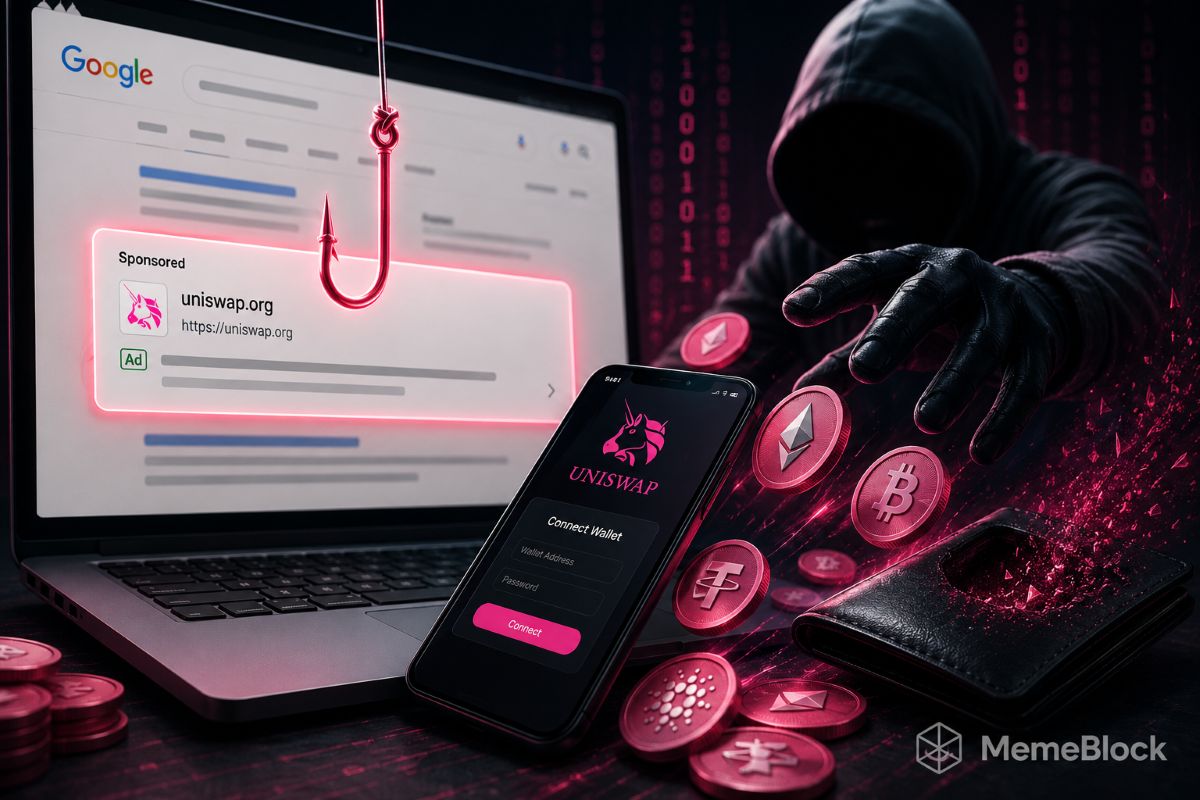
Crypto phishing attacks are once again making headlines after scammers reportedly stole more than $400,000 through fake Google advertisements impersonating decentralized exchange protocol Uniswap. The latest campaign highlights the growing risks facing decentralized finance users. In particular, cybercriminals exploit paid search advertising to lure victims into connecting their crypto wallets to malicious websites.
According to blockchain investigators and cybersecurity groups, attackers used sponsored Google ads that appeared above legitimate search results. These ads directed unsuspecting users to cloned Uniswap websites designed to drain wallet funds.
Fake Uniswap Ads Became a Sophisticated Crypto Wallet Trap
The phishing campaign was first flagged by on-chain analyst “b-block,” who warned that multiple wallets had already been compromised through a fraudulent website mimicking Uniswap’s interface. Blockchain data showed that wallets linked to the scammers held at least 146 ETH, worth roughly $306,000 at the time of reporting. Meanwhile, total estimated losses surpassed $400,000.
Cybersecurity researchers say the scam worked by displaying convincing sponsored ads on Google Search. Victims searching for Uniswap-related services unknowingly clicked on malicious advertisements that closely resembled the official platform.
Once users connected their wallets and approved transactions, the attackers gained permission to transfer crypto assets directly from victim accounts. Security experts noted that these attacks do not require hackers to steal private keys. Instead, users unknowingly authorize malicious smart contracts themselves.
Security Alliance Warns Crypto Phishing Attacks Are Increasing
The nonprofit cybersecurity organization Security Alliance, commonly known as SEAL, reported a significant rise in phishing campaigns tied to Google advertisements earlier this year. The group said it blocked more than 356 malicious ad links connected to crypto scams over the past year.
SEAL researchers explained that scammers either purchase Google ads directly or compromise legitimate advertiser accounts to spread fake crypto links. In many cases, attackers reportedly outbid official crypto companies to secure top placement in sponsored search results.
The organization also revealed that phishing attacks linked to Google ads stole approximately $1.27 million between March 13 and March 30 alone.
Analysts say the scammers are becoming increasingly advanced. Some campaigns use legitimate-looking URLs and hidden malicious code embedded through invisible iframes. This method allows fake pages to bypass automated ad screening systems.
Google Ads Continue Facing Criticism From Crypto Community
The latest phishing incident has reignited criticism against Google for failing to adequately prevent fraudulent crypto advertisements from appearing on its search platform.
Stacy Muur, founder of Web3 marketing agency Green Dots, criticized Google after screenshots of the fake sponsored Uniswap ads circulated online. She argued that phishing links have continued appearing above legitimate websites for years. This trend has persisted despite repeated reports from crypto users.
The crypto industry has witnessed similar attacks in recent years targeting major decentralized finance platforms, NFT marketplaces, and crypto exchanges. Researchers say phishing scams remain one of the biggest threats to retail investors entering the digital asset sector.
Longtail keywords: crypto phishing attacks through Google ads, fake Uniswap website scam, DeFi wallet approval exploit, blockchain phishing security risks, sponsored search crypto fraud.
How Crypto Users Can Avoid Phishing Websites
Cybersecurity experts recommend that crypto users avoid clicking sponsored advertisements when accessing exchanges or DeFi platforms. Instead, users should manually type official URLs or use bookmarked links.
Security firms also advise users to double-check wallet permissions before approving transactions and regularly revoke unnecessary smart contract access through blockchain security tools.
As phishing attacks become more sophisticated, experts warn that user awareness remains the strongest defense against wallet-draining scams targeting the cryptocurrency market.