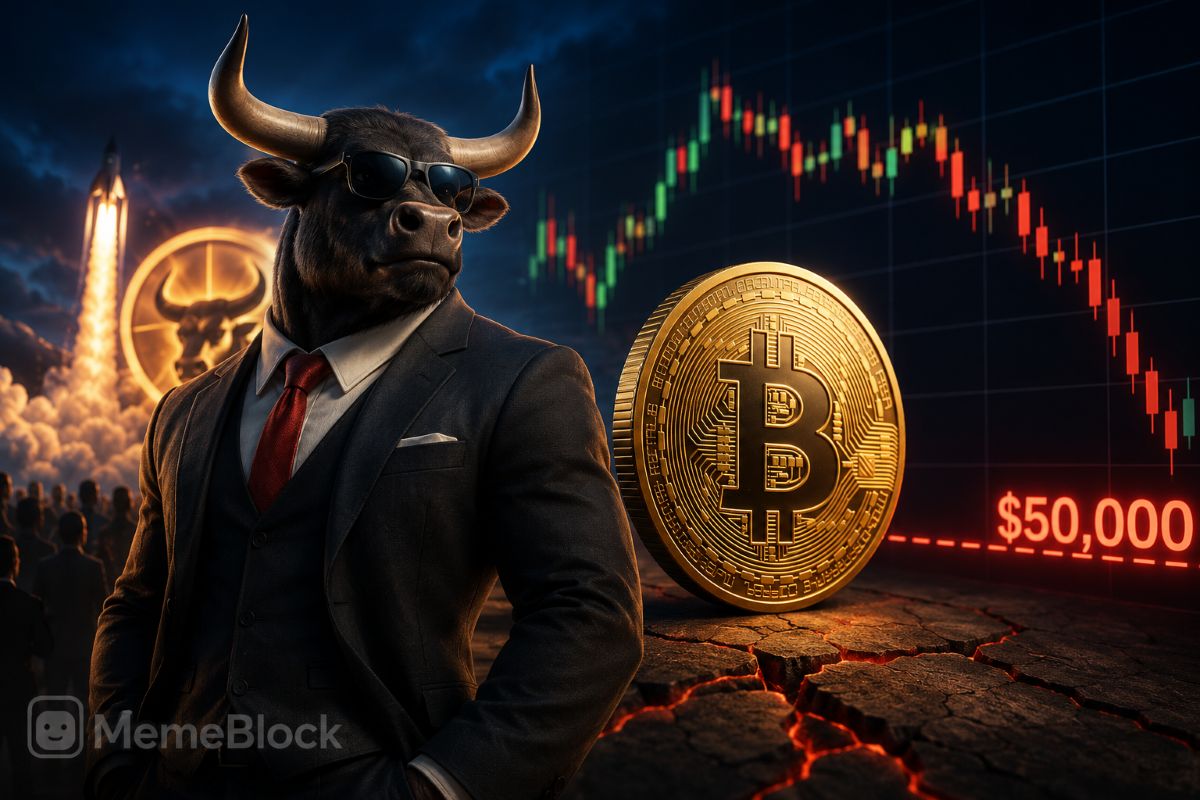
After the latest crypto market crash, traders are pointing fingers at President Donald Trump’s new tariff policies. Analysts, however, say this is classic crypto rationalization behavior, where every dip needs a villain.
When in Doubt, Blame the President (and Tariffs)
The crypto market took a sharp nosedive this week, and in true digital asset fashion, traders didn’t take long to find a scapegoat. This time, it’s President Donald Trump’s recently announced tariff measures, which apparently sent Bitcoin, Ethereum, and half of the meme coin market spiraling down.
Of course, this is crypto, where logic often checks out early. While traditional markets reacted modestly, the crypto crowd collectively decided that tariff fears were the ultimate reason behind their portfolio losses. Because clearly, nothing says “sound economic analysis” like blaming international trade policy for the price of Dogecoin.
Bitcoin Slides, Excuses Rise
Bitcoin dropped nearly 6% in 24 hours, dragging the rest of the market with it. The reason, according to Twitter traders turned macroeconomists, is that Trump’s tariffs on imported tech goods have sparked “economic uncertainty.” Never mind that Bitcoin was already overbought and funding rates were flashing red — no, it was definitely the tariffs.
“Tariffs mean inflation, inflation means volatility, volatility means sell-off,” one anonymous influencer explained in a 37-tweet thread, just before posting a link to his paid trading course.
Meanwhile, Ethereum lost 4%, Solana took a 7% hit, and Pepe Coin fell, well, because that’s what Pepe Coin does.
The Psychology of the Crypto Blame Game
Analysts say the phenomenon isn’t new. Every time crypto tanks, the community scrambles for a narrative, a psychological coping mechanism to explain why their 15-minute TA didn’t predict a 20% drop.
“Crypto traders love external blame,” said a behavioral finance researcher. “It’s always the Fed, the whales, or now Trump’s tariffs. The idea that markets move because of profit-taking or technical resistance? Unthinkable.”
It’s what experts call rationalization behavior, the art of turning every loss into a grand geopolitical theory. When prices go up, it’s innovation. When they go down, it’s tariffs, regulations, or Mercury in retrograde.
Tariffs and Tinfoil Hats: A Match Made in Crypto Heaven
The irony, of course, is that tariffs have virtually zero direct impact on crypto markets. Unlike traditional stocks or commodities, digital assets aren’t tied to imports, exports, or manufacturing. But that hasn’t stopped traders from drawing wild connections.
Some believe tariffs could “hurt tech innovation,” others think they’ll “strengthen the dollar,” and a few insist it’s all part of a secret “deep state plan to suppress Bitcoin.”
Still, amid the chaos, opportunists are thriving. Influencers are already pitching “anti-tariff trading strategies,” Telegram groups are hyping “safe haven” altcoins, and YouTube analysts are posting videos titled “TRUMP BROKE BITCOIN?! (MUST WATCH).”
Because in crypto, nothing sells better than fear, especially when it’s wrapped in politics.
Meanwhile, Whales Keep Accumulating
Ironically, while retail traders panic and tweet through it, whales have been quietly buying the dip. On-chain data shows a sharp increase in large Bitcoin wallet activity since the sell-off began, suggesting the smart money sees tariffs as… irrelevant.
As one analyst put it, “The market doesn’t care about tariffs, traders just need a reason to justify their emotions.”
FAQs
1. Did Trump’s tariffs cause the crypto market crash?
No. While tariffs may impact broader markets, there’s no direct link between trade policy and crypto price movements.
2. Why do crypto traders keep blaming external factors?
It’s a form of rationalization — an emotional response to losses that helps investors cope with volatility.
3. How much did Bitcoin drop after the tariff announcement?
Bitcoin fell around 6%, though analysts attribute the decline to overleveraging and profit-taking, not tariffs.
4. Are whales actually buying the dip?
Yes. On-chain data shows increased whale accumulation following the sell-off, suggesting confidence in long-term fundamentals.
5. What should investors do during volatile periods?
Avoid panic-selling, ignore social media hysteria, and focus on fundamentals rather than politics.