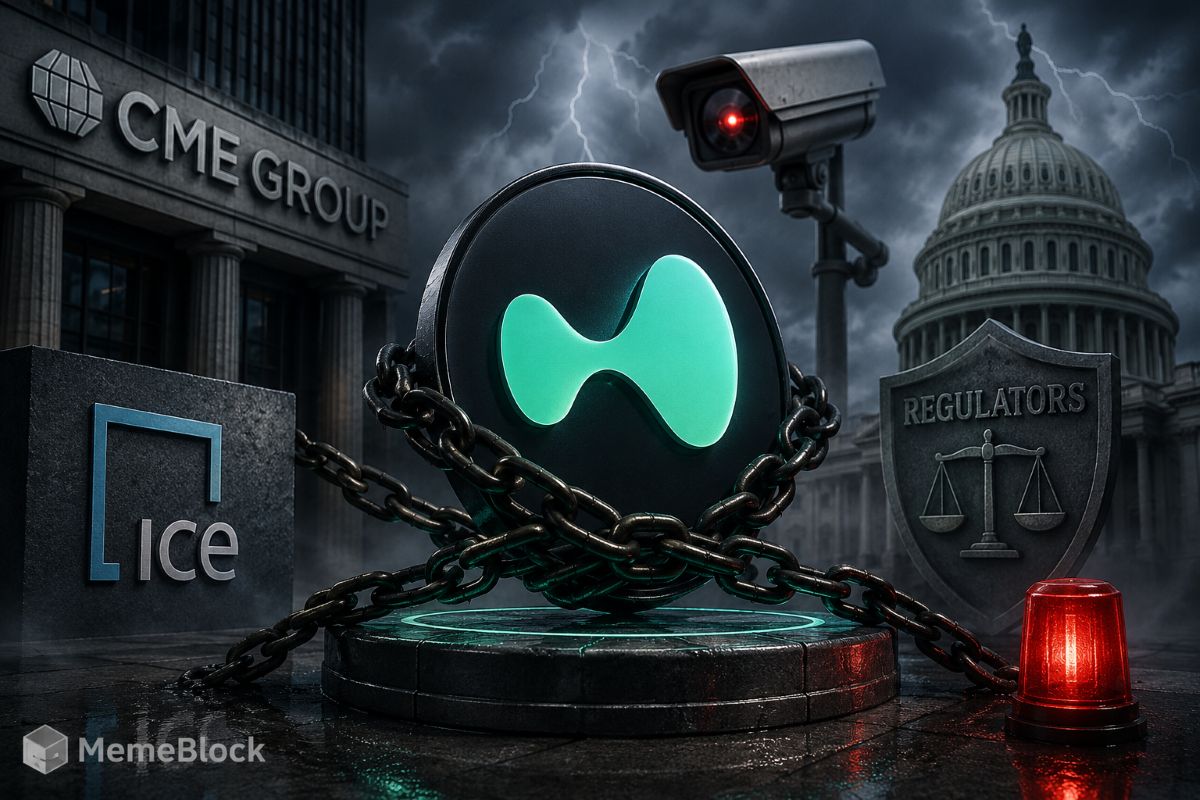
Two of the world’s largest derivatives operators, CME Group and Intercontinental Exchange (ICE), are reportedly increasing pressure on U.S. regulators to examine decentralized trading platform Hyperliquid more closely. This is raising concerns about possible market manipulation and sanctions evasion within the fast-growing crypto derivatives sector.
The push comes as regulators in Washington intensify scrutiny of decentralized finance platforms. These platforms offer perpetual futures and leveraged trading products without traditional compliance structures. Additionally, industry executives and policymakers are becoming increasingly worried that offshore crypto venues could expose institutional investors to legal and financial risks. This trend could also undermine confidence in regulated U.S. markets.
Hyperliquid Faces Growing Regulatory Attention
Hyperliquid has rapidly emerged as one of the most active decentralized perpetual futures exchanges in crypto markets. The platform has attracted traders seeking high leverage, low fees, and permissionless access to digital asset derivatives.
However, the exchange’s decentralized structure has also sparked concerns among major traditional finance firms. According to market participants familiar with the discussions, executives tied to CME and ICE believe regulators should examine whether platforms like Hyperliquid provide sufficient protection against wash trading and spoofing. Furthermore, they question whether these platforms offer protection against cross-border sanctions violations.
The concerns reflect a broader debate surrounding decentralized exchanges, commonly called DEXs, which operate without centralized intermediaries. Unlike regulated futures exchanges in the United States, many DeFi platforms allow users to trade anonymously through crypto wallets. As a result, compliance and identity verification are more difficult.
Financial regulators worldwide have warned that anonymous blockchain-based trading systems may create opportunities for illicit financing or sanctions evasion if monitoring systems are weak. Moreover, academic research published in recent months has highlighted vulnerabilities tied to decentralized markets and on-chain sanctions enforcement.
Why CME and ICE Are Concerned
For traditional exchanges like CME and ICE, the rise of decentralized perpetual trading platforms represents both a competitive threat and a regulatory challenge.
CME operates one of the world’s largest regulated crypto futures marketplaces, offering Bitcoin and Ethereum derivatives to institutional investors. ICE, the parent company of the New York Stock Exchange, has also expanded its digital asset ambitions through crypto-related infrastructure and clearing services.
Both firms operate under strict U.S. regulatory frameworks that require anti-money laundering controls and customer identification procedures. These frameworks also require surveillance systems and reporting standards. Executives within the regulated derivatives industry argue that decentralized exchanges should face similar oversight if they continue attracting significant trading volumes.
Market analysts say regulators are particularly focused on whether highly leveraged decentralized products could distort broader crypto price discovery. In addition, they worry these products could allow manipulation during periods of market volatility.
The issue has become increasingly important as institutional capital flows deeper into digital assets following the approval of spot Bitcoin ETFs. There is also concern as regulated crypto investment products expand in the United States.
Sanctions Evasion Risks Draw Attention
One of the biggest concerns surrounding decentralized exchanges involves sanctions compliance.
Blockchain researchers and regulators have repeatedly warned that decentralized protocols can sometimes be exploited by sanctioned entities attempting to move funds across borders. While blockchain transactions are publicly visible, identifying the individuals behind wallet addresses remains difficult without strong compliance systems.
Recent academic studies examining blockchain sanctions enforcement found that some sanctioned users managed to move assets before restrictions could be fully enforced. As a result, researchers argued that decentralized transaction ordering systems can create loopholes that sophisticated actors may exploit.
These findings are fueling calls from parts of the traditional financial industry for stricter oversight of decentralized derivatives platforms operating at a global scale.
U.S. Crypto Regulation Enters Critical Phase
The growing scrutiny surrounding Hyperliquid arrives at a pivotal moment for U.S. crypto regulation.
Lawmakers and federal agencies are actively debating how decentralized finance platforms should be supervised, especially as crypto trading volumes continue rising worldwide. In the coming years, regulators are expected to focus heavily on market integrity, customer protection, and anti-money laundering standards throughout 2026.
Industry observers believe the debate could shape the future relationship between decentralized finance and traditional financial institutions.
Supporters of decentralized exchanges argue that open blockchain systems increase transparency and reduce reliance on centralized intermediaries. Critics counter that the absence of robust compliance controls could create systemic risks as institutional adoption accelerates.
For now, the pressure from CME and ICE signals that major Wall Street-backed exchanges want regulators to establish clearer rules. This should happen before decentralized derivatives platforms become even larger players in the global financial system.