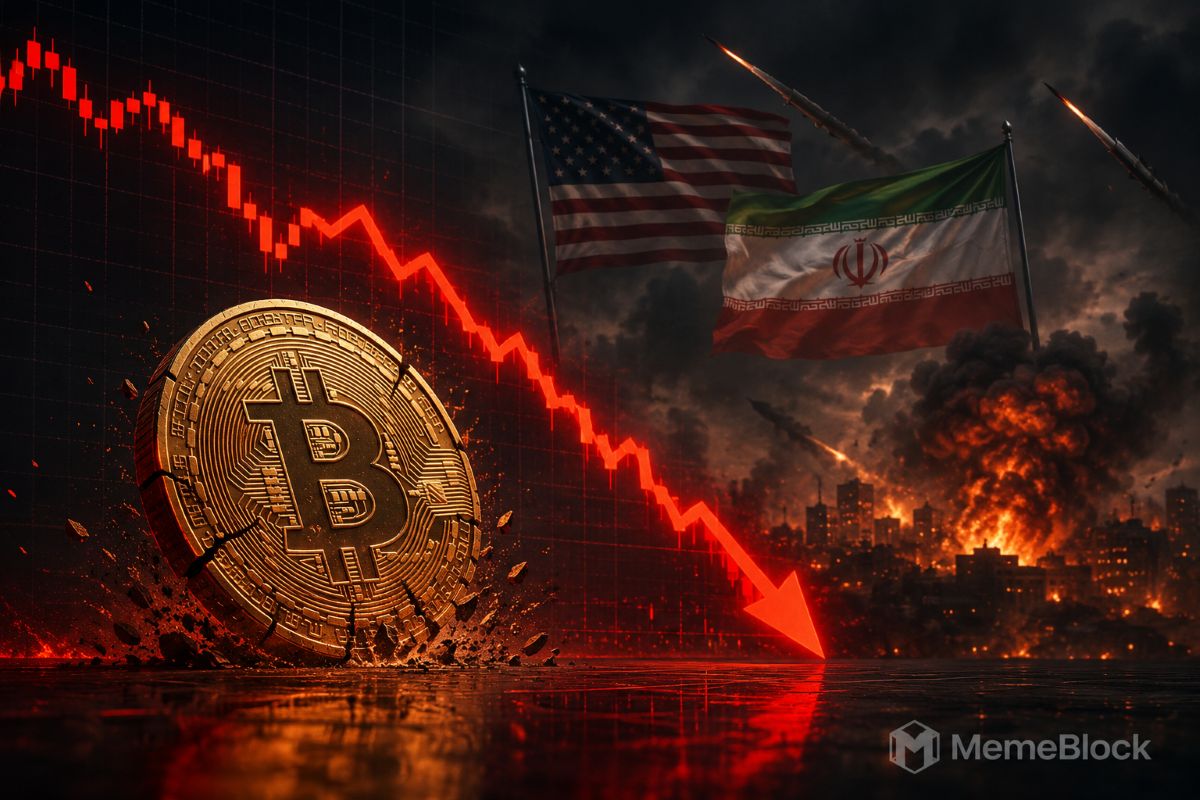
Bitcoin (BTC) fell to around $59,700 on Monday, extending its recent weakness even as global equity markets gained following reports of easing tensions between the United States and Iran. While investors welcomed renewed diplomatic talks that boosted stock futures and weighed on oil prices, cryptocurrencies failed to attract similar buying interest.
The world’s largest cryptocurrency traded roughly 0.3% lower on the day and remained nearly 7% down over the past week. Ethereum showed limited strength with modest gains, while Solana outperformed most major digital assets. XRP and Dogecoin, however, continued to trade under selling pressure.
The latest price action highlights a growing disconnect between traditional financial markets and cryptocurrencies, with Bitcoin struggling to regain momentum despite improving geopolitical conditions.
Iran De-escalation Boosts Stocks, Not Bitcoin
Investor sentiment improved after reports indicated that the United States and Iran had agreed to halt military strikes and resume diplomatic discussions in Qatar over regional security and the Strait of Hormuz. The news lifted U.S. stock futures, while oil prices retreated as fears of supply disruptions eased.
Ordinarily, easing geopolitical tensions encourages investors to move toward higher-risk assets, including cryptocurrencies. This time, however, Bitcoin remained largely unchanged.
Market analysts believe crypto investors are no longer reacting strongly to geopolitical headlines after several short-lived rallies over the past few weeks. Instead, traders appear to be waiting for stronger macroeconomic signals before increasing exposure to digital assets.
Federal Reserve Expectations Continue to Pressure Crypto
Beyond geopolitical developments, investors remain focused on U.S. monetary policy.
The cryptocurrency market has been weighed down by expectations that the Federal Reserve could keep interest rates elevated for longer if inflation remains persistent. Higher interest rates typically reduce liquidity and make risk assets like Bitcoin less attractive.
Market participants are closely watching upcoming U.S. inflation data, particularly the Personal Consumption Expenditures (PCE) index, for clues about the Fed’s next policy move. A softer inflation reading could revive expectations of monetary easing and potentially support Bitcoin prices.
Institutional Demand Remains Weak
Institutional participation also continues to disappoint.
Spot Bitcoin ETFs have experienced substantial capital outflows throughout June, reflecting cautious sentiment among large investors. Rather than buying the recent dip, many institutions have preferred to reduce exposure amid uncertainty surrounding global growth, monetary policy, and crypto-specific risks.
Without renewed institutional buying, Bitcoin has struggled to establish a sustainable recovery despite several attempts to reclaim the $60,000 level.
Analysts note that improving ETF inflows will likely be necessary before Bitcoin can build meaningful upside momentum.
Technical Outlook Shows Key Support in Focus
From a technical perspective, Bitcoin remains near an important support zone around $60,000.
Analysts have identified the Fibonacci 61.8% retracement level as a critical area for buyers. Holding above this region could help stabilize prices, while a decisive break below may trigger additional selling pressure and increase the risk of further declines.
Although Bitcoin briefly recovered toward the $60,000 mark after touching intraday lows, trading volumes remain relatively subdued, suggesting buyers are still hesitant.
What Bitcoin Investors Should Watch This Week
Several catalysts could determine Bitcoin’s next major move.
Investors will closely monitor progress in U.S.-Iran negotiations, upcoming U.S. inflation data, Federal Reserve commentary, and Bitcoin ETF flow reports. Positive developments across these areas could improve confidence and encourage fresh capital into digital assets.
Conversely, continued ETF outflows or stronger-than-expected economic data supporting higher interest rates may keep Bitcoin under pressure in the near term.
For now, Bitcoin continues to trade defensively while traditional markets respond more positively to easing geopolitical risks. Until macroeconomic uncertainty fades and institutional demand returns, cryptocurrency markets may continue to lag behind broader financial assets despite improving global sentiment.