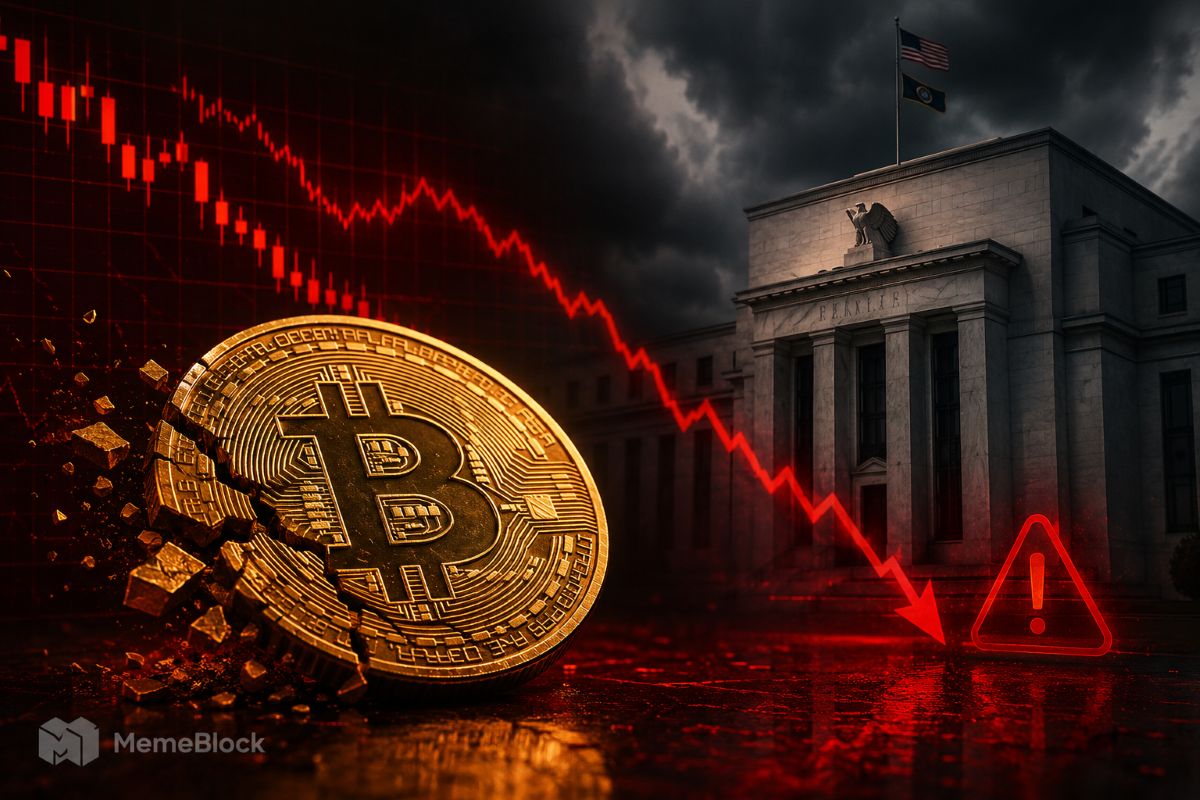
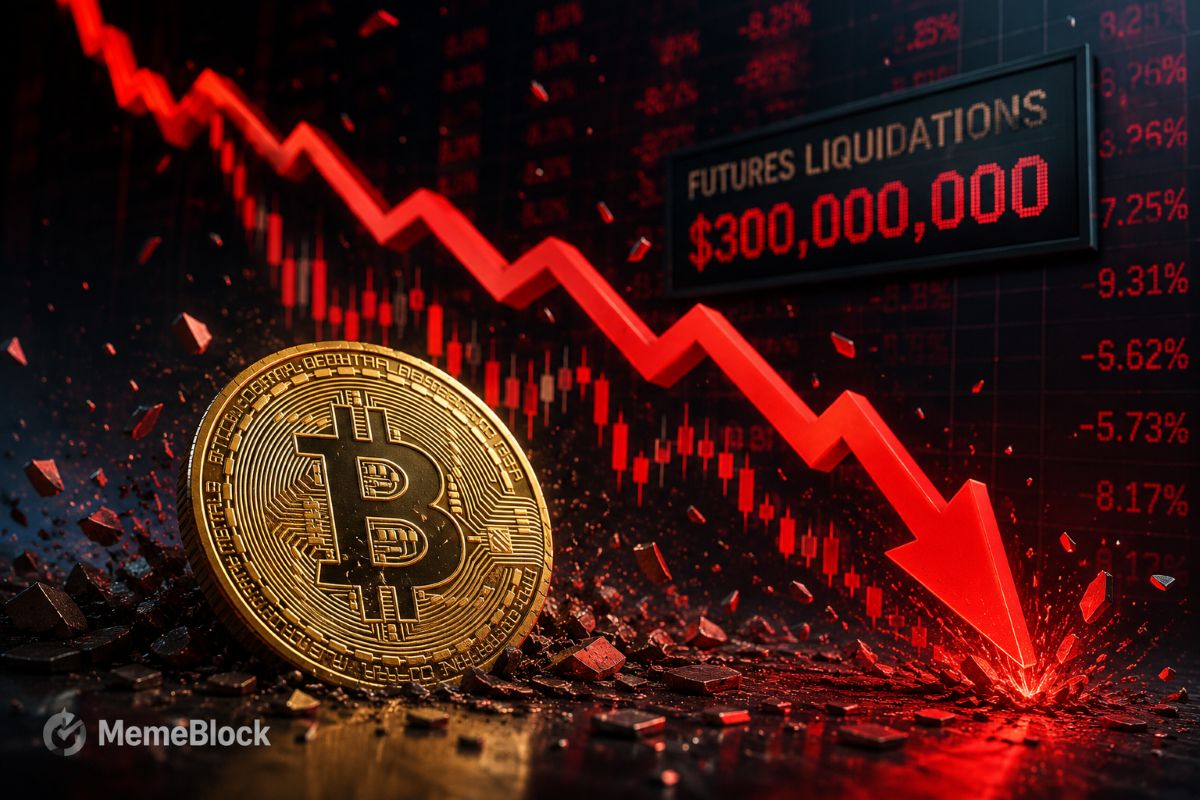
The price of Bitcoin continues to experience renewed downward pressure despite earlier optimism. As of early November 2025, Bitcoin has dropped below US$95,000, a significant slide from recent highs.
Below are the major drivers behind this repeated decline
1. Uncertainty over US interest-rate policy and macro-economics
A major reason for Bitcoin’s slide is the lack of clarity around the policy direction of the Federal Reserve. Market participants had earlier expected a December rate cut, which would typically support risk assets such as cryptocurrencies. But now the likelihood of a cut has fallen to roughly 50%.
With higher interest rates or the expectation thereof, investors tend to shift away from “risk-on” assets like Bitcoin to safer alternatives, reducing demand and placing price pressure.
2. Risk-asset sell-off & correlation with tech stocks
Bitcoin is behaving increasingly like a risk-asset rather than a safe-haven asset such as gold. When technology stocks and higher‐risk markets fall, Bitcoin often falls too. For example, a broad technology slump has weighed on crypto markets overall.
This correlation means that even if there’s nothing specific wrong with Bitcoin’s fundamentals, the broader sentiment decline drags it down.
3. Lack of fresh catalyst and an “information vacuum”
Analysts point to a lack of compelling new positive catalysts for Bitcoin. Coupled with delayed or missing US economic data (for instance during a government shutdown), this creates what one firm described as an “information vacuum” that suppresses investor confidence.
Without clear drivers of upside, the default can become “sell first, ask questions later.”
4. Profit-taking, miner and ETF flows
After recent highs, some long-term holders and miners may be taking profits, which increases supply in the market. Also, outflows from Bitcoin-linked exchange-traded funds (ETFs) or large sell orders can amplify the downward move.
Such flows put additional pressure on price even if no major new negative news emerges.
5. Technical support levels and possible downside targets
With the break below major support zones (e.g., around US $100,000), some analysts warn of potential downside to US $84,000 or lower if sentiment deteriorates further.
Technical breakdowns often trigger stop-losses and algorithmic selling, which can accelerate a decline.
Conclusion
In sum, Bitcoin’s repeated decline is less about one single dramatic event and more about a convergence of macro-economic headwinds, weak investor sentiment, profit-taking and technical breakdowns. Until there is a clear positive catalyst, such as a rate cut, favourable regulation or fresh institutional demand, the risk remains that Bitcoin may face further downside or at least remain range-bound for a period.
FAQs
Q1: Is the Bitcoin price falling because of regulation?
While regulatory uncertainty remains a factor for the broader crypto market, the most immediate drivers of the recent fall are macro-economics and sentiment, rather than a specific regulation collapse.
Q2: Does a rate cut by the Fed guarantee Bitcoin will rise?
Not necessarily, a rate cut may improve risk-asset sentiment, but Bitcoin’s price still depends on other factors like flows, technicals and market confidence. It is a facilitator, not a guarantee.
Q3: Can Bitcoin rebound quickly from this fall?
Yes, if a strong positive catalyst arrives (for example, a major institutional investment announcement or a favourable regulatory change), Bitcoin could rally. However, timing and magnitude are uncertain.
Q4: Should I buy Bitcoin now while the price is falling?
That depends on your risk tolerance and investment horizon. Many analysts caution that the decline may not yet be over and that buying while sentiment remains weak can carry risks.
Q5: What level could Bitcoin fall to if the current trend continues?
Some analysts are citing potential downside targets around US $84,000 or even lower if sentiment does not improve.
Q6: Does the price fall mean Bitcoin is a bad asset long-term?
Not necessarily. Price volatility is a characteristic of Bitcoin. Long-term value depends on adoption, regulation, network effects and macro-economics. A short-term decline doesn’t negate its long-term relevance.