Institutional demand for tokenized assets, real-world assets (RWAs), and blockchain-based securities surged in 2026 as banks, hedge funds, and asset managers accelerated their digital asset strategies. With tokenized treasuries, private credit, and on-chain securities becoming mainstream, institutional investors are now prioritizing secure custody infrastructure capable of meeting compliance, settlement, and regulatory standards.
The global crypto custody market is projected to expand rapidly through the decade as institutional participation increases across North America, Europe, the Middle East, and Asia.
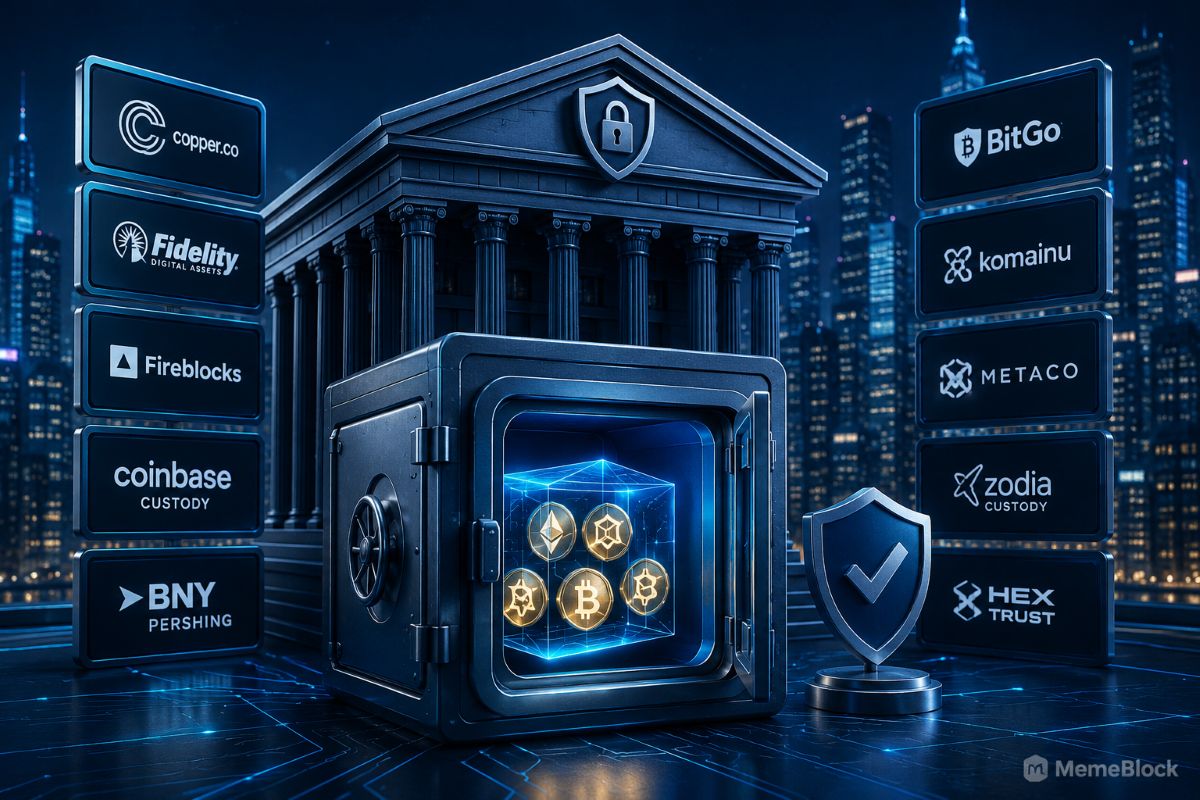
Here are the top 10 institutional custody solutions for tokenized assets and RWAs in May 2026.
1. Fireblocks
Fireblocks remains one of the most widely adopted institutional digital asset custody providers in 2026. The platform combines MPC wallet infrastructure, treasury automation, tokenization support, and settlement rails for banks and asset managers.
Its infrastructure is heavily used by institutional trading firms and tokenization platforms handling tokenized bonds, securities, and stablecoin settlements. Fireblocks also expanded integrations with compliance providers and regulated financial institutions this year.
2. BitGo
BitGo continues to dominate the U.S. institutional custody market thanks to its qualified custody services, insurance coverage, and regulatory positioning. The company gained additional attention after its successful 2026 IPO push.
Institutional investors favor BitGo for secure cold storage, tokenized asset management, and multi-signature security architecture. Its expanding RWA custody services also positioned the firm as a major player in tokenized securities infrastructure.
3. Anchorage Digital
Anchorage Digital strengthened its leadership position among regulated digital asset banks in 2026. As one of the few federally chartered crypto banks in the United States, Anchorage appeals strongly to institutions seeking regulatory clarity for tokenized securities custody.
The platform supports staking, governance, treasury management, and institutional-grade settlement for RWAs and blockchain-based financial products.
4. Copper
Copper became increasingly important for hedge funds and trading firms seeking off-exchange collateral management and secure custody solutions. Its ClearLoop settlement system gained adoption among institutional market participants managing tokenized securities and digital collateral.
The company also expanded its footprint across the Middle East and Europe amid growing institutional tokenization activity.
5. Coinbase Custody
Coinbase Custody remains a preferred choice for large institutions entering tokenized finance. Backed by Coinbase’s regulatory infrastructure and global liquidity network, the platform offers secure cold storage, governance participation, and institutional reporting features.
Many tokenized treasury and stablecoin issuers rely on Coinbase Custody for regulated digital asset safekeeping.
6. Fidelity Digital Assets
Fidelity Digital Assets continued expanding into tokenized fixed-income products and institutional blockchain settlement in 2026. Traditional financial institutions increasingly prefer Fidelity because of its established reputation in conventional asset management.
Its custody infrastructure now supports Bitcoin, Ethereum, tokenized securities, and institutional crypto treasury operations.
7. Hex Trust
Hong Kong-based Hex Trust emerged as one of Asia’s leading regulated custodians for tokenized assets and RWAs. The company expanded aggressively across Dubai and Singapore as regulatory frameworks matured in both regions.
Institutions use Hex Trust for secure wallet infrastructure, staking, and tokenized securities management.
8. Komainu
Backed by major financial institutions, Komainu positioned itself as a trusted institutional custodian for banks and sovereign investors. Its hybrid model combines traditional finance governance with blockchain-native security architecture.
Komainu’s growth accelerated alongside increased institutional demand for compliant tokenized asset infrastructure in Europe and the Middle East.
9. Cobo
Cobo gained traction among institutional allocators seeking scalable MPC custody and staking infrastructure. The platform expanded support for Ethereum ecosystems, Layer-2 networks, and tokenized treasury products.
Its institutional-grade wallet architecture remains popular among crypto-native funds and Asian financial firms.
10. Taurus
Swiss-based Taurus continued strengthening its presence among European banks exploring tokenized securities issuance and custody. The company provides tokenization infrastructure, secure custody, and digital asset settlement services tailored for regulated financial institutions.
Taurus benefited significantly from Europe’s evolving MiCA regulatory framework and growing tokenization adoption by private banks.
Why Institutional Crypto Custody Matters in 2026
The institutional custody sector has become the backbone of the tokenized asset economy. Custodians now provide much more than cold storage. Modern platforms support compliance automation, governance, staking, settlement, token issuance, and interoperability with traditional financial systems.
As tokenized treasuries, private credit, and blockchain securities continue gaining traction, institutional custody providers are expected to play a central role in the future of global finance.