AI startup HeyElsa AI has unveiled its next-generation DeFAI agents, autonomous, self-executing artificial intelligence systems designed to interact directly with decentralized finance (DeFi) protocols and perform on-chain transactions without human intervention. The launch marks a significant leap forward in the fusion of AI and blockchain, enabling programmable agents that can analyze, execute, and optimize complex DeFi strategies in real time.
The move positions HeyElsa AI at the forefront of a rapidly emerging field where artificial intelligence not only interprets blockchain data but also acts on it autonomously, bridging the gap between predictive analytics and operational execution.
DeFAI: Decentralized Finance Meets Autonomous Intelligence
HeyElsa’s DeFAI (Decentralized Financial AI) agents operate as smart-contract-driven entities that can manage digital assets, rebalance liquidity pools, and execute yield farming or hedging strategies, all based on data-driven decision models. These agents use a hybrid architecture combining large language models (LLMs) for reasoning and reinforcement learning for adaptive market behavior.
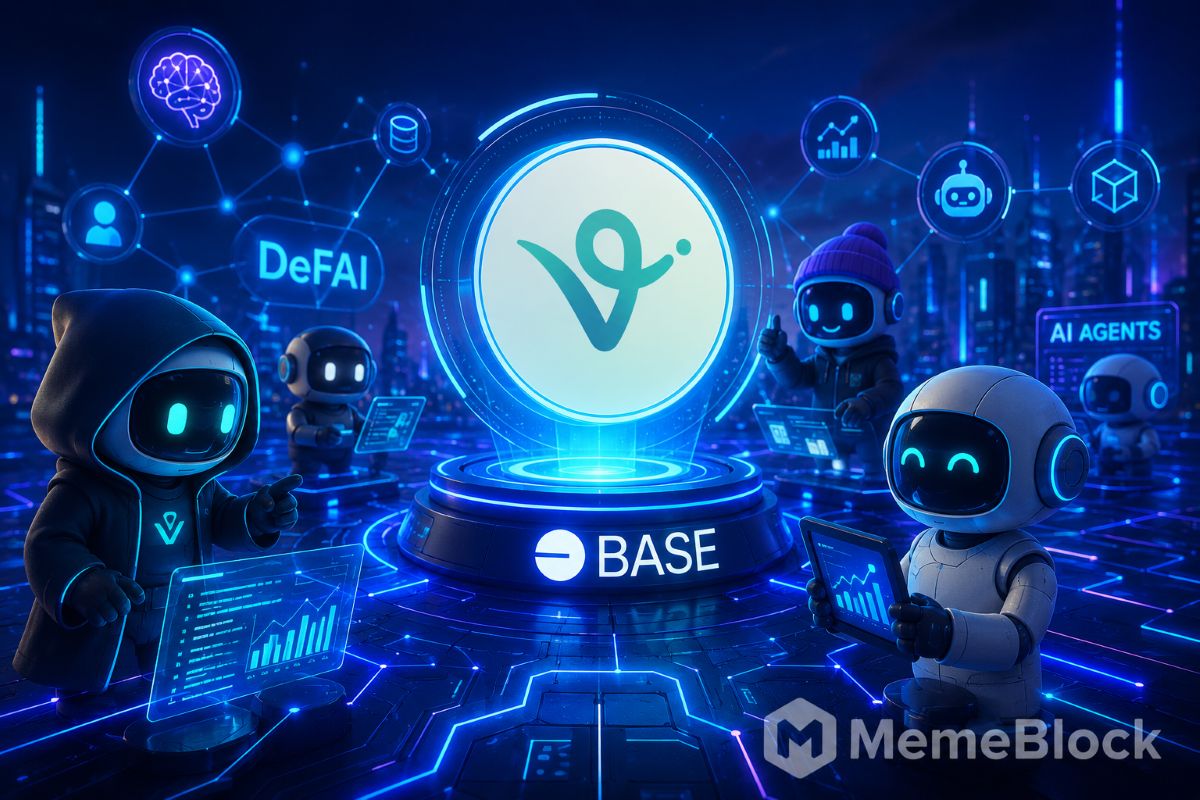
Each DeFAI agent connects to Solana, Ethereum, and Base networks, leveraging on-chain data oracles and cross-chain messaging protocols to ensure seamless interoperability across ecosystems.
According to HeyElsa’s CEO, Dr. Mira Chen, this technology represents “the evolution of DeFi into self-governing, intelligent systems that operate at machine speed with human-like adaptability.”
“Our goal is to give decentralized protocols their own intelligence layer,” said Chen. “DeFAI agents can execute trades, monitor liquidity, hedge exposure, and interact with smart contracts autonomously, all while staying fully transparent and on-chain.”
How It Works
HeyElsa AI’s architecture integrates three functional layers:
- Perception Layer — The agent continuously scans real-time blockchain data, liquidity pool metrics, and oracle feeds using an AI-powered analytics engine.
- Cognitive Layer — It uses machine learning and large language reasoning models to predict market shifts, assess risk, and make execution decisions.
- Execution Layer — The agent triggers on-chain actions, from swapping tokens to adjusting leverage or staking collateral, through smart contracts validated by multisig or DAO oversight.
These DeFAI agents operate under customizable governance policies, ensuring that institutional users can define constraints such as gas fee budgets, slippage limits, and exposure thresholds.
Early pilot programs have seen the agents outperform manually executed yield strategies by 27% while maintaining lower downside volatility, according to internal testing data shared by HeyElsa.
The Rise of Autonomous On-Chain Execution
The development of HeyElsa’s DeFAI agents comes amid growing interest in AI-automated decentralized finance, a trend driven by the need for scalable and emotion-free execution in volatile crypto markets. Traditional DeFi strategies often require continuous monitoring and human adjustment, tasks that are both resource-intensive and prone to error.
By automating these operations, DeFAI agents can make split-second, data-backed decisions, reducing latency and improving capital efficiency. Analysts predict that autonomous DeFi infrastructure could soon become a standard feature across yield protocols, decentralized exchanges (DEXs), and liquidity aggregators.
“AI agents that can act on-chain are the logical next step,” said a DeFi researcher at Delphi Digital. “We’ve seen AI used for trading signals and analytics, now it’s executing trades, managing liquidity, and interacting directly with DeFi protocols in real time.”
Security and Transparency by Design
To address concerns about automation risk, HeyElsa AI has incorporated auditable smart contracts and open governance controls into every DeFAI deployment. Each agent’s transaction history, logic parameters, and model updates are recorded on-chain for full transparency.
Furthermore, HeyElsa is developing decentralized insurance modules that will compensate users in the event of agent misexecution, similar to smart contract coverage in traditional DeFi ecosystems.
Dr. Chen added,
“Our mission is to build trust in autonomous intelligence. Every DeFAI agent is as auditable as a smart contract, you can see exactly what it does, why it does it, and when it acts.”
The Future: AI-Powered DAOs and DeFAI Networks
Looking ahead, HeyElsa plans to launch a DeFAI Network, where autonomous agents will collaborate across multiple blockchains, forming AI-powered decentralized autonomous organizations (DAOs). These AI-driven collectives could manage liquidity, rebalance treasuries, and even vote on governance proposals, signaling the next phase of intelligent decentralized economies.
The company also hinted at partnerships with several major DeFi protocols and Layer-2 networks to integrate DeFAI modules for liquidity optimization and automated governance execution by early 2026.
As AI and DeFi continue to converge, HeyElsa’s innovation could mark the beginning of a new financial paradigm, one where machine intelligence doesn’t just analyze blockchain systems but becomes an active, autonomous participant in them.
FAQs
Q1: What are HeyElsa DeFAI agents?
They are AI-powered, on-chain autonomous systems capable of executing DeFi transactions such as swaps, staking, and rebalancing without human intervention.
Q2: How are DeFAI agents different from bots?
Unlike simple trading bots, DeFAI agents use machine learning, reasoning models, and on-chain governance parameters to make adaptive, transparent decisions.
Q3: Which blockchains do they support?
DeFAI agents currently operate on Solana, Ethereum, and Base, with plans for expansion to Polygon and Arbitrum.
Q4: How is risk managed?
All actions are governed by predefined smart contract parameters, audit trails, and optional DAO-based oversight for safety and transparency.
Q5: What’s next for HeyElsa AI?
The company plans to launch its DeFAI Network in 2026, connecting AI agents into collaborative, self-governing DeFi ecosystems.