A fast-rising crypto artificial intelligence startup has raised $15 million in fresh funding after publicly claiming its flagship model is “four times better” than leading AI systems such as ChatGPT and Grok. The funding round attracted notable investors from the blockchain, AI, and digital infrastructure sectors, highlighting the accelerating convergence of Web3 and advanced machine learning.
The new capital will help the startup, still operating partially in stealth, scale its model training, expand compute capacity, and accelerate deployment of decentralized AI products.
Aiming to Outperform Mainstream AI Models
The team behind the project says its model delivers significant improvements in:
- Speed of inference
- Accuracy in reasoning tasks
- Low-latency performance for real-time data
- On-chain analytics and crypto-market prediction
- Decentralized AI integration
According to the founders, the model was designed specifically for blockchain-native environments, enabling AI systems to process crypto data, smart-contract events, and decentralized-network signals more efficiently than traditional large language models.
Why Crypto-Native AI Is Gaining Ground
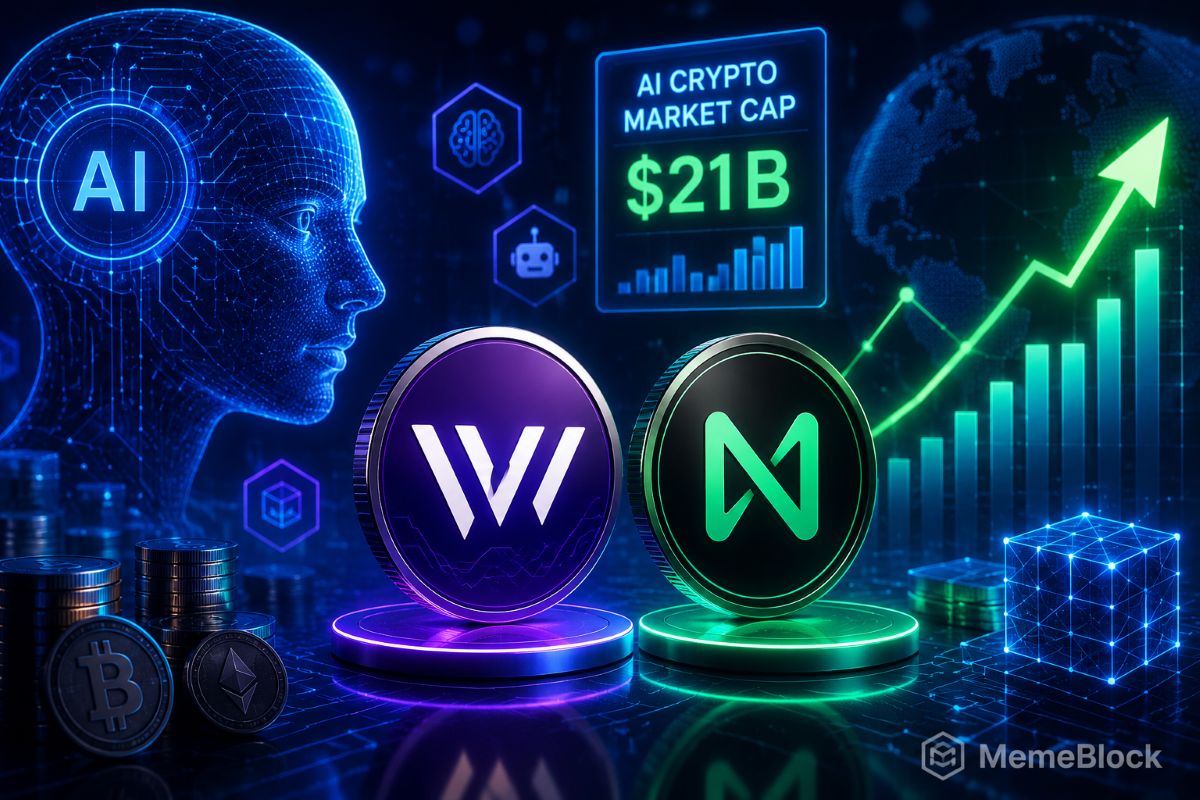
The rise of decentralized AI has become a defining trend in 2025, driven by demand for transparent models, distributed computation, and verifiable data sources. Crypto AI projects claim several advantages over centralized AI services:
- Permissionless access to training data
- Decentralized compute networks are reducing reliance on Big Tech
- Token-based incentive structures for contributors
- On-chain verifiability of model outputs
- Privacy-preserving computation using cryptography
This latest startup aims to combine these advantages with high-performance infrastructure, making it appealing to investors seeking exposure to AI projects that integrate blockchain economics.
Funding Round Signals Investor Confidence
The $15 million raise comes amid strong institutional interest in AI-crypto hybrids. Investors cite the project’s:
- Rapid model-performance milestones
- Strong engineering team
- Early traction among decentralized applications
- Potential for enterprise-grade integrations
- Ability to serve both AI and Web3 ecosystems
Several venture firms specializing in AI, digital identity, and decentralized infrastructure participated in the round, marking one of the largest early-stage raises in the blockchain-AI category this quarter.
Use Cases: From Trading Bots to Smart-Contract Agents
The startup says its AI model can support a wide range of crypto-native use cases, including:
- Real-time trading assistants
- On-chain fraud detection
- Automated smart-contract audits
- DeFi strategy optimization
- AI-powered governance proposals
- Autonomous agent networks operating on L1 and L2 chains
These applications could help shape the next wave of AI-enabled Web3 innovation, where intelligent agents interact directly with blockchain systems without centralized intermediaries.
Roadmap: Scaling Models and Expanding Token Utility
With the new funding, the company plans to:
- Launch a public version of its AI model
- Open decentralized compute nodes to external contributors
- Expand training datasets with on-chain signals
- Introduce a token-based reward system for model improvement
- Build enterprise APIs for fintech and crypto-infrastructure providers
A token launch may also be on the horizon, which could power governance, compute access, and developer incentives.
Market Outlook: Competition Intensifies
The startup enters an increasingly competitive landscape as decentralized AI gains momentum globally. Projects across Web3 are racing to build AI systems that outperform centralized incumbents while offering transparency and token-powered community ownership.
If the startup’s performance claims hold up during public testing, analysts say it could become a major player in both AI and crypto-infrastructure markets.
FAQs
Q: How much funding did the crypto AI startup raise?
It secured $15 million in a new investment round.
Q: What performance claims did the company make?
The startup says its model is “four times better” than leading AI systems like ChatGPT and Grok.
Q: What makes the model different?
It is designed natively for blockchain environments, enabling real-time, on-chain data processing and decentralized-compute compatibility.
Q: What will the funding be used for?
Scaling compute infrastructure, improving training pipelines, launching decentralized AI tools, and expanding enterprise integrations.
Q: Is the decentralized AI sector growing?
Yes. It is one of the fastest-growing segments in Web3 due to demand for transparent, token-incentivized AI ecosystems.