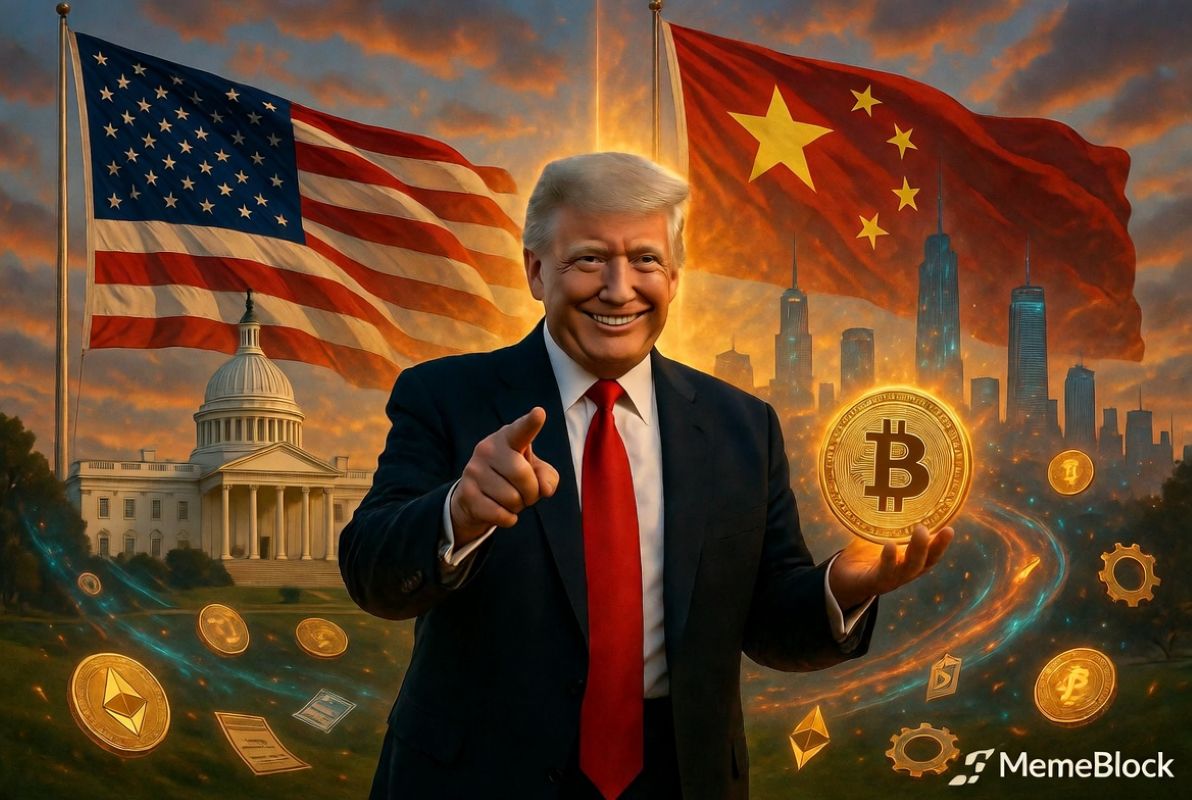
In the fast-moving world of digital finance, cryptocurrencies have become a focal point of global power politics. Nowhere is this more evident than in the ongoing tug-of-war between Washington and Beijing. As the United States pushes for innovation under regulatory oversight, China doubles down on control and sovereignty. This rivalry is not only reshaping the crypto landscape but also influencing the next era of global monetary order.
The U.S. Approach: Balancing Innovation and Oversight
The United States has long walked a fine line between promoting innovation and ensuring market stability. In recent years, lawmakers have sought to establish clearer frameworks for crypto regulation. Initiatives such as the GENIUS Act and the Digital Commodities Consumer Protection Act represent the U.S. attempt to build transparent standards for stablecoins, exchanges, and decentralized finance.
Washington’s goal is twofold: to safeguard consumers while keeping America competitive in the blockchain and fintech race. By regulating stablecoins and defining digital assets under securities and commodities laws, the U.S. aims to provide the legal clarity the market has long demanded. However, fragmentation between federal and state jurisdictions continues to frustrate many crypto companies. Despite this, America’s open regulatory dialogue positions it as a leading hub for blockchain innovation and institutional adoption.
China’s Strategy: Total Control and Digital Sovereignty
On the other side of the Pacific, China has taken a starkly different stance. The government has banned crypto trading, mining, and exchanges, effectively outlawing most private digital asset activity. Yet, China is simultaneously pioneering its central bank digital currency (CBDC)—the digital yuan (e-CNY).
This move gives the Chinese government full control over digital payments, data, and cross-border flows, allowing it to strengthen monetary sovereignty while curbing risks like capital flight or speculative bubbles. In essence, China doesn’t view cryptocurrency as a tool of innovation—it sees it as a potential threat to national stability and political control.
Why the Tug-of-War Matters for the World
1. Setting Global Standards
The policies emerging from Washington and Beijing are shaping how other nations regulate crypto. Countries are watching both models closely, deciding whether to follow the U.S.’s innovation-friendly path or China’s tightly controlled framework.
2. The Innovation Divide
The U.S. model encourages private-sector innovation, fostering startups and institutional adoption. China’s approach, however, centralizes innovation within state-approved systems—prioritizing security and control over decentralization.
3. The Geopolitical Dimension
This regulatory battle is not just about finance—it’s about global influence. America wants to keep the U.S. dollar at the center of the digital economy, while China aims to challenge that dominance through the international rollout of its digital yuan.
4. Investor Impact
Every regulatory move affects markets. Clearer rules in the U.S. tend to attract institutional investors, while China’s crackdowns push miners and developers overseas. This has caused major shifts in mining hubs, trading volumes, and venture capital flows worldwide.
The Future Outlook: Toward a Fragmented Yet Evolving System
Looking ahead, the world seems headed for a fragmented crypto landscape—with Western markets operating under regulatory frameworks and Asian economies experimenting with state-backed digital currencies. While global harmonization remains a distant goal, competition between Washington and Beijing could accelerate innovation and technological breakthroughs in blockchain, DeFi, and cross-border payments.
In the end, the question isn’t whether cryptocurrencies will survive—it’s which regulatory philosophy will define their evolution. The answer will likely depend on how effectively the U.S. and China can balance innovation, control, and trust in the digital economy.
FAQs
Q1. Why do the U.S. and China have such different crypto policies?
The U.S. prioritizes innovation and consumer protection through regulation, while China emphasizes government control to maintain financial stability and political sovereignty.
Q2. Is cryptocurrency legal in China in 2025?
No. Cryptocurrency trading and mining remain banned in China, but individuals can still hold digital assets privately.
Q3. How is the U.S. regulating crypto now?
The U.S. has introduced federal frameworks for stablecoins and clearer definitions for digital assets, aiming to make the industry safer for investors.
Q4. What is China’s digital yuan (e-CNY)?
It’s a state-controlled digital currency issued by the People’s Bank of China, designed to modernize payments and reduce reliance on traditional banking systems.
Q5. How does this U.S.–China competition affect the global crypto market?
Other countries model their regulations on these two giants, creating ripple effects in investment, innovation, and international financial systems.
Q6. Will there be global crypto regulations soon?
Global harmonization is possible, but unlikely in the near term due to differing national interests and regulatory philosophies.