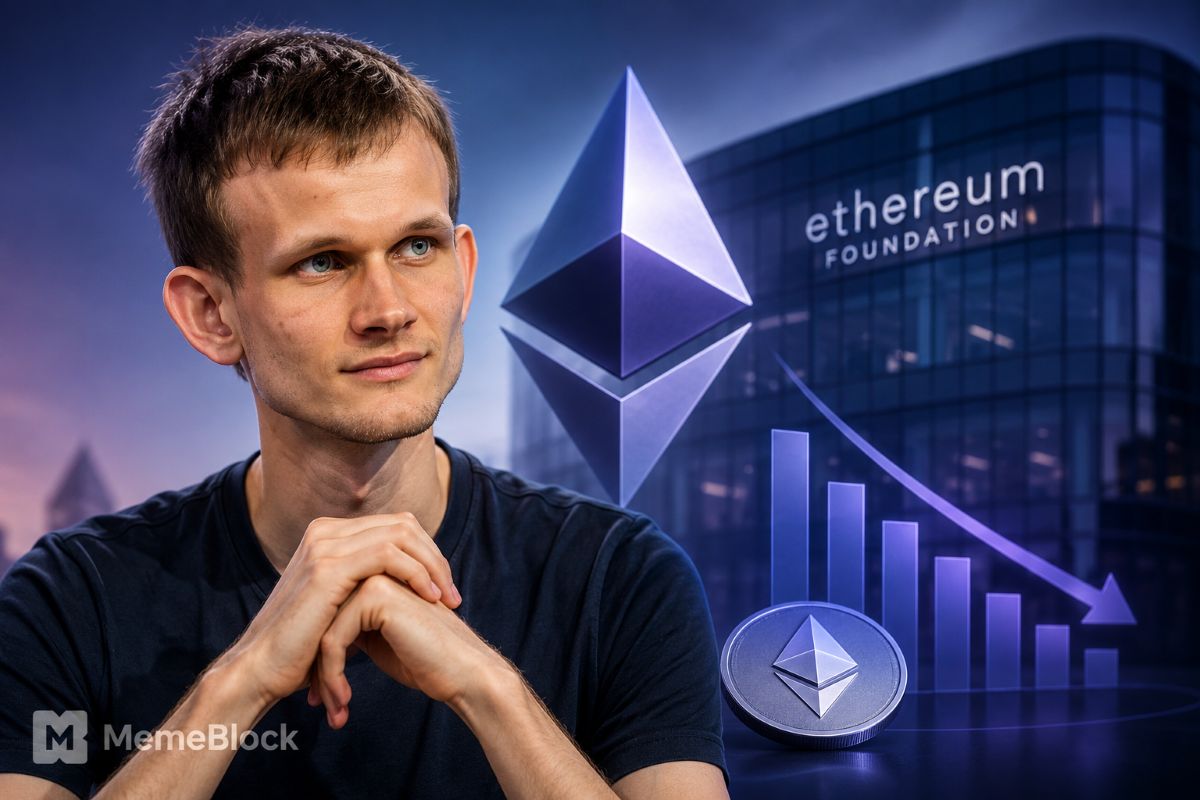
Ethereum co-founder Vitalik Buterin has floated a new concept known as “Gas Futures,” aimed at reducing fee volatility and improving cost predictability on the Ethereum network. The proposal addresses one of Ethereum’s most persistent user complaints: unpredictable gas fees that spike during periods of high demand.
Rather than altering Ethereum’s core fee mechanism directly, Gas Futures introduces a market-based approach that allows users and applications to hedge future transaction costs.
What Are “Gas Futures”?
Under this model, users could purchase the right to use a certain amount of gas at a predetermined price in the future.
In practice, this could allow:
- Developers to budget transaction costs
- DeFi protocols to manage operational expenses
- Layer-2 operators to stabilize fee structures
- Power users to hedge against congestion spikes
Instead of reacting to volatile gas prices, users could plan.
Why Ethereum Needs Gas Price Hedging
Ethereum gas fees fluctuate based on network demand. While upgrades like EIP-1559 improved fee efficiency and predictability, congestion during NFT mints, memecoin trading, or major DeFi events still leads to sudden spikes.
Vitalik argues that volatility, not necessarily high fees, is the core issue. Sudden unpredictability:
- Breaks user experience
- Increases risk for smart contracts
- Discourages enterprise adoption
- Complicates automated on-chain systems
Gas Futures aim to shift this volatility risk from users to a market that can price it more efficiently.
How Gas Futures Could Work in Practice
While still conceptual, the proposal outlines a few possible implementations:
- A protocol-level market where future gas blocks are auctioned
- A derivatives-style contract tied to base fee levels
- On-chain instruments allowing prepaid gas usage
- Third-party markets building on Ethereum primitives
Prices would be determined by supply and demand, reflecting expectations about future network congestion.re
Importantly, Gas Futures would not replace existing gas mechanics. Instead, they would coexist alongside spot gas pricing, offering optional risk management tools.
Potential Benefits for Developers and DeFi
The biggest beneficiaries could be applications that rely on predictable costs, such as:
- Rollups and Layer-2 sequencers
- On-chain games
- Automated trading systems
- DAOs with recurring execution costs
- Enterprise blockchain integrations
By hedging gas costs, these systems could operate more like traditional software infrastructure, with forecastable expenses rather than volatile operating risk.
Risks and Open Questions
Despite its promise, the proposal raises several unresolved challenges:
- Complexity: Futures markets may confuse average users
- Speculation: Gas markets could attract excessive trading
- Manipulation risks: Large players might influence pricing
- Implementation difficulty: Protocol-level changes require consensus
- Liquidity concerns: Futures markets need sufficient participation
Vitalik has acknowledged these trade-offs, presenting Gas Futures as an exploratory concept rather than a finalized roadmap item.
Broader Vision: Ethereum as a Predictable Economic Layer
Gas Futures fit into a broader vision of Ethereum evolving into a stable, predictable economic base layer, suitable for global-scale applications. As Ethereum matures, the focus is shifting from raw decentralization toward usability, reliability, and economic efficiency.
If successful, Gas Futures could represent a major step in making Ethereum more enterprise-friendly without sacrificing its decentralized foundations.
What Comes Next
The proposal is currently in the discussion phase, with developers and researchers evaluating feasibility, design trade-offs, and potential unintended consequences. If interest grows, experimentation may begin at the Layer-2 level before any consideration of mainnet integration.
For now, Gas Futures remain a bold idea, but one that highlights Ethereum’s continued push toward economic sophistication.
FAQs
Q: What are Ethereum Gas Futures?
A proposed mechanism allowing users to lock in future gas prices, similar to commodity futures.
Q: Why did Vitalik propose this idea?
To reduce gas price volatility and improve predictability for users and developers.
Q: Does this replace Ethereum’s current gas system?
No. It would coexist with existing spot gas pricing as an optional hedging tool.
Q: Who benefits most from Gas Futures?
DeFi protocols, Layer-2s, enterprises, and power users need predictable costs.
Q: Is this proposal live on Ethereum?
No. It is currently a conceptual proposal under community discussion.