Ethereum, the undisputed leader in decentralized applications and smart contracts, is currently experiencing a monumental shift in its operational efficiency. Recent data reveals that the network is now processing an astounding 1.6 million daily transactions, a figure that underscores its robust and growing utility. What’s truly remarkable, however, is that these high transaction volumes are occurring while average gas fees have plummeted to an astonishing low of around $0.01. This marks the lowest Ethereum gas fees in years, sparking widespread excitement and speculation about the long-term scalability of Ethereum.
For years, high Ethereum gas fees have been a significant bottleneck, deterring users and developers alike from fully embracing the network. These prohibitive costs often made basic transactions, such as swapping tokens or interacting with decentralized finance (DeFi) protocols, financially unviable for many. The recent dramatic reduction in fees, combined with the surge in transaction throughput, strongly suggests that the series of Ethereum upgrades – particularly those related to Layer 2 solutions and the network’s transition to Proof-of-Stake – are finally bearing fruit.
Understanding Ethereum’s Scalability Journey
The journey towards a more scalable Ethereum blockchain has been a complex and iterative process. The core Ethereum network, often referred to as Layer 1, faced inherent limitations in processing a large number of transactions simultaneously. This led to network congestion and, consequently, soaring gas prices.
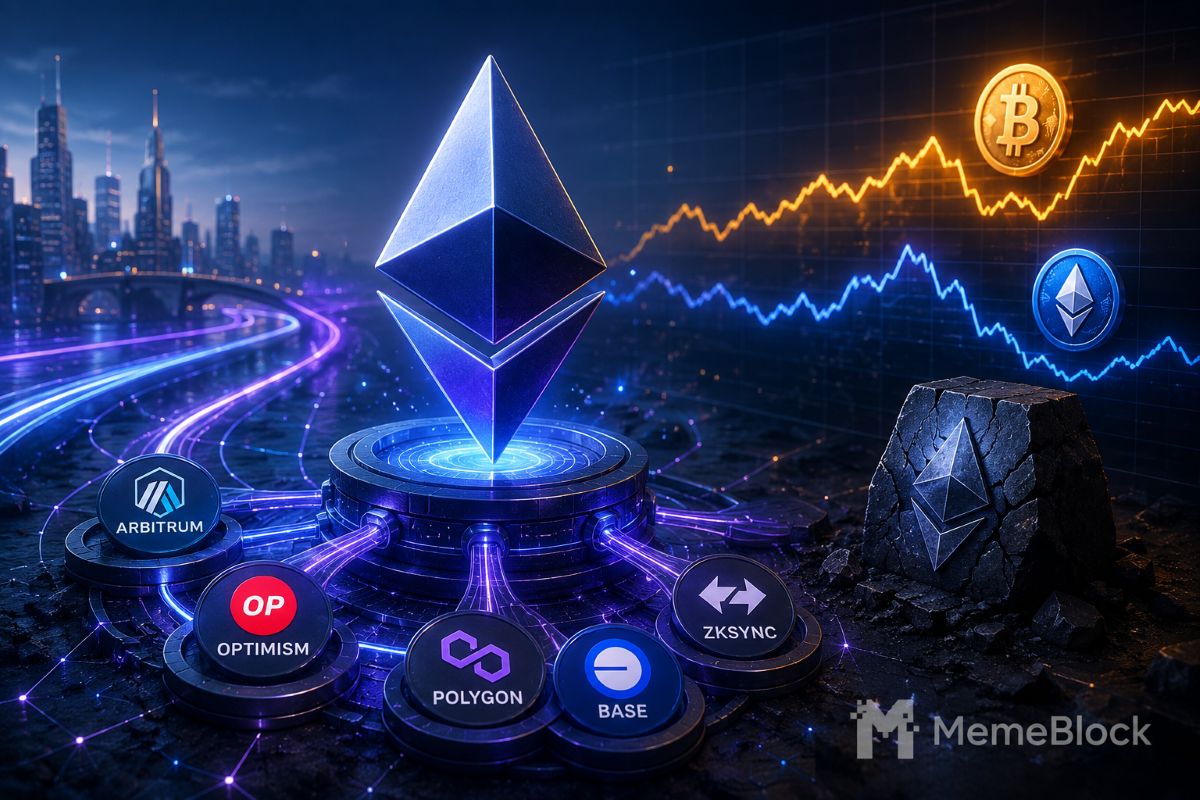
The solution has largely come in the form of Layer 2 scaling solutions, which process transactions off the main Ethereum chain and then bundle them into a single, verifiable transaction on Layer 1. Technologies like Optimistic Rollups (e.g., Arbitrum, Optimism) and ZK-Rollups (e.g., zkSync, StarkNet) have been instrumental in this transformation. These Ethereum Layer 2 solutions significantly increase transaction capacity and reduce costs without compromising the security of the underlying Ethereum mainnet.
The data indicating 1.6 million daily transactions at near-zero gas fees strongly implies a massive adoption and effective functioning of these Layer 2 networks. Users are increasingly opting for these more efficient pathways to interact with the Ethereum ecosystem, alleviating pressure on Layer 1 and allowing for a smoother, more affordable experience. This period could mark the true beginning of Ethereum’s mass adoption, as the barrier to entry related to transaction costs is now virtually non-existent.
Implications for DeFi, NFTs, and Web3
The implications of this Ethereum scalability breakthrough are vast and far-reaching. For the DeFi sector, lower gas fees mean that more frequent and complex interactions become economically feasible. This could lead to a surge in DeFi activity, attracting new users who were previously priced out. Similarly, the NFT market, which often suffered from exorbitant minting and trading fees, stands to benefit immensely. Artists and collectors can now engage with NFTs more freely and affordably.
Beyond specific applications, this enhanced Ethereum performance is crucial for the broader vision of Web3. A scalable and affordable blockchain is fundamental for building truly decentralized and user-friendly applications that can rival their centralized counterparts. Developers can now innovate with fewer constraints, knowing that their applications can handle significant user loads without incurring prohibitive costs. This is a critical step towards realizing the promise of a decentralized internet.
In conclusion, the current state of Ethereum, with its high transaction volume and incredibly low gas fees, is a testament to years of dedicated development and strategic upgrades. While challenges remain, the network appears to be on a clear path towards unlocking its full scalability potential, paving the way for a more accessible and vibrant decentralized future. This significant milestone signals a new era for Ethereum, firmly establishing its position as the leading platform for innovation in the crypto space.
FAQs on Ethereum’s Scalability and Gas Fees
Q1: What are “gas fees” on Ethereum?
A1: Gas fees are the transaction costs paid by users to execute operations or smart contract interactions on the Ethereum blockchain. They compensate network validators for processing and securing transactions.
Q2: Why were Ethereum gas fees so high in the past?
A2: Ethereum gas fees were high due to network congestion. The limited capacity of the Ethereum mainnet (Layer 1) meant that during periods of high demand, users had to bid higher prices (gas fees) to get their transactions processed quickly.
Q3: How has Ethereum managed to reduce gas fees to $0.01?
A3: The dramatic reduction in Ethereum gas fees is primarily attributed to the increased adoption and efficiency of Layer 2 scaling solutions like Optimistic Rollups and ZK-Rollups. These solutions process transactions off the main chain, significantly increasing throughput and reducing costs.
Q4: What are Layer 2 scaling solutions?
A4: Layer 2 scaling solutions are protocols built on top of the Ethereum blockchain that handle transactions off-chain, then periodically submit bundled transaction data back to the Ethereum mainnet. They improve Ethereum’s scalability and efficiency.
Q5: Does this mean Ethereum 2.0 (The Merge) is fully complete?
A5: The transition to Proof-of-Stake (often referred to as The Merge), a major component of Ethereum 2.0, is complete. However, further upgrades like sharding, which will further enhance Ethereum’s scalability, are still in development and will roll out in subsequent phases.
Q6: What are the benefits of low Ethereum gas fees for users and developers?
A6: For users, low gas fees make interacting with DeFi applications, NFTs, and other Web3 services much more affordable. For developers, it allows for the creation of more complex and user-friendly applications without the constraint of high transaction costs, fostering greater innovation in the Ethereum ecosystem.