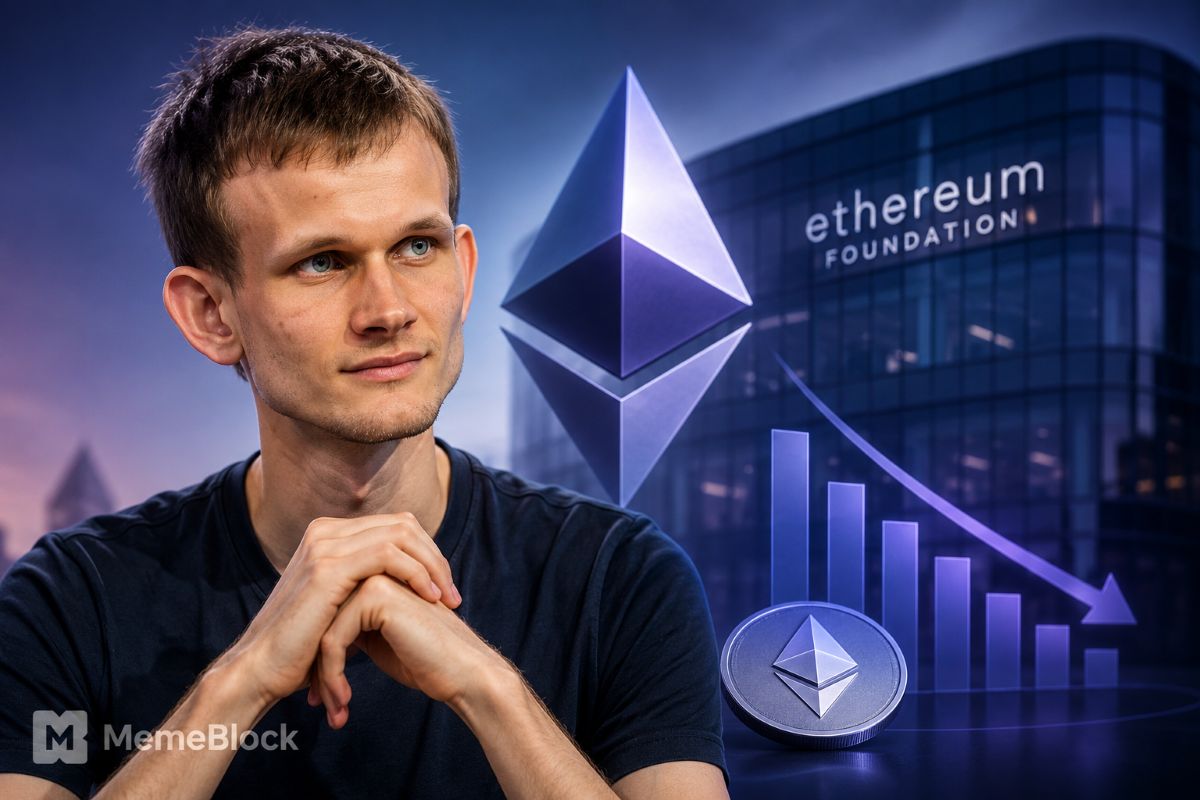
Ethereum co-founder Vitalik Buterin has revealed a bold long-term scaling roadmap. It is designed to transform Ethereum into a high-speed “Internet of Value” by 2029. The new technical vision is often referred to as the Ethereum Strawmap roadmap. It outlines major upgrades aimed at drastically improving transaction speed, throughput, and usability for global financial applications.
The roadmap signals Ethereum’s shift toward becoming a faster and more efficient settlement layer. As a result, it could support institutional-scale activity and mainstream financial services.
Ethereum Scaling Roadmap Targets Massive Performance Gains
A central goal of Buterin’s Ethereum scaling roadmap is improving transaction finality and throughput on Layer 1. Developers aim to reduce confirmation times from roughly 16 minutes today to as little as 6–16 seconds by 2029. This will make Ethereum closer to real-time settlement infrastructure.
The roadmap also envisions Ethereum eventually reaching around 10,000 transactions per second (TPS) on its base layer. This would be a significant jump from current capabilities.
To achieve these improvements, Ethereum developers plan a series of protocol upgrades that include:
- Reduced slot times and faster block processing
- zkEVM integration for scalable verification
- Gas rule optimizations and storage improvements
- Enhanced peer-to-peer networking efficiency
Buterin indicated that these changes could make Ethereum up to 1,000 times more powerful over time. That would allow the network to support large-scale financial ecosystems and decentralized applications.
Moving Beyond Layer-2 Dependence
Another key aspect of the Ethereum high-speed Internet of Value strategy is strengthening Layer 1. This way, it no longer becomes a bottleneck for scaling.
While Layer-2 rollups remain important, the roadmap proposes a dual-track scaling model. In this model, Layer 1 becomes faster and more efficient while Layer 2 networks handle specialized workloads.
This shift reflects growing concerns among developers. Some worry that excessive reliance on Layer-2 solutions could weaken decentralization and fragment liquidity across the ecosystem.
Instead, Ethereum’s long-term architecture aims to balance:
- Base-layer security
- Layer-2 scalability
- Decentralization
- Institutional usability
This approach is designed to keep Ethereum competitive with emerging high-performance blockchains.
Seven Major Upgrades Planned Through 2029
The Ethereum Strawmap outlines approximately seven protocol forks scheduled between 2026 and 2029. Each fork targets specific improvements to consensus, execution, and data availability.
These upgrades will include innovations such as:
- Gigagas throughput improvements
- Post-quantum cryptographic security
- Privacy enhancements
- Faster validator coordination
Researchers say the roadmap is meant as a coordination tool rather than a fixed plan. It helps Ethereum developers align around long-term priorities.
Vision for Ethereum as the Internet of Value
The long-term vision behind the Ethereum scaling roadmap is to make blockchain transactions as seamless as sending a text message.
If successful, Ethereum could evolve into the foundational infrastructure for:
- Cross-border payments
- Decentralized finance (DeFi)
- Tokenized assets
- AI-driven economies
- Institutional settlement systems
Ethereum’s broader roadmap focuses on creating a scalable and secure base layer capable of supporting the global digital economy.
Outlook for Ethereum Development
Despite the ambitious targets, execution risks remain high. Major upgrades require coordination across validators, developers, wallets, and exchanges, a challenge for any decentralized ecosystem.
Still, Buterin’s scaling roadmap represents one of the most structured long-term visions for Ethereum in recent years. If the milestones are achieved, Ethereum could transition from a congested smart-contract platform into a true high-speed Internet of Value blockchain by 2029. This could potentially reshape the global financial infrastructure.