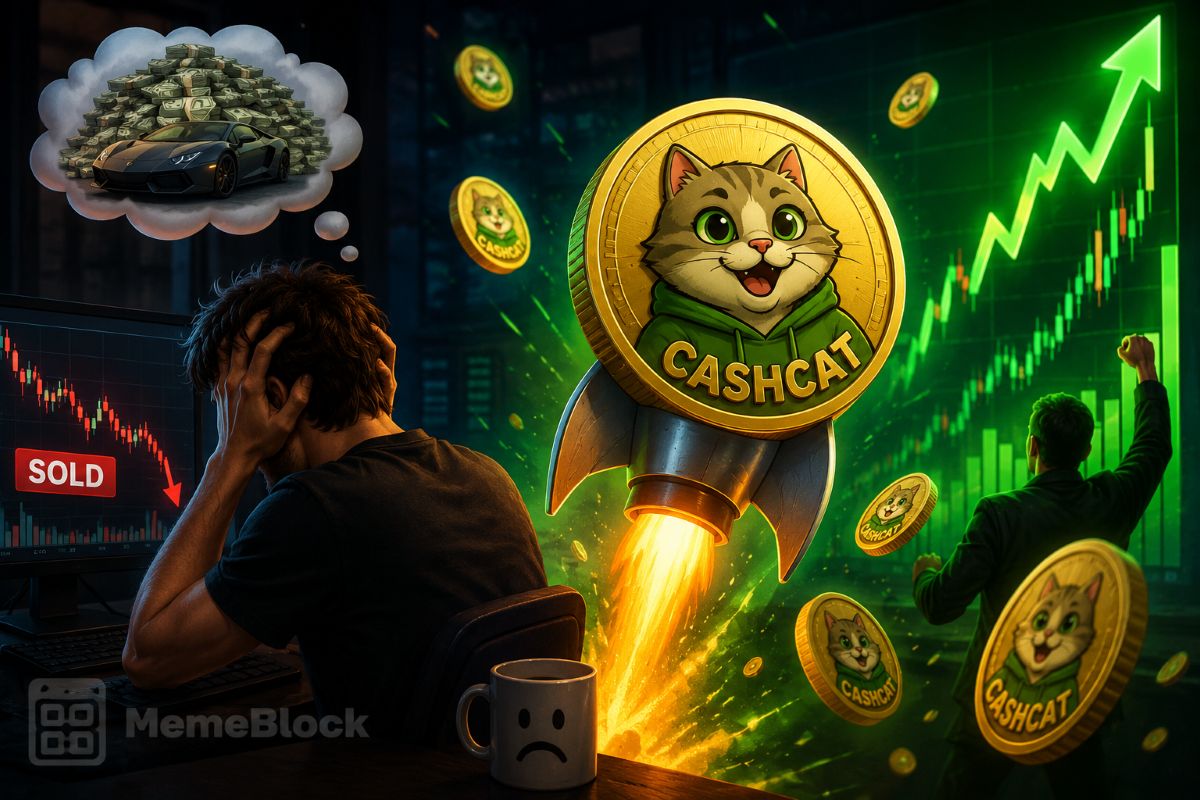
The crypto market has done it again. Just when traders thought taking a 10x profit was enough to celebrate, the market responded with its usual sarcasm: “That’s cute.” A trader who exited a CASHCAT memecoin position for approximately $711 missed out on what would have become more than $2.7 million after the token exploded during its recent rally on Robinhood Chain. The story is another reminder that in crypto, timing often matters more than talent.
Early Profit, Late Regret: The CASHCAT Trading Story
According to on-chain analytics cited by multiple crypto news outlets, the trader initially purchased 20 million CASHCAT tokens for just 0.04 ETH (around $69). After seeing the investment grow nearly tenfold, the trader sold the entire holding for roughly 0.415 ETH, worth about $711 at the time. A respectable return by traditional investing standards, but crypto rarely cares about “respectable.”
Days later, CASHCAT, a community-created meme coin inspired by Robinhood’s former mascot, surged dramatically following increased attention around Robinhood’s newly launched Arbitrum-based blockchain. Had the trader simply held the tokens, the position would have been worth over $2.7 million near the token’s peak.
Why Did CASHCAT Surge So Quickly?
The CASHCAT price rally gained momentum after Robinhood launched its blockchain, and memecoin speculation intensified. Although Robinhood did not create or endorse the token, growing ecosystem activity, viral social media posts, and aggressive speculative trading pushed the token’s market capitalization above $100 million before volatility set in.
Ironically, the token’s website openly describes CASHCAT as “fan fiction with a ticker,” proving once again that in crypto, narrative sometimes outruns utility at least temporarily.
Crypto Trading Lesson: Profit Is Good, But Timing Is Everything
The episode perfectly captures the emotional roller coaster of crypto trading. Selling after a 10x gain is generally considered disciplined risk management. Unfortunately for this trader, the market decided to rewrite the script immediately afterward.
Still, the opposite scenario happens just as often. Many traders hold meme coins too long and watch extraordinary paper profits disappear within hours. CASHCAT itself trades with relatively limited liquidity compared to its valuation, making sharp price swings and rapid reversals a constant risk.
Final Thoughts
The CASHCAT saga is less about one unlucky trader and more about the unpredictable nature of meme coins. Today’s “missed millionaire” could easily have become tomorrow’s “bag holder.” While viral rallies create headlines, they also highlight the extreme volatility that defines speculative crypto assets. In other words, crypto remains the only place where making 10x can somehow feel like losing.
FAQs
1. What is CASHCAT?
CASHCAT is a community-created meme coin launched on Robinhood Chain and inspired by Robinhood’s former mascot. It is not officially affiliated with Robinhood.
2. How much profit did the trader miss?
Based on on-chain analysis, the trader missed gains exceeding $2.7 million after selling early.
3. Why did CASHCAT’s price increase?
The rally was fueled by speculation surrounding Robinhood Chain, viral community interest, and strong meme coin momentum.
4. Is CASHCAT a safe investment?
Like most meme coins, CASHCAT is highly volatile and carries significant investment risk.
5. Did Robinhood create CASHCAT?
No. Robinhood did not create or officially endorse the token, although it gained attention after the launch of Robinhood Chain.
6. What is the biggest takeaway for crypto traders?
Taking profits is never a mistake, but meme coin markets are unpredictable. Effective risk management is more sustainable than trying to capture every possible rally.