Coinbase-backed Layer-2 blockchain Base has postponed its highly anticipated Beryl network upgrade by one day. The activation is now set for June 26, 2026, at 18:00 UTC. The decision was made to provide additional time for the B20 Activation Registry to become fully operational before the hard fork goes live.
Rather than indicating a technical failure, the delay reflects a cautious approach by the Base engineering team. The network wants to ensure that developers can begin deploying B20-native assets immediately after the upgrade. This approach avoids activation or synchronization issues.
The announcement has been well-received across the developer community. Many are viewing the move as an example of prioritizing stability over meeting an aggressive deployment schedule.
What Is the Beryl Upgrade?
Beryl is Base’s second major network upgrade and introduces several protocol-level improvements designed to strengthen the blockchain’s infrastructure. The most significant feature is the introduction of B20, a native token standard integrated directly into Base’s node software. Unlike before, it no longer relies entirely on smart contracts.
The upgrade also includes:
- Native B20 token issuance
- Reduced withdrawal delay from Base to Ethereum, lowering the standard waiting period from seven days to five days
- Integration of Reth V2 for improved node performance and scalability
- Enhanced protocol efficiency for developers and infrastructure providers
These improvements are expected to make Base a stronger platform for stablecoins, tokenized real-world assets, gaming ecosystems, decentralized finance applications, and enterprise blockchain projects.
Why the Delay Matters
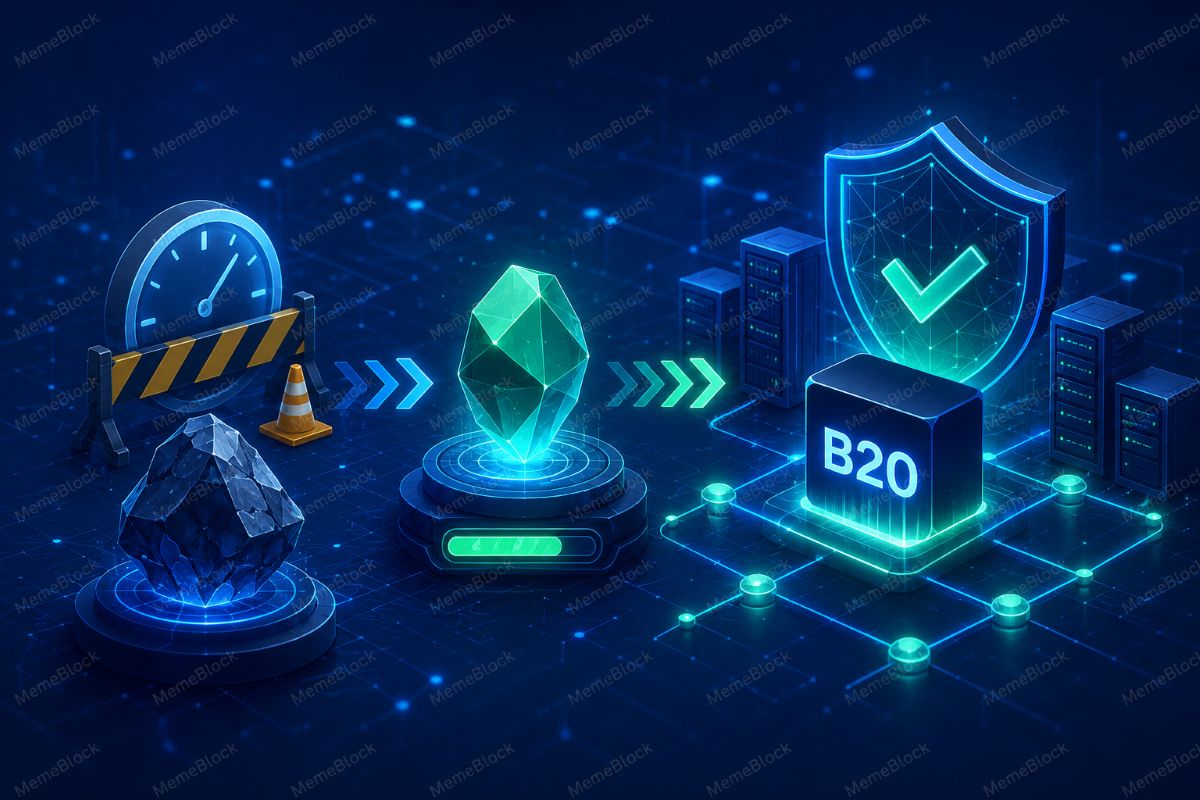
The B20 Activation Registry plays a critical role in enabling developers to deploy B20 tokens after the hard fork. According to Base, the registry requires additional synchronization time after activation before token deployment becomes available.
If the upgrade had proceeded without allowing sufficient time for registry readiness, developers could have encountered delays when launching new assets. This would have happened despite the network upgrade being technically complete. By postponing activation for one day, Base aims to eliminate this risk. Therefore, the goal is to provide a smoother experience for builders.
The decision demonstrates the growing maturity of Layer-2 infrastructure projects, where operational reliability has become just as important as feature innovation.
What B20 Means for the Base Ecosystem
Unlike traditional ERC-20 tokens that rely solely on smart contracts, B20 introduces protocol-native functionality. At the same time, it maintains compatibility with the broader Ethereum ecosystem.
The standard is expected to reduce token creation costs, lower storage overhead, and improve gas efficiency for asset issuers. Existing wallets, exchanges, and blockchain explorers supporting ERC-20 assets can integrate B20 tokens with minimal changes. As a result, adoption is easier for developers and users alike.
Industry observers believe the upgrade could encourage greater activity across decentralized finance, stablecoin issuance, tokenized securities, gaming assets, and community-driven token launches on Base.
Developers Remain the Primary Focus
Although traders closely monitor major network upgrades, Beryl is primarily aimed at developers and infrastructure operators. The improvements focus on reducing operational costs while increasing scalability and capital efficiency.
For projects considering launching on Base, the combination of native token issuance, faster withdrawals, and improved node performance offers a more attractive development environment. The upgrade also reflects Base’s broader strategy of becoming a leading blockchain for institutional and retail asset issuance.
Developers have already been testing Beryl on the Base Sepolia testnet. This has allowed teams to prepare applications ahead of the mainnet rollout.
Summary
The one-day postponement is unlikely to have any lasting impact on Base’s roadmap. Instead, it highlights the network’s emphasis on delivering stable infrastructure before introducing major protocol changes.
As competition among Ethereum Layer-2 networks continues to intensify, the successful implementation of the Beryl upgrade could strengthen Base’s position. It would do this by offering more efficient token issuance, improved developer tools, and enhanced network performance. If the rollout proceeds smoothly, B20 may become one of the most important infrastructure additions to the Base ecosystem in 2026.