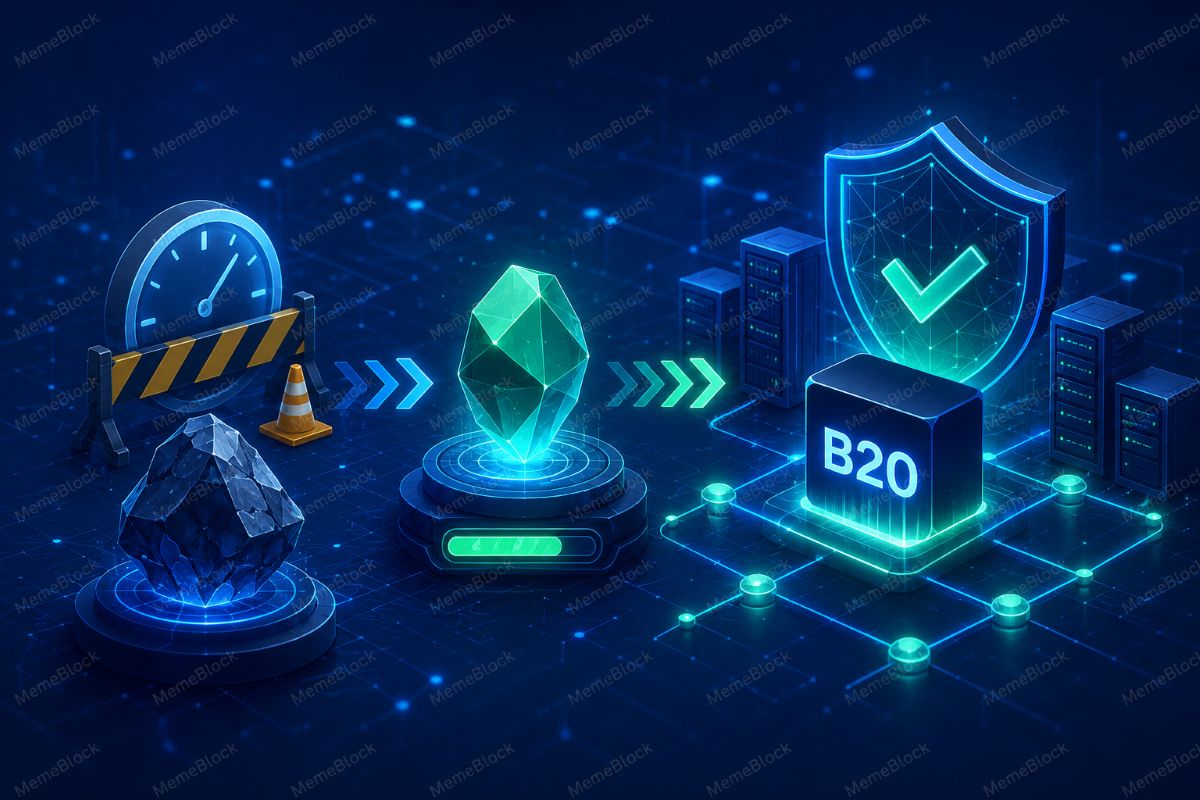
As Bitcoin mining profits tighten and artificial intelligence (AI) demand skyrockets, major mining firms are making a strategic shift, repurposing their data centers and energy contracts to power the AI revolution. This growing trend marks one of the most significant transitions in the digital infrastructure landscape, where Bitcoin miners pivot to AI as the next frontier for computational power.
Bitcoin Miners Repurpose Data Centers for AI Workloads
The shift began in mid-2024, when falling Bitcoin block rewards and rising energy costs pushed miners to explore alternative revenue streams. With the upcoming Bitcoin halving in 2028 expected to cut mining rewards again, companies are seeking long-term sustainability by entering the AI computing and data services market.
Industry leaders such as Marathon Digital, Core Scientific, and Hive Digital Technologies have already begun transforming their mining facilities into AI-focused data centers. These firms are leveraging their access to cheap power, cooling infrastructure, and advanced chips to train large language models and host AI workloads for enterprise clients.
“The transition from Bitcoin mining to AI infrastructure is a natural evolution,” said a Hive Digital executive. “We already operate high-performance GPU farms; we’re simply redirecting that computing power toward AI and machine learning applications.”
Energy Efficiency Becomes the New Gold
One of the key advantages miners bring to the AI sector is energy optimization expertise. Bitcoin miners have long excelled at securing cheap, renewable, or stranded energy sources to maintain profitability. Now, that same expertise is being used to support AI data center expansion.
In Texas, several mining farms are now partnering with renewable energy providers to balance grid loads while hosting AI inference clusters. This Bitcoin mining-to-AI transition model allows for dual utility, miners can toggle between blockchain validation and AI processing based on market conditions.
“Energy efficiency is the common denominator,” said an analyst from Galaxy Digital. “AI requires scalable, always-on compute, exactly what Bitcoin miners have already built.”
The Halving Pressure and AI Boom Converge
The timing of this pivot is not coincidental. The Bitcoin halving cycle, which reduces mining rewards by 50% every four years, has historically squeezed smaller operators and forced consolidation in the industry. Meanwhile, the AI market explosion, fueled by global adoption of large language models (LLMs) and enterprise automation, offers a high-margin alternative.
According to a recent report, the global AI infrastructure market is expected to surpass $150 billion by 2027, creating immense opportunities for miners with available hardware and power capacity.
This trend is driving a convergence of crypto and AI industries, where traditional miners evolve into hybrid compute providers, offering blockchain validation, AI hosting, and cloud GPU services under one roof.
Strategic Partnerships Signal the Future
Several new crypto-AI partnerships are already emerging. Core Scientific recently signed agreements with AI startups to provide compute resources for training models on its refurbished mining rigs. Similarly, Marathon Digital has begun discussions with cloud providers to co-locate AI workloads alongside its Bitcoin mining operations.
Industry experts predict that within the next five years, a significant share of Bitcoin mining infrastructure will be repurposed for AI and high-performance computing (HPC).
“This isn’t just a survival tactic,” noted a tech strategist. “It’s a strategic pivot that positions miners at the center of the next major technology wave.”
FAQs
Q1: Why are Bitcoin miners pivoting to AI?
Falling mining profitability and rising demand for AI computing power are prompting miners to repurpose their infrastructure for artificial intelligence workloads.
Q2: How does AI benefit from Bitcoin mining infrastructure?
Mining data centers already have cheap energy access, cooling systems, and GPU clusters, making them ideal for AI training and inference tasks.
Q3: Will miners stop Bitcoin operations entirely?
Not necessarily. Many plan to operate hybrid models, allocating part of their compute to AI and cloud workloads while continuing to mine Bitcoin.
Q4: How does the Bitcoin halving affect this trend?
The upcoming Bitcoin halving will cut mining rewards in half, reducing revenue and accelerating the shift toward AI-based income streams.
Q5: What does this mean for the future of mining?
It signals an industry evolution, from pure Bitcoin mining to a diversified digital infrastructure economy supporting AI, blockchain, and data services.