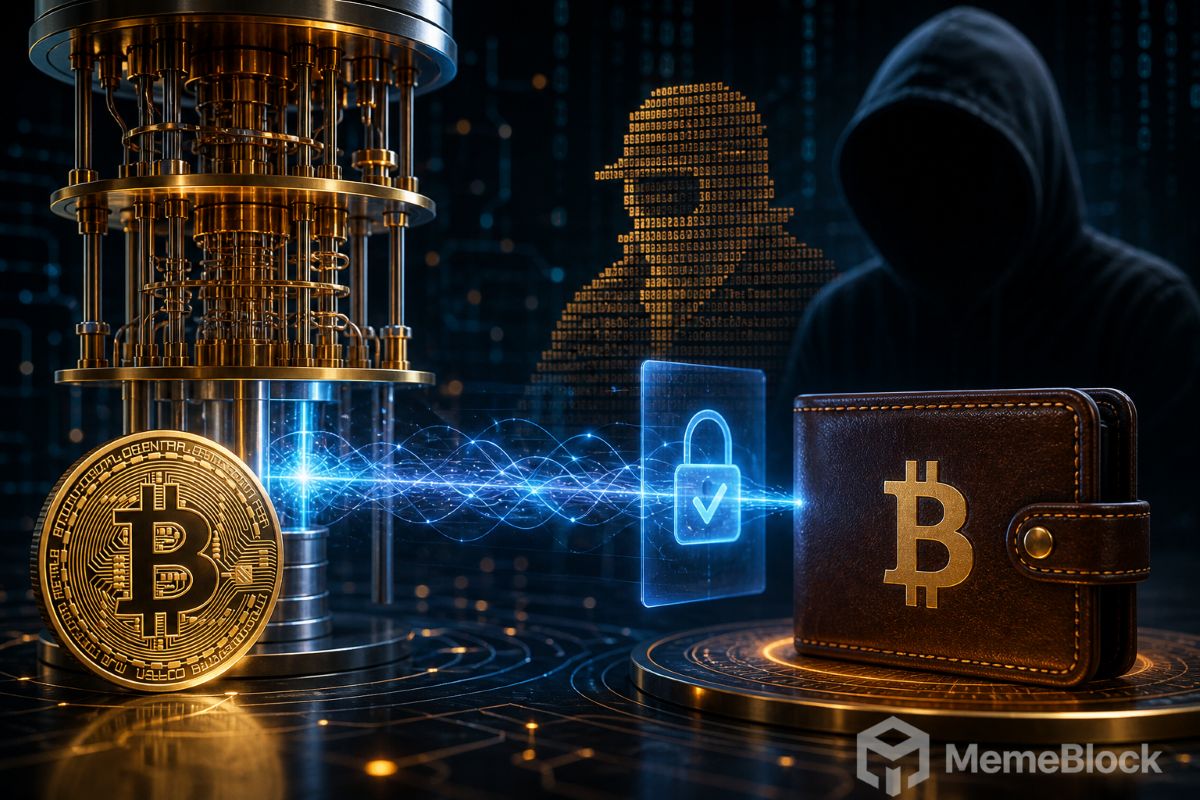
Bitcoin developers and cryptography researchers are debating a new proposal that could help protect some of the oldest Bitcoin wallets from future quantum-computing threats. This protection would not require owners to move their BTC. The proposal is called Provable Address-Control Timestamps (PACTs). It is already gaining attention because it may offer Bitcoin creator Satoshi Nakamoto a way to prove ownership of dormant wallets while keeping the coins untouched.
Paradigm researcher Dan Robinson introduced the proposal and focused on a growing concern in the crypto industry: the possibility that future quantum computers could crack Bitcoin’s current cryptographic protections. Older Bitcoin wallets are considered more vulnerable. This is because many early addresses exposed their public keys directly on the blockchain.
Why Quantum Computing Threatens Old Bitcoin Wallets
Bitcoin currently relies on elliptic curve cryptography to secure wallets and transactions. Experts believe sufficiently advanced quantum computers could theoretically use algorithms like Shor’s algorithm to derive private keys from exposed public keys. If that happens, dormant wallets containing millions of BTC could become vulnerable to theft.
The issue is especially important because early Bitcoin wallets mined during the network’s first years often revealed public keys after transactions were made. Analysts estimate roughly 1.7 million BTC may be exposed to future quantum risks. This includes around 1.1 million BTC believed to belong to Satoshi Nakamoto.
Until now, the most common solution discussed by developers has involved moving funds into quantum-resistant wallets. However, this creates privacy concerns and technical complications. This is especially true for dormant wallets that have not moved coins for over a decade.
How the New PACT Proposal Works
The PACT model would allow wallet owners to create a timestamped cryptographic proof showing they control a Bitcoin address without actually transferring the BTC. According to reports, the proposal combines BIP-322 message signing with OpenTimestamps technology. It also uses hidden cryptographic commitments.
In simple terms, a Bitcoin holder could prove ownership today and later use that proof if Bitcoin introduces future quantum-resistant upgrades. This would allow dormant wallets to remain inactive while still demonstrating legitimate control.
For Satoshi Nakamoto, the proposal creates an interesting possibility. If the anonymous Bitcoin creator still has access to the original private keys, PACTs could theoretically allow proof of ownership without moving the famous BTC holdings that the crypto community constantly monitors.
Bitcoin Community Divided Over Quantum Protection Plans
The proposal arrives as Bitcoin developers continue discussing broader quantum-security upgrades. Earlier conversations included BIP-361, a controversial proposal suggesting that quantum-vulnerable coins could eventually be frozen. This would happen if owners fail to migrate them to safer wallets.
Some Bitcoin supporters believe proactive action is necessary before quantum technology advances further. Others argue that forcing wallet migrations or freezing dormant funds could violate Bitcoin’s decentralized principles.
PACTs are viewed by many researchers as a more balanced alternative because they do not require immediate movement of coins. They may preserve user privacy better than earlier ideas. However, the system would still require future Bitcoin network upgrades. A broad community consensus would also be necessary before becoming fully operational.
Could Quantum Computers Really Break Bitcoin Soon?
Many experts believe practical quantum attacks on Bitcoin are still years away, but timelines remain uncertain. Some researchers argue that the industry may have three to five years before quantum risks become serious. Others warn that breakthroughs could happen faster than expected.
Despite the uncertainty, the debate highlights how Bitcoin developers are increasingly preparing for long-term security threats. Quantum-resistant cryptography is becoming a major topic not only for Bitcoin but also for banks, governments, and cybersecurity firms worldwide.
For now, PACTs remain only a proposal, but the idea has already sparked major discussion across the crypto industry. This is because it touches one of Bitcoin’s biggest mysteries: whether Satoshi Nakamoto could someday prove ownership of the original wallets without ever moving a single BTC.