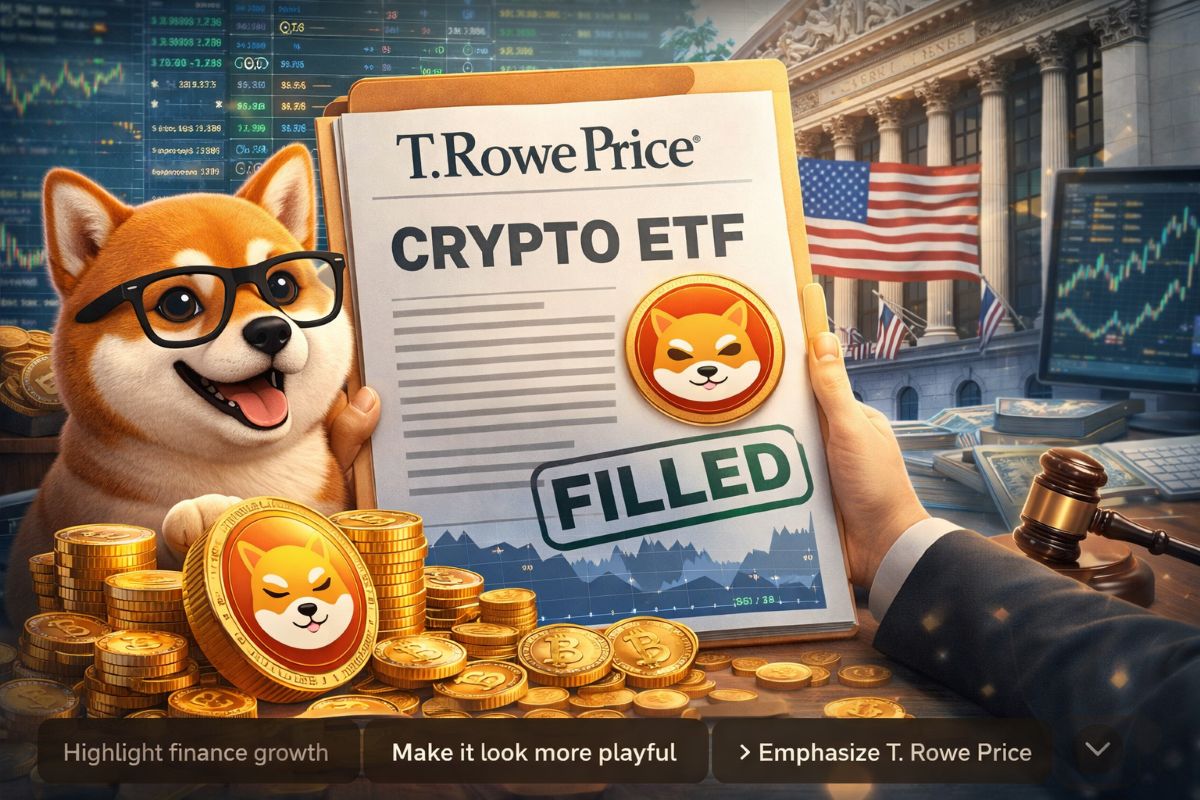
Global asset-management giant T. Rowe Price, which oversees approximately US$1.77 trillion in assets under management, has formally filed with the U.S. Securities and Exchange Commission (SEC) for its first actively-managed crypto ETF, the T. Rowe Price Active Crypto ETF.
What the filing covers
According to the S-1 registration statement filed on or around October 22, 2025, the fund intends to:
- Be listed on NYSE Arca under a yet-to-be-announced ticker.
- Actively manage a basket of between 5 and 15 digital assets under normal conditions (though the fund may hold fewer or more at times).
- Seek to outperform the FTSE Crypto US Listed Index (a benchmark tracking eligible US-listed crypto assets) via model-based selection, fundamental/valuation/momentum criteria, and discretionary tilts away from index weights.
- Limit its holdings to “Eligible Assets”, which are defined as crypto-assets that meet certain criteria (e.g., trade on markets with Intermarket Surveillance Group (ISG) membership, or underlie futures with adequate oversight) and which the Fund may invest in or out of at its discretion.
- Potentially include in its universe such crypto-assets as XRP, ADA (Cardano), HBAR (Hedera), and XLM (Stellar), among others. The filing lists these tokens among the “Eligible Assets” that currently meet criteria.
Why is this significant
- This filing marks a major pivot for T. Rowe Price, traditionally a mutual-fund and vanilla-asset manager, into the crypto space. The move signals that legacy asset managers believe institutional and retail demand for diversified crypto exposure is growing.
- Unlike many earlier crypto funds that track a single asset (e.g., bitcoin) or passively follow an index, this fund is actively managed. That offers flexibility but also greater risk and higher fees.
- The inclusion of altcoins beyond just Bitcoin and Ether broadens the scope. With tokens like XRP, ADA, HBAR, and XLM on the eligibility list, investors may get exposure to more than the “top two” crypto-assets. This could, in turn, drive interest (and possibly price flows) into many of these altcoins.
- Because T. Rowe Price already has a large institutional reach and credibility, the approval of such a product (if granted) could open crypto access to a broader segment of investors who had previously stayed on the sidelines due to infrastructure, regulation, or custody concerns.
Key Risks & Considerations
- The fund is in the filing stage; there is no guarantee of SEC approval, nor a set launch date. Regulatory delays (e.g., due to staffing or policy concerns) remain possible.
- Active management adds layers of complexity: manager decisions, portfolio weight shifts, trading costs, crypto liquidity/volatility risk, and custody/security risks all matter. The filing emphasises risks such as extreme price volatility, limited operating history of crypto assets, custody counterparty risk, etc.
- The term “Eligible Assets” may evolve, and new tokens could be added or removed. Investors must understand that holdings may change, and some tokens listed as eligible may not end up being significant portfolio components.
- Liquidity, tax treatment, and regulatory clarity (especially around altcoins) remain variable and evolving. The fund may face challenges in portfolio execution, arbitrage functioning, and investor adoption.
Outlook & Implications
For the crypto-ecosystem, the move by T. Rowe Price could be viewed as a watershed moment: when large, traditional asset managers begin offering actively-managed crypto funds that include altcoins, the narrative shifts from niche/experimental to mainstream/institutional.
For the specific tokens mentioned (XRP, ADA, HBAR, XLM), inclusion on the eligibility list, while not guaranteeing direct fund investment, offers visibility and potential indirect demand tailwinds.
If the fund benefits from strong launch flows, one can foresee ancillary benefits: improved custodial infrastructure, greater regulatory comfort, enhanced liquidity in broader altcoin markets, and more competitive products from other asset managers.
It also raises the prospect of a “land rush” for active crypto offerings: analysts quoted in the filing coverage expect many more launches, and competition among asset managers to capture crypto ETF capital.
FAQs
Q1: What crypto assets will the fund hold?
A1: The fund’s filing states it may hold 5–15 crypto assets at a given time, selected from its “Eligible Assets” list. As of the filing, eligible tokens include XRP, ADA (Cardano), HBAR (Hedera), XLM (Stellar), and others such as Bitcoin (BTC), Ethereum (ETH), and Solana (SOL). However, the fund’s actual holdings and relative weights are at the discretion of the manager.
Q2: When will the ETF launch?
A2: There is no definitive launch date yet. The S-1 registration has been filed with the SEC, but the product remains subject to regulatory review, market conditions, and listing approval.
Q3: How is this different from existing crypto ETFs?
A3: Many existing crypto ETFs are passive (track one asset like bitcoin) or index-based. This fund is actively managed, meaning the manager can select assets and weights dynamically, rather than simply mirroring an index. Also, this fund’s inclusion of altcoins (beyond the major two) gives broader exposure.
Q4: Is inclusion on the eligibility list a guarantee that the token will be invested in?
A4: No. Being eligible means the fund can invest in the token, but it doesn’t guarantee investment or a specific allocation. Portfolio decisions will factor in valuation, momentum, liquidity, risk, and the manager’s view.
Q5: What could this mean for tokens like XRP, ADA, HBAR, XLM?
A5: On a potential positive note: increased visibility, broader institutional access, and more credible infrastructure. If the ETF launches and invests meaningfully in these tokens, that could lead to indirect demand and improved market dynamics. On the flip side, these assets remain subject to normative crypto risks (volatility, regulatory shifts, adoption).
Q6: Should I invest in this ETF or in the underlying tokens?
A6: This article is for informational purposes only, not investment advice. Investors should assess their own risk tolerance, do their due diligence on the fund’s structure, fees, underlying holdings, and liquidity. Investing in an actively managed crypto fund has different costs, risks and operational profiles than buying tokens directly.