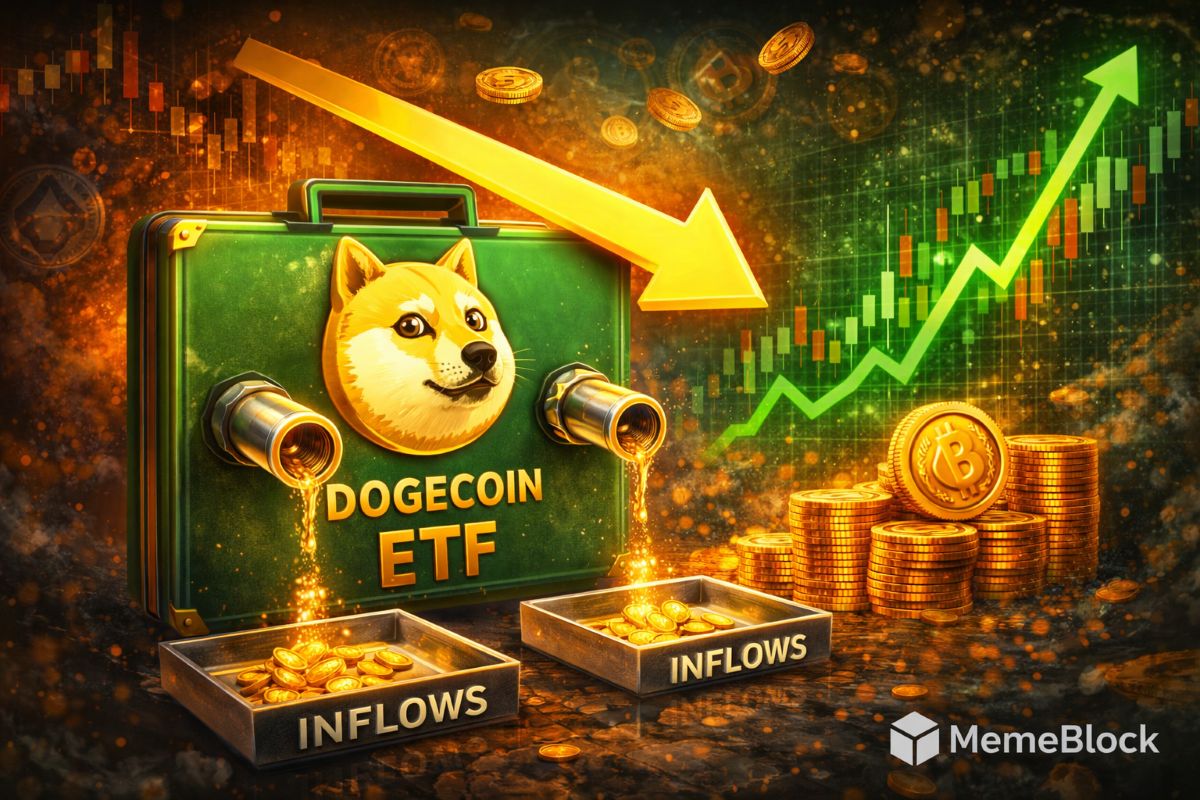
The memecoin investment narrative is facing a reality check as Dogecoin exchange-traded funds (ETFs) continue to show a prolonged lack of institutional demand. Recent market data confirms that Dogecoin ETFs have now recorded their eighth consecutive day of zero inflows, raising concerns about investor sentiment and the broader outlook for meme-based financial products.
Dogecoin ETF Inflows Stall Again
According to the latest figures from market trackers, daily net inflows into Dogecoin ETFs remain at $0, signalling no fresh capital entering these funds. This trend has persisted across multiple trading sessions, highlighting a cautious stance among institutional investors.
The stagnation is not an isolated event. Since their launch in late 2025, Dogecoin ETFs have frequently experienced long stretches of minimal or zero inflows, with only brief spikes in capital activity.
Even more concerning is that this latest streak follows a short-lived recovery earlier in March, when inflows briefly resumed before fading again.
Institutional Interest Remains Weak
While retail traders continue to speculate on Dogecoin’s price movements, institutional players appear hesitant. Analysts point out that total assets under management in Dogecoin ETFs remain relatively small, reflecting limited confidence compared to other crypto ETF products.
This divergence between retail enthusiasm and institutional caution is becoming a defining feature of the Dogecoin market. Traders are still opening long positions and betting on future gains, but ETFs typically a proxy for institutional demand, are showing little momentum.
The absence of inflows is significant because ETF capital often acts as a stabilizing force in crypto markets. Without it, price rallies tend to be less sustainable and more dependent on short-term sentiment.
Price Pressure and Market Uncertainty
Dogecoin’s price performance adds another layer of complexity. The token has struggled to maintain upward momentum, trading around the $0.09 range and facing continued volatility.
Recent data shows declining trading volume and a broader bearish trend, with Dogecoin experiencing multiple months of downward pressure.
Technical indicators also suggest indecision in the market, with analysts noting that the asset is hovering near key support levels. Without a strong catalyst, such as renewed ETF inflows breaking out of this consolidation phase, it may prove difficult.
Why Zero Inflows Matter for Meme Coin ETFs
The lack of inflows into Dogecoin ETFs reflects a deeper issue within the memecoin investment landscape. Unlike Bitcoin or Ethereum, which have clearer use cases and institutional backing, Dogecoin remains heavily driven by sentiment and social media hype.
Although the introduction of ETFs marked a major milestone for Dogecoin’s mainstream adoption, the products have not yet delivered the level of demand seen in other crypto funds.
This raises questions about the long-term viability of meme coin ETFs as an asset class. If institutional investors continue to stay on the sidelines, these funds may struggle to attract meaningful liquidity.
Market Outlook: Waiting for a Catalyst
Despite the current stagnation, analysts believe the situation is not entirely bearish. Zero inflows do not necessarily indicate negative sentiment; they may simply reflect a “wait-and-see” approach among investors.
Potential catalysts that could reverse the trend include:
- A broader crypto market rally led by Bitcoin
- Increased regulatory clarity around altcoin ETFs
- New use cases and integrations within the Dogecoin ecosystem
Until then, the ETF market for Dogecoin is likely to remain quiet, with investors closely watching for signs of renewed momentum.
Conclusion
The eighth consecutive day of zero inflows into Dogecoin ETFs underscores a critical phase for meme coin investments. While retail traders remain active, institutional capital has yet to fully commit, leaving the market in a state of uncertainty.
For Dogecoin to regain traction, ETF inflows will need to return consistently, providing the liquidity and confidence required to support sustained growth.