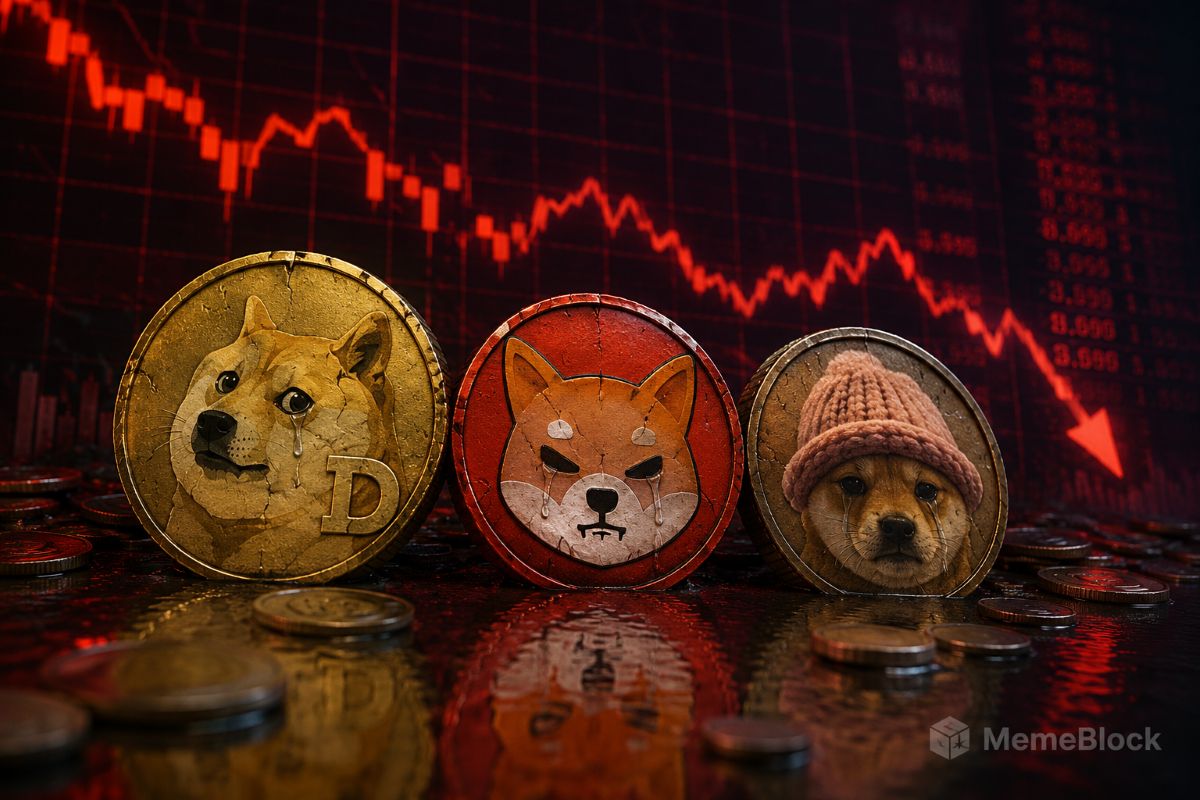
The memecoin market is facing another wave of selling pressure as leading tokens, including Dogecoin, Shiba Inu, and dogwifhat, continue to post notable declines across the broader crypto sector. Traders are becoming increasingly cautious as risk appetite weakens and volatility returns to speculative digital assets.
Over the past several days, popular meme cryptocurrencies have struggled to maintain momentum after earlier rallies faded. Analysts say declining trading volume, profit-taking activity, and weaker social sentiment are contributing to the downturn.
Memecoin Market Pullback Hits Major Tokens
The latest memecoin correction has affected nearly every major project in the sector. Dogecoin, which remains the largest meme-based cryptocurrency by market capitalization, has seen renewed selling pressure as investors rotate capital toward more utility-focused blockchain projects.
Shiba Inu has also weakened despite continued ecosystem development around Shibarium and decentralized finance initiatives. Market analysts note that meme tokens are still heavily driven by sentiment and retail enthusiasm rather than traditional fundamentals.
Meanwhile, Solana-based dogwifhat (WIF), one of the strongest-performing meme coins during previous bullish cycles, has also recorded sharp pullbacks. The token remains highly volatile, making it particularly vulnerable during broader crypto market corrections.
Why Are Memecoins Falling?
Several factors are currently driving the decline across the memecoin market.
First, overall crypto market uncertainty has reduced speculative trading activity. Investors are becoming more selective after months of extreme volatility in smaller-cap assets. This has caused liquidity to move away from high-risk meme tokens.
Second, many traders who entered during earlier rallies are now taking profits. Analysts have repeatedly warned that meme cryptocurrencies can experience rapid gains followed by equally aggressive selloffs.
Another issue is declining social media momentum. Memecoins often rely on viral attention, influencer support, and online community hype to sustain price growth. Once engagement slows, buying activity typically weakens as well.
Research studies published in recent months also highlighted the fragile nature of meme token ecosystems. Academic reports examining memecoin trading patterns found that many projects remain highly sensitive to whale activity, market sentiment, and speculative retail behaviour.
DOGE and SHIB Still Dominate Memecoin Rankings
Despite the latest declines, Dogecoin and Shiba Inu continue to hold dominant positions in the memecoin industry. Both projects maintain massive online communities and remain among the most actively traded cryptocurrencies globally.
Dogecoin still benefits from strong brand recognition and periodic endorsements from high-profile personalities. Shiba Inu, on the other hand, continues expanding its ecosystem through Layer-2 scaling, token burns, and decentralized applications.
Some market observers believe established meme tokens could recover if Bitcoin regains bullish momentum later this year. Historically, meme coins tend to outperform during periods of strong retail-driven crypto rallies.
Investors Watching for Recovery Signals
Crypto traders are now closely monitoring whether the memecoin sector can stabilize after recent losses. Key indicators include trading volume recovery, renewed social engagement, and improving market sentiment across digital assets.
While some analysts remain optimistic about long-term memecoin relevance, others warn that volatility will likely remain extreme throughout 2026. Investors are being encouraged to manage risk carefully and avoid overexposure to speculative assets.
For now, the broader memecoin market remains under pressure as major tokens like DOGE, SHIB, and WIF continue searching for stronger support levels amid cautious investor sentiment.