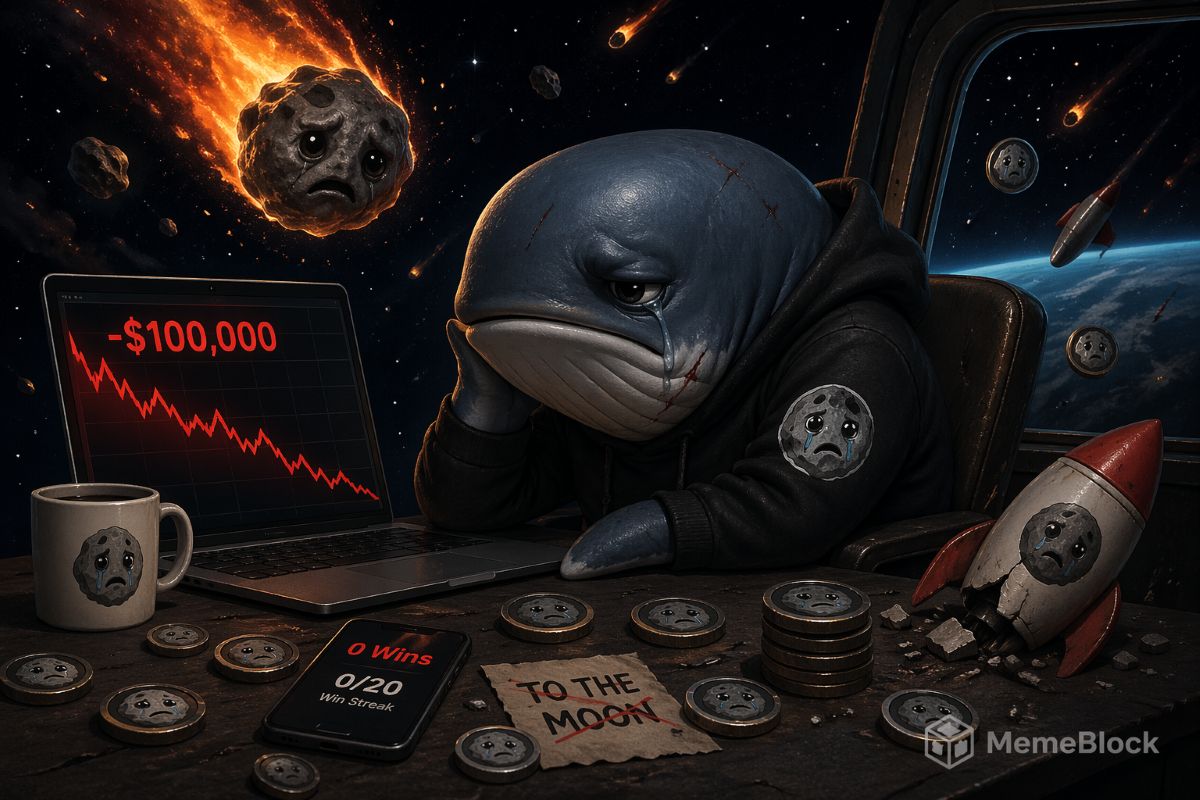
The memecoin market has once again delivered a brutal reminder of its high-risk nature. A prominent crypto whale chasing the rapidly trending ASTEROID token is now sitting on nearly $100,000 in unrealized losses, despite aggressively buying into the hype-driven rally.
Whale Bets Big on ASTEROID But Timing Backfires
According to recent on-chain data, a single wallet spent approximately $707,000 accumulating around 1.85 billion ASTEROID tokens within a 10-hour window. The average entry price hovered near $0.0003822, but market fluctuations quickly turned the position negative, leaving the trader with significant paper losses.
What makes the situation more striking is the whale’s track record. This address has traded only four memecoins to date, and every single trade has resulted in losses. One of the most notable setbacks included a staggering $1.64 million loss on another memecoin, CULT.
This ongoing zero-win rate highlights a pattern of poorly timed entries in highly volatile assets, raising questions about whether even large capital can consistently outperform in speculative markets.
ASTEROID’s Explosive Surge Driven by Hype
The whale’s losses come despite ASTEROID experiencing a massive surge in price and trading activity. The Ethereum-based memecoin skyrocketed nearly 700% in just 24 hours, fuelled largely by social media buzz and rumours linking the token to a SpaceX-themed narrative.
At its peak, ASTEROID briefly reached a market capitalization of around $194 million before cooling off to roughly $137 million. Daily trading volume also spiked to approximately $125 million, indicating intense short-term interest from traders and speculators.
However, such rapid growth often proves unsustainable, especially when driven by sentiment rather than fundamentals.
The Risk of Chasing Memecoin Momentum
The whale’s situation underscores a broader trend in crypto markets: the dangers of chasing momentum during hype cycles. Memecoins like ASTEROID are typically driven by viral narratives, influencer mentions, and speculative trading rather than real-world utility.
Market observers note that large buys from whales can temporarily push prices higher, attracting retail traders and creating a feedback loop of rising demand. But once momentum fades, liquidity thins quickly, leaving late entrants exposed to steep losses.
This pattern often leads to sharp corrections, where even early gains can evaporate within hours.
Early Investors Win While Late Buyers Struggle
Interestingly, not all participants in the ASTEROID rally have lost money. Some early adopters who accumulated tokens months ago have seen massive gains, with reports of wallets turning modest investments into six-figure or even million-dollar profits during the recent surge.
This contrast highlights a key dynamic in memecoin trading: timing is everything. Early conviction holders can reap outsized rewards, while late entrants, even whales, often bear the brunt of volatility.
Final Take: A Costly Lesson in Speculative Trading
The ASTEROID whale’s $100K unrealized loss is more than just a headline; it’s a case study in the unpredictable nature of memecoins. Even with significant capital, traders are not immune to poor timing and market sentiment shifts.
As the memecoin sector continues to attract attention in 2026, this incident serves as a cautionary tale: hype can drive prices up, but it can just as easily reverse, leaving investors stuck in losing positions.
For traders, the message is clear in the world of memecoins: momentum can be powerful, but discipline and risk management remain essential.