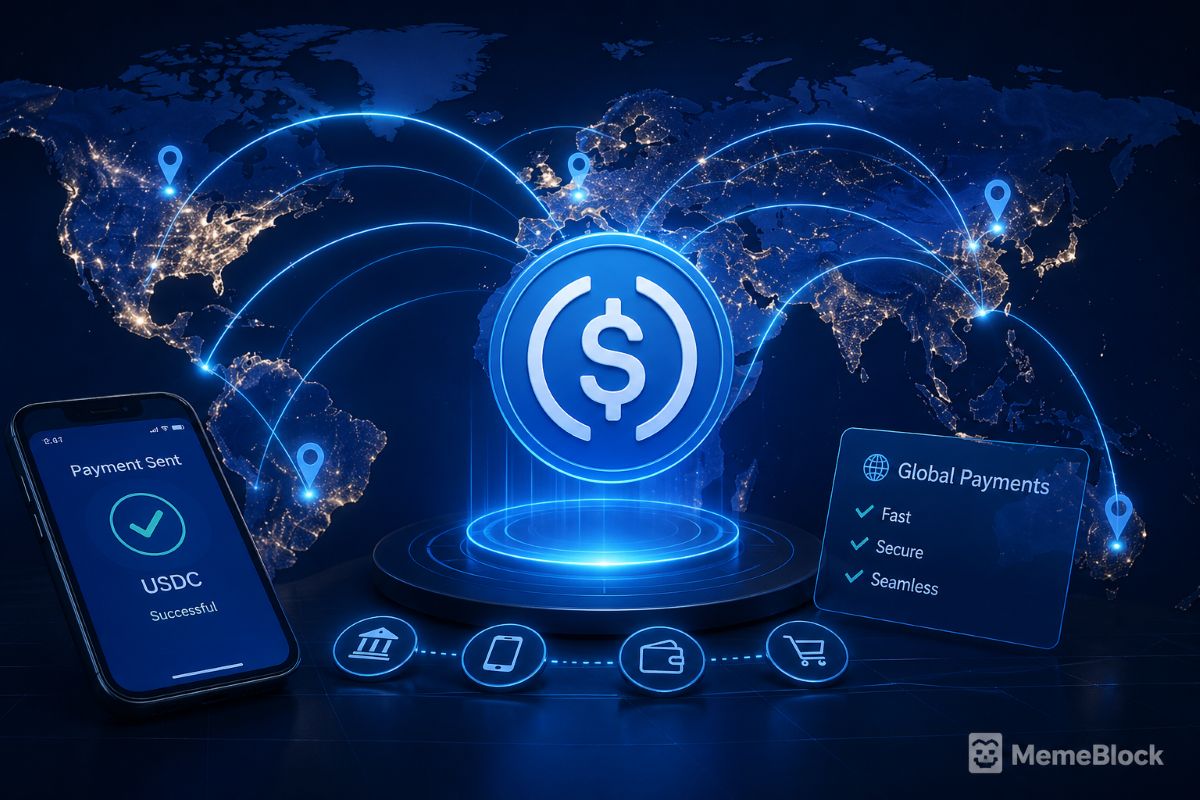
Circle, a global financial technology firm and issuer of the USDC stablecoin, has announced a strategic partnership with LianLian Global, a leading cross-border payments provider. The collaboration is designed to strengthen international payment infrastructure. It does this by integrating compliant stablecoin settlement solutions into LianLian Global’s extensive payment network.
This partnership reflects the growing demand for faster, more transparent, and cost-efficient cross-border payments. This is particularly relevant for businesses operating across multiple markets. By combining Circle’s regulated digital currency infrastructure with LianLian Global’s expertise, the two companies aim to simplify how enterprises move money internationally.
Focus on Stablecoin-Powered Cross-Border Payments
At the core of the Circle and LianLian Global partnership is the use of USDC, a fully reserved, dollar-backed stablecoin issued by Circle. USDC is widely used for digital settlements due to its price stability, transparency, and regulatory alignment in key jurisdictions. Through this collaboration, LianLian Global plans to support USDC-based settlements. This enables merchants and enterprises to access near-real-time cross-border transactions.
Traditional international payments often involve multiple intermediaries, resulting in delays, high fees, and limited visibility. By leveraging stablecoin settlement, the partnership seeks to reduce friction in global payments while maintaining strong compliance standards.
Enhancing Global Trade and Merchant Payments
LianLian Global serves merchants, e-commerce platforms, and enterprises across major markets, supporting a wide range of currencies and payment methods. The integration of Circle’s stablecoin infrastructure is expected to enhance LianLian Global’s ability. It aims to offer efficient settlement options for global trade, digital services, and cross-border commerce.
For international businesses, this means improved cash flow management, faster settlement times, and reduced reliance on legacy correspondent banking systems. The partnership aligns with broader industry trends where stablecoins are increasingly used as a settlement layer rather than a speculative asset.
Commitment to Compliance and Transparency
Both Circle and LianLian Global have emphasized compliance and regulatory cooperation as central pillars of the partnership. Circle operates with a strong focus on transparency, providing regular attestations on USDC reserves. LianLian Global, meanwhile, holds multiple regulatory licenses across key markets, supporting compliant payment services for global merchants.
By prioritizing regulatory standards, the partnership aims to build trust among institutional clients and regulators. At the same time, it accelerates the adoption of digital currency-based payment solutions.
Supporting the Future of Digital Payments
The Circle and LianLian Global partnership comes at a time when global payment systems are undergoing rapid transformation. Businesses are increasingly seeking alternatives to slow and costly cross-border transfers. This trend is particularly present as digital commerce and remote services continue to expand.
Stablecoins like USDC are emerging as a practical tool for settlement. They offer programmability, speed, and interoperability with existing financial systems. Through this collaboration, Circle and LianLian Global are positioning themselves at the forefront of this shift, supporting the next phase of global payment innovation.
Long-Term Vision for Global Financial Infrastructure
Looking ahead, the partnership is expected to explore additional use cases for stablecoin settlement. These include treasury operations, merchant payouts, and enterprise-level financial workflows. By combining Circle’s blockchain-native infrastructure with LianLian Global’s established payment rails, the alliance aims to contribute to a more open, efficient, and connected global financial ecosystem.
As cross-border commerce continues to grow, partnerships like this highlight how regulated digital assets can play a meaningful role. They help modernize global payments while maintaining trust, compliance, and operational reliability.