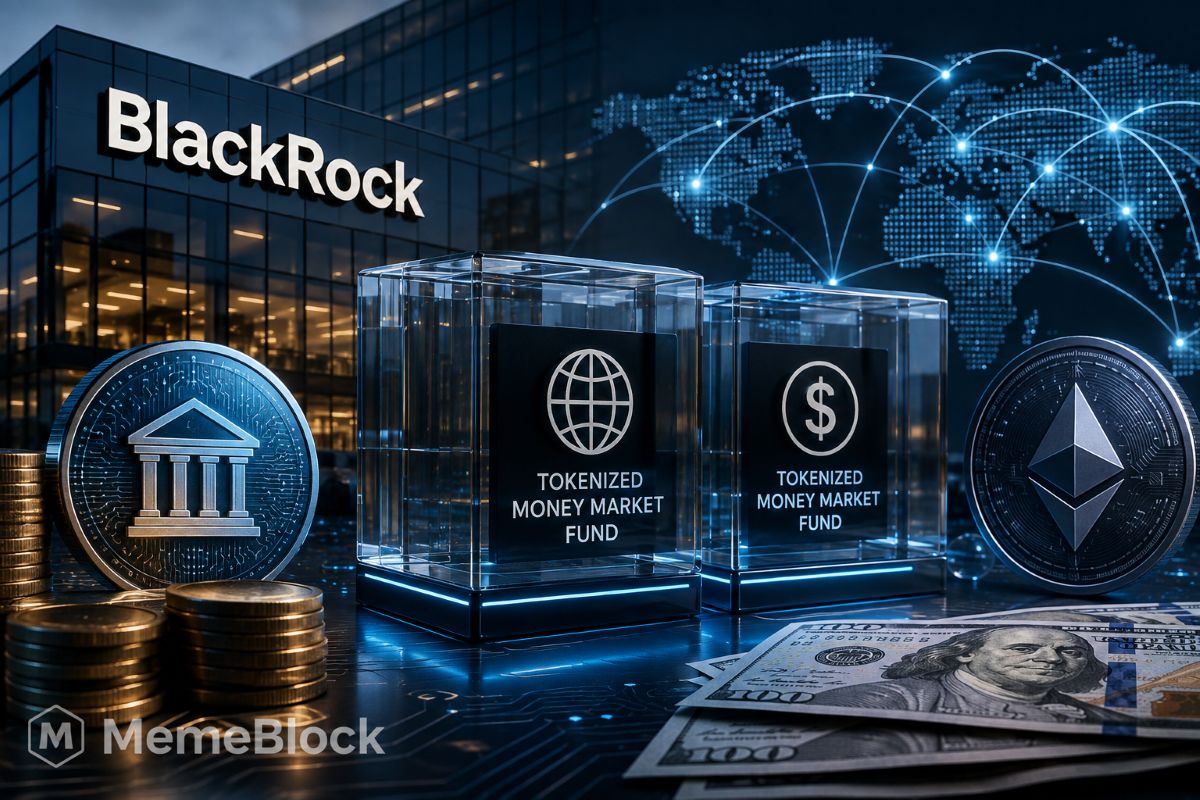
The world’s largest asset manager is expanding its tokenization strategy through two blockchain-enabled money market offerings. These are designed for institutional investors operating in digital asset markets.
BlackRock has launched two tokenized money market products aimed at institutional investors that manage cash through stablecoins and blockchain infrastructure. This marks another step in the firm’s broader push to integrate traditional financial products with digital asset markets.
According to BlackRock’s regulatory filings and company materials, the two products serve different purposes. One introduces a tokenized share class for an existing money market fund. The other is a newly created blockchain-native investment vehicle. This second product is built specifically for investors that hold capital in digital wallets rather than conventional brokerage accounts.
The initiative expands BlackRock’s tokenization strategy following the growth of its USD Institutional Digital Liquidity Fund (BUIDL). This fund has become one of the largest tokenized U.S. Treasury funds available to institutional investors. Additionally, the company has repeatedly stated that tokenized investment products represent an important part of its long-term digital asset strategy.
Two Products Target Different Institutional Use Cases
The first product is a blockchain-enabled share class linked to BlackRock’s approximately $6.1 billion Select Treasury Based Liquidity Fund (BSTBL), according to regulatory documents first reported by Bloomberg.
The fund continues investing in cash, U.S. Treasury bills, Treasury notes and other high-quality short-term securities with maturities of up to 93 days. The difference lies in ownership. Eligible investors receive tokenized shares issued on the Ethereum blockchain while retaining exposure to the same underlying portfolio managed under traditional money market regulations.
The second offering, the BlackRock Daily Reinvestment Stablecoin Reserve Vehicle (BRSRV), is a newly established tokenized money market product intended for institutions that operate primarily through stablecoins and crypto wallets. Unlike the Ethereum-only share class, BlackRock has indicated that this product is designed to support multiple blockchain networks and additional digital-native functionality. These features include automated daily dividend reinvestment.
Why BlackRock is Expanding Tokenized Cash Products
Money market funds have become an increasingly important component of the digital asset ecosystem. Stablecoin issuers, crypto exchanges and institutional investors seek regulated, yield-generating assets that can function alongside blockchain-based payment infrastructure.
BlackRock has argued that tokenized money market funds combine the familiar investment framework of traditional cash-management products with blockchain capabilities such as programmable transfers, near real-time settlement and 24-hour transferability between approved wallets. The firm’s educational materials note that the shareholder register remains the legal record of ownership. Additionally, blockchain tokens represent digital ownership rights.
The strategy also aligns with comments from BlackRock Chairman and Chief Executive Larry Fink. He wrote in his 2026 annual letter that the firm intends to expand access to traditional investment products inside digital wallets as tokenization becomes a larger part of financial markets.
Tokenization Competition is Accelerating Across Wall Street
BlackRock’s latest products arrive as several major financial institutions increase investments in tokenized financial infrastructure.
Goldman Sachs and BNY have introduced tokenized representations of money market fund shares. In addition, JPMorgan, Nasdaq and other large financial firms have announced blockchain initiatives covering collateral management, tokenized securities and digital settlement infrastructure.
The broader trend reflects growing institutional interest in real-world asset tokenization. In this model, traditional financial instruments such as Treasury funds, bonds and equities are represented on blockchain networks while remaining subject to existing legal ownership structures.
Industry participants argue that tokenization could improve settlement efficiency, collateral mobility and interoperability between traditional financial institutions and digital asset platforms. However, adoption remains dependent on regulatory clarity, operational standards and interoperability between different blockchain systems.
Risks and Remaining Uncertainties
Although tokenized money market products continue to attract institutional attention, several questions remain.
Participation is generally limited to approved institutional investors that satisfy know-your-customer and anti-money laundering requirements. In addition, blockchain-based ownership introduces new operational considerations, including wallet management, cybersecurity, smart-contract infrastructure and compatibility across different blockchain networks. BlackRock also notes that the official shareholder register not blockchain records alone remains the legal source of ownership.
Market adoption will also depend on whether stablecoin issuers, digital asset custodians and institutional treasury managers increasingly integrate tokenized cash products into their operating models.
What Comes Next
BlackRock’s new products illustrate how traditional asset managers are moving beyond experimental blockchain initiatives toward regulated financial products built specifically for digital asset markets.
Investors will likely monitor several developments over the coming months. For example, regulatory approvals, institutional inflows, blockchain network expansion beyond Ethereum, and whether additional asset managers introduce competing tokenized liquidity products will all be watched closely.
As tokenized Treasury products continue to expand, these funds could become part of a broader financial infrastructure connecting traditional capital markets with blockchain-based payment and settlement systems. However, widespread adoption will depend on regulatory progress and institutional demand rather than technology alone.