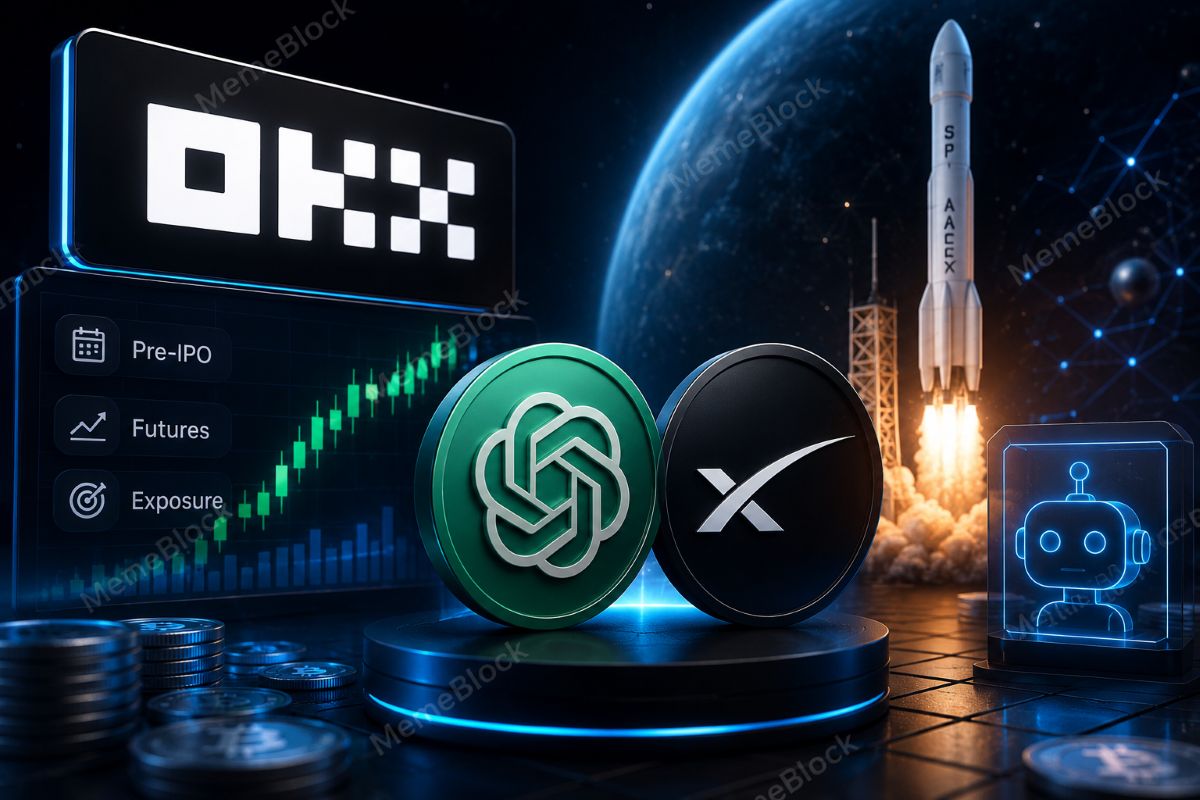
Crypto exchange giant OKX is stepping deeper into the booming pre-IPO trading market by introducing perpetual futures linked to private companies such as OpenAI, SpaceX, and Anthropic. The move highlights a growing trend among crypto platforms racing to give retail traders synthetic exposure to high-profile startups before they officially go public.
According to recent reports, OKX plans to launch perpetual futures products tied to private company valuations, allowing traders to speculate on price movements without owning actual shares. The development places the exchange at the centre of crypto’s latest innovation wave, where blockchain-based derivatives are increasingly merging with traditional financial markets.
OKX Targets Growing Demand for Pre-IPO Trading
The latest initiative comes as investor interest in private technology firms continues to surge globally. Companies like OpenAI and SpaceX remain among the most sought-after private firms, yet direct investment opportunities are limited to venture capital firms and institutional investors.
By offering perpetual futures contracts, OKX aims to bridge that gap for retail crypto traders. These contracts are designed to track the perceived market value of private firms, enabling speculative trading around anticipated IPO activity.
Unlike traditional equities, perpetual futures do not expire. Instead, they use funding mechanisms to keep contract prices aligned with market sentiment and reference valuations. The model has already become one of the most popular products in crypto derivatives trading.
Industry analysts say the launch reflects how centralized exchanges are diversifying beyond Bitcoin and Ethereum trading in search of fresh revenue streams and new user engagement opportunities.
Competition Intensifies in Crypto Pre-IPO Markets
OKX is not the first exchange exploring tokenized exposure to private companies. Rival platforms have recently introduced similar products tied to firms such as SpaceX and OpenAI.
Earlier this year, BTCC launched SpaceX perpetual futures contracts with leverage options reaching 50x, targeting retail traders seeking exposure to Elon Musk’s aerospace company before a public listing.
Meanwhile, crypto firms like Injective and Bitget have also experimented with pre-IPO derivatives and synthetic equity products. The trend reflects broader interest in bringing real-world assets and traditional financial instruments onto blockchain-based trading platforms.
The growing market could reshape how investors interact with private equity, especially in regions where access to venture-backed startups remains heavily restricted.
OpenAI Previously Raised Concerns Over Synthetic Equity Products
Despite rising interest, tokenized exposure to private firms remains controversial. Last year, Robinhood introduced OpenAI-linked investment tokens backed through a special-purpose vehicle structure rather than direct company ownership.
OpenAI publicly distanced itself from the offering, emphasizing that any official equity transfer would require company approval. The statement raised concerns about how synthetic products tied to private firms should be marketed and regulated.
OKX’s upcoming perpetual futures products reportedly will not provide actual ownership rights, shareholder voting power, or direct equity stakes. Instead, traders will gain speculative price exposure based on market expectations surrounding company valuations.
Crypto Exchanges Continue Expanding Beyond Digital Assets
The move also highlights a wider transformation across the crypto industry. Exchanges are increasingly launching products linked to stocks, commodities, prediction markets, and real-world assets as competition intensifies.
OKX has already expanded its derivatives ecosystem significantly in 2026, introducing multiple new perpetual futures markets and pre-market trading products tied to emerging crypto projects.
Analysts believe pre-IPO perpetual futures could attract a younger generation of traders interested in artificial intelligence, space technology, and startup investing without needing access to traditional venture capital networks.
However, regulators are likely to monitor the sector closely as tokenized exposure to private companies grows. Questions surrounding investor protection, valuation transparency, and securities classification remain unresolved in several jurisdictions.