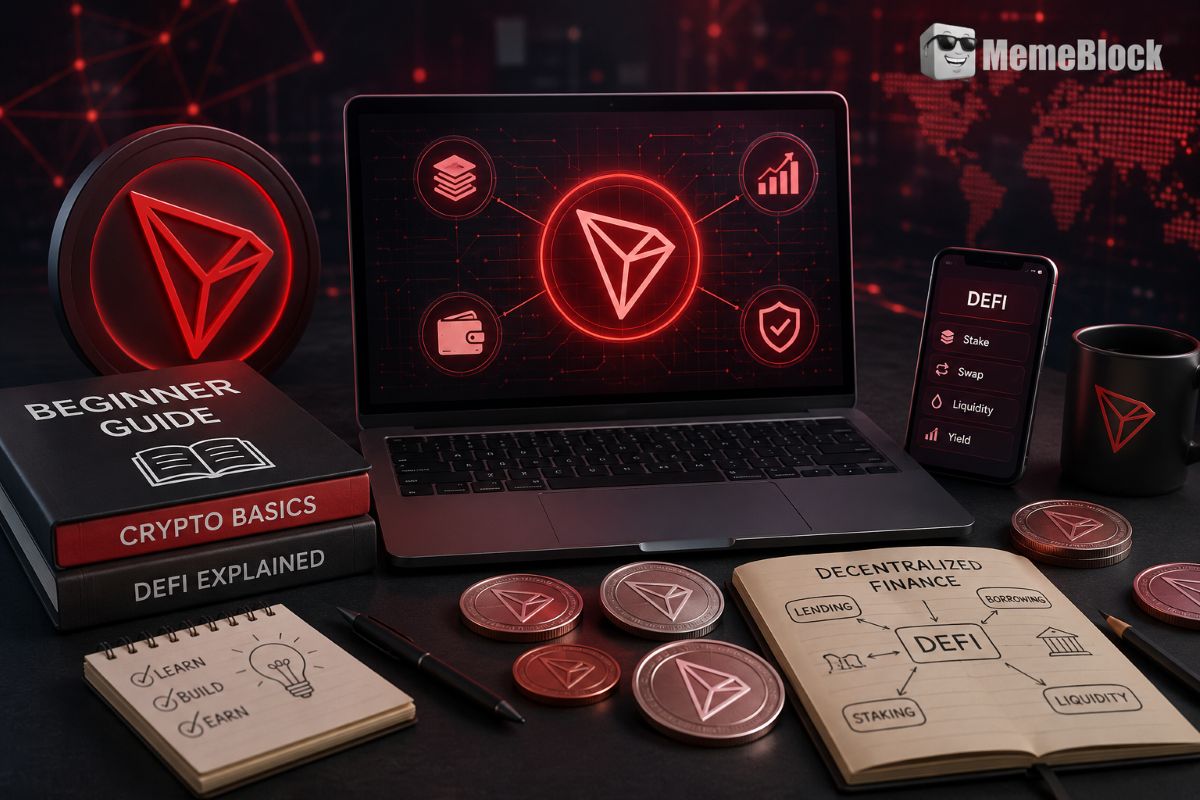
SUN crypto is the native governance token of SUN.io, a decentralized finance (DeFi) platform built on the TRON blockchain. While many crypto projects focus on a single service, SUN.io combines token swaps, stablecoin exchanges, liquidity mining, and decentralized governance into one ecosystem. The SUN token gives holders access to governance rights, staking rewards, and other protocol incentives rather than functioning solely as a payment asset. According to the official SUN.io documentation, users can also lock their tokens to receive vote-escrowed SUN (veSUN), allowing them to participate directly in protocol governance.
For newcomers exploring decentralized finance, understanding SUN means understanding the broader role of governance tokens within blockchain ecosystems. Rather than promising fixed returns, the token derives its utility from participation in the operation and development of the SUN.io protocol.
What Is SUN Crypto?
SUN is the governance token of SUN.io, a decentralized finance platform operating on the TRON blockchain. The protocol offers multiple DeFi services through a single interface, including:
- Decentralized token swaps
- Stablecoin swaps
- Liquidity pools
- Liquidity mining
- Community governance
- Developer integrations
According to SUN.io’s official documentation, the platform’s objective is to provide efficient, transparent, and low-cost trading infrastructure for TRON-based assets. Unlike centralized exchanges, users retain custody of their digital assets while interacting with smart contracts directly from compatible wallets.
The SUN token functions similarly to governance tokens used by other DeFi protocols. Holders can influence protocol decisions instead of relying on a centralized company to determine future upgrades.
How Did SUN.io Begin?
SUN first launched in September 2020 as a yield farming project within the TRON ecosystem.
Since then, the protocol has undergone several major upgrades.
According to the official protocol history:
- September 2020: Genesis mining launched.
- May 2021: The project completed a 1:1000 token redenomination, increasing the token supply while maintaining the same overall market capitalization. The original token became SUNOLD, while the new token retained the SUN name.
- 2021: SUN.io expanded into stablecoin swaps and introduced governance through veSUN.
- 2023: SunSwap V3 introduced concentrated liquidity to improve capital efficiency.
- 2024: The protocol formally launched SUN DAO, expanding community-led governance.
- 2026: SunSwap V4 introduced programmable Hooks and Singleton architecture aimed at improving developer flexibility and reducing transaction costs.
These upgrades reflect SUN’s evolution from a yield-farming initiative into one of TRON’s largest DeFi infrastructure projects.
How Does SUN Work?
The token performs several functions inside the SUN.io ecosystem.
Governance
SUN holders can lock their tokens to receive veSUN (vote-escrowed SUN).
veSUN allows users to:
- Vote on governance proposals
- Influence liquidity mining rewards
- Participate in community decisions affecting protocol development
According to SUN.io documentation, governance decisions include determining liquidity pool weights and other protocol parameters.
Liquidity Mining
Users supplying assets to liquidity pools receive LP tokens.
These LP tokens may be staked to earn protocol rewards, with reward levels influenced by governance participation and staking mechanisms established by SUN.io. The platform supports multiple mining programs designed to encourage long-term liquidity rather than short-term speculation.
Stablecoin Swaps
One distinguishing feature of SUN.io is its emphasis on efficient stablecoin trading.
The protocol operates dedicated stablecoin pools designed to reduce slippage compared with traditional automated market maker pools. Official documentation states these pools support multiple TRON ecosystem stablecoins while maintaining relatively low trading fees.
Buyback and Burn
SUN also incorporates a deflationary mechanism.
According to the official protocol documentation, portions of revenue generated by selected protocol products are used to repurchase SUN tokens before permanently removing them from circulation through token burns. This mechanism is intended to reduce circulating supply over time, although its long-term impact depends on continued platform activity.
Tokenomics and Current Market Position
Following the 2021 redenomination, SUN’s maximum supply increased from approximately 19.9 million tokens to 19.9 billion, while preserving the project’s market capitalization through a 1:1000 token split. According to CoinMarketCap, the token currently has a maximum supply of 19.9 billion SUN, with most of that supply already circulating.
At the time of research (July 2026), CoinMarketCap listed:
- Price: approximately $0.018
- Market capitalization: about $353 million
- 24-hour trading volume: roughly $63 million
Because cryptocurrency markets operate continuously, these figures should be verified immediately before publication.
Why SUN Matters in the TRON Ecosystem
SUN has grown beyond its origins as a yield-farming token to become a core governance asset within the TRON decentralized finance ecosystem. According to the official SUN.io documentation, the platform integrates decentralized token swaps, stablecoin trading, liquidity mining, and governance under a single protocol. Users who lock SUN receive veSUN, enabling them to vote on proposals, influence liquidity mining allocations, and share in a portion of protocol-generated fees.
The governance model follows the vote-escrow (veToken) framework popularized by Curve Finance. Under this design, users who commit their tokens for longer periods receive greater voting power, encouraging long-term participation over short-term trading. veSUN holders can also receive up to a 2.5x boost on eligible liquidity mining rewards and are entitled to a share of fees generated by the protocol’s stablecoin swap pools, according to SUN.io documentation.
The protocol has continued to expand its infrastructure. Official documentation shows that SunSwap V3 introduced concentrated liquidity in 2023, SUN DAO launched in July 2024, and SunSwap V4 added programmable Hooks, Singleton architecture, and Flash Accounting in March 2026 to improve developer flexibility and transaction efficiency.
Another feature intended to support the ecosystem is the protocol’s buyback-and-burn mechanism. According to SUN.io, portions of fees generated by selected trading pools are periodically used to repurchase SUN tokens before sending them to a burn address, reducing total supply over time. The platform states that this mechanism remains active as part of its long-term tokenomics strategy.
Risks Beginners Should Understand
Although SUN provides governance and staking utility, it carries many of the same risks associated with decentralized finance.
Smart contract risk remains one of the largest concerns. While SUN.io has operated for several years, any decentralized application can be exposed to coding vulnerabilities or unforeseen exploits.
Impermanent loss may affect users who provide liquidity rather than simply holding the token. Price changes between paired assets can reduce the value of liquidity positions compared with holding those assets separately.
Governance participation also requires long-term commitment. Users must lock SUN for a minimum period to obtain veSUN, and governance weight gradually declines as the lock approaches expiration. According to the official documentation, locked tokens cannot be redeemed before their unlock date.
Like most digital assets, SUN is also subject to market volatility. Its price can fluctuate significantly in response to broader cryptocurrency market conditions, changes in TRON ecosystem activity, liquidity levels, or investor sentiment. Readers should avoid assuming that governance participation guarantees financial returns.
What Beginners Should Watch Next
For users considering the SUN ecosystem, several indicators may provide insight into the protocol’s future development:
- Growth in total value locked (TVL) across SUN.io.
- Adoption of new SunSwap V4 features by developers.
- Governance proposals submitted through SUN DAO.
- Changes to liquidity mining incentives or veSUN voting rules.
- Continued implementation of the protocol’s buyback-and-burn program.
- Broader activity across the TRON decentralized finance ecosystem.
As decentralized finance continues to mature, governance tokens such as SUN increasingly derive their value from protocol participation rather than speculation alone. Understanding how governance, staking, liquidity provision, and tokenomics interact can help newcomers better evaluate both the opportunities and the risks before engaging with any DeFi platform.