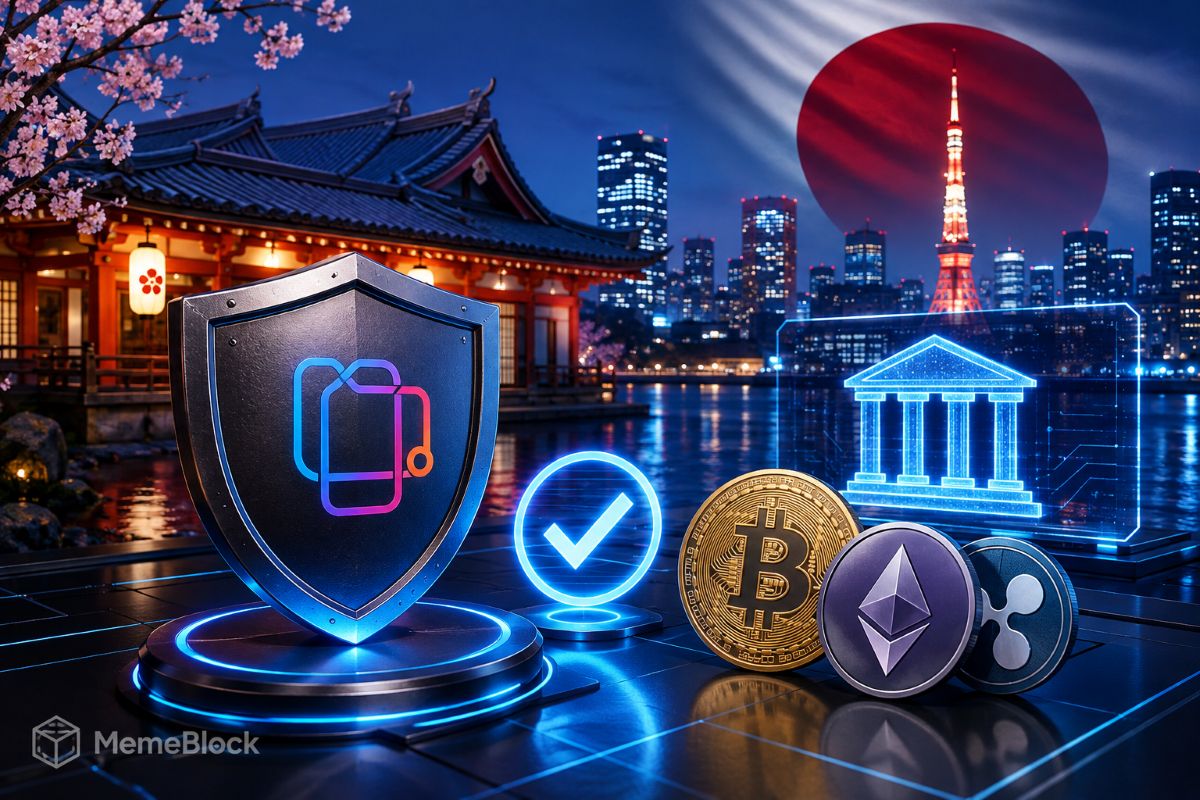
Laser Digital Japan has completed its registration as a Crypto Asset Exchange Service Provider in Japan. This gives Nomura’s digital-asset subsidiary a regulated foothold to provide liquidity services to domestic crypto businesses. Additionally, it may potentially expand into institutional trading. The company announced the registration on August 21. Meanwhile, Japan’s Financial Services Agency registry confirms the firm was registered under the Kanto Local Finance Bureau with registration No. 00032.
The registration is notable because Japan’s official registry shows Laser Digital Japan is the first new crypto asset exchange service provider added since Binance Japan was registered on October 14, 2022. The FSA’s August 21 registry lists 27 registered operators nationwide. This includes the newly added Laser Digital Japan.
Reuters separately reported that the company plans to initially serve existing Japanese crypto asset businesses by providing liquidity. At a later stage, it will consider digital-asset trading opportunities for institutional investors.
Japan Adds a New Regulated Crypto Operator
Laser Digital Japan’s registration was completed under Japan’s Payment Services Act. The FSA registry identifies the company as Laser Digital Japan Co., Ltd., with its headquarters in Tokyo. There are six crypto assets listed under its registration: Bitcoin, Ethereum, XRP, Bitcoin Cash, Litecoin and Shiba Inu.
The asset listing establishes which crypto assets appear in the regulator’s current registration record. It should not, however, be interpreted as confirmation that Laser Digital Japan has already launched trading services for each asset.
The company said the timing and scope of its services will be announced separately. Its immediate business objective is to enhance liquidity for domestic virtual asset service providers. Additionally, institutional trading services are planned for a later stage.
That distinction matters. The registration gives Laser Digital Japan regulatory authorization to operate as a crypto asset exchange service provider. However, it does not mean a fully operational institutional trading platform is already available.
Reuters likewise reported that the company had not yet disclosed the timing or detailed scope of its planned services.
A Four-Year Gap Ends With a Wholesale-Focused Entrant
The historical comparison is clear in the FSA’s own records.
Binance Japan was registered on October 14, 2022, under registration No. 00031. Laser Digital Japan now appears immediately afterward in the sequence as registration No. 00032, dated August 21, 2026.
That creates a gap of nearly four years between the two registrations. Reuters described Laser Digital Japan’s arrival as Japan’s first new crypto exchange registration since 2022.
The development does not mean Japan had stopped regulating crypto businesses during that period. Existing registered operators continued to operate, and the FSA has continued to update its rules and supervisory framework. The more precise point is that no new operator had appeared in the FSA’s crypto asset exchange registration list between Binance Japan’s 2022 entry and Laser Digital Japan’s August 2026 registration.
Laser Digital Japan’s strategy also differs from that of a conventional retail exchange. Rather than announcing an immediate consumer trading platform, the company says it will first focus on liquidity for domestic virtual asset service providers.
Institutional Demand Gives the Registration Context
The regulatory approval arrives as Nomura and Laser Digital report growing interest in digital assets among Japanese institutional investors.
Their April 2026 institutional investor survey covered 518 investment professionals in Japan, including institutional investors, family offices and public-interest organizations. The survey was conducted online from December 16, 2025, through January 29, 2026.
According to the survey, 65% of respondents viewed crypto assets as an opportunity to diversify their portfolios. This is up from 62% in the previous survey. Among respondents considering crypto investment over the following three years, 79% said they planned to invest. Nevertheless, 60% of that group expected allocations of between 2% and less than 5% of their portfolios.
The same research also identified counterparty risk, asset loss, volatility and regulatory uncertainty as continuing obstacles to crypto investment. That is relevant to Laser Digital Japan’s stated business model. This is because regulated liquidity and trading infrastructure can address some market-access and counterparty requirements, although registration alone does not remove investment or operational risks.
The survey is company-sponsored research by Nomura and Laser Digital, so its findings should be treated as evidence of surveyed investor sentiment rather than independent proof of future capital flows.
Why the Laser Digital Japan Approval Matters
The immediate significance is infrastructure rather than retail adoption.
Laser Digital Japan is part of Laser Digital, which Nomura established as its digital-asset business. Nomura’s 2023 announcement said Laser Digital Japan was established in October 2023 to support the group’s trading business and related digital-asset activities.
The Japanese subsidiary has also participated in domestic regulatory and industry initiatives before receiving its exchange-service registration. In 2026, the FSA identified Laser Digital Japan as a participant in a FinTech proof-of-concept project. This project examined information sharing and anti-money-laundering measures involving crypto assets and electronic payment instruments.
That history provides useful context for the registration: Laser Digital Japan’s entry did not appear overnight. The company had already been involved in Japan’s digital-asset ecosystem and regulatory experimentation before obtaining its exchange-service registration.
For the broader market, the more important question is whether the new regulated operator can translate its license into functioning liquidity relationships. Eventually, it may also develop institutional trading services.
A registration creates the regulatory foundation. It does not guarantee client demand, trading volume, profitability or successful institutional adoption.
Risks, Limitations and What Comes Next
The biggest unanswered question is the timetable.
Laser Digital Japan has not announced when its liquidity services will formally begin or when institutional trading services will become available. The company has also not publicly specified the counterparties it expects to serve, commercial terms for liquidity provision or the full operational scope of its future institutional offering.
The FSA registry also should not be treated as a statement that the regulator endorses the listed crypto assets. The agency explicitly warns that its registration list does not constitute a guarantee or recommendation of the value of the crypto assets handled by registered operators.
For institutional investors, additional considerations will include custody, counterparty exposure, cybersecurity, internal investment mandates and compliance requirements. Nomura and Laser Digital’s own survey identifies several of those issues as continuing barriers to institutional crypto investment.
The next developments to monitor are therefore operational rather than speculative: the launch date for Laser Digital Japan’s liquidity business, the domestic providers it connects with, the eventual scope of institutional trading services and any further regulatory changes affecting Japanese crypto markets.
For now, the verified development is narrower but important: Japan has added a new registered crypto asset exchange service provider after an almost four-year gap. The Nomura-backed entrant is positioning itself around institutional market infrastructure rather than an immediate retail exchange.