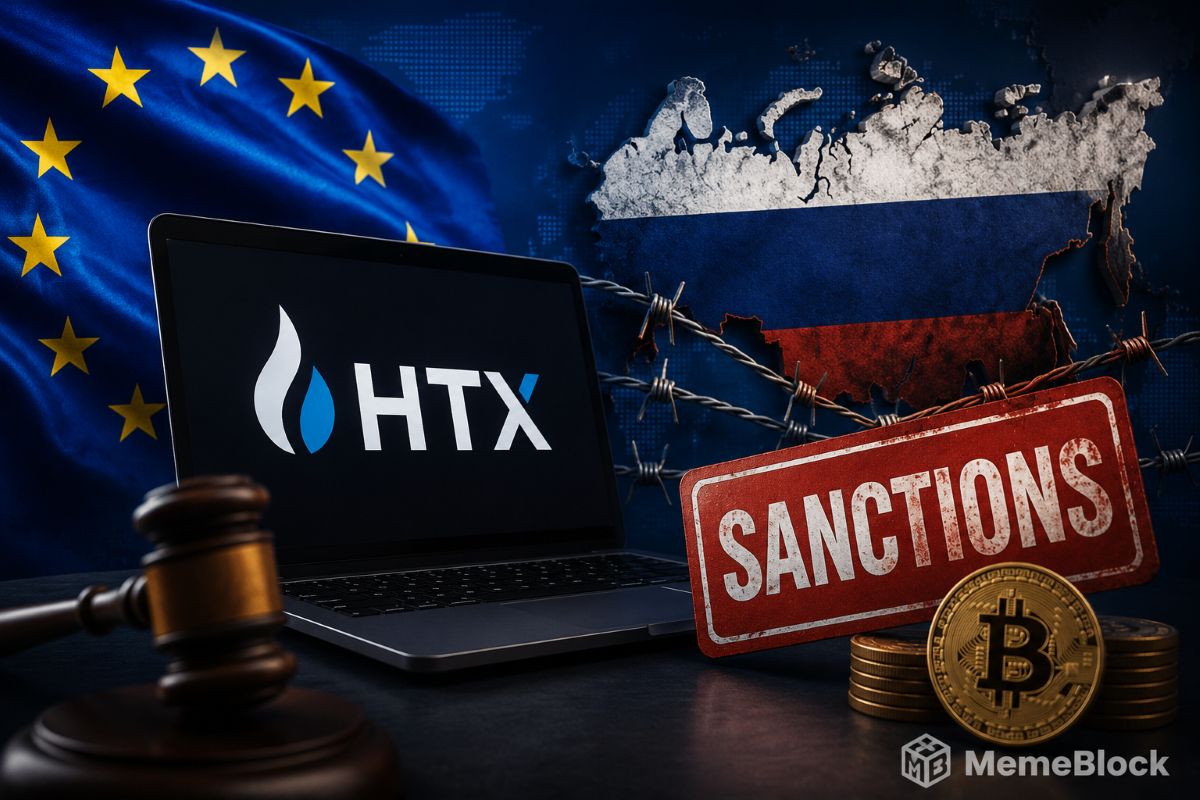
The European Union added HTX to a new list of crypto-related entities. This is part of its latest sanctions package targeting financial networks accused of helping Russia evade restrictions.
The European Union has included cryptocurrency exchange HTX among the crypto-related entities targeted under its 21st package of sanctions against Russia. This measure broadens its effort to restrict financial channels that European authorities believe could assist sanctions evasion during the war in Ukraine.
According to the Council of the European Union’s official announcement published on July 23, 2026, the latest sanctions package expands restrictions on Russia’s financial sector. It also introduces new measures against crypto-asset service providers operating outside the European Union. The package includes transaction bans affecting several crypto businesses that EU officials say are connected to sanctions circumvention. The Council also announced a new legal mechanism that could allow a broader prohibition on dealings with crypto providers used to bypass EU restrictions.
Reuters separately reported that HTX, formerly known as Huobi, was among the crypto exchanges included in the latest measures. The exchange is controlled by entrepreneur Justin Sun. He became closely associated with the platform following its ownership changes in 2022.
EU Expands Sanctions Beyond Russian Financial Institutions
The latest sanctions package represents one of the EU’s broadest actions against Russia’s financial infrastructure since the invasion of Ukraine in 2022.
Besides crypto-related entities, the package introduces restrictions affecting dozens of Russian financial institutions and additional banks. It also includes entities linked to the country’s military-industrial complex, oil traders, refineries, and vessels associated with Russia’s so-called shadow fleet.
According to the Council, the package adds 48 individuals and 170 entities to EU sanctions lists. Authorities also expanded transaction bans to 33 additional Russian credit and financial institutions. Additionally, the package targets 14 crypto-related service platforms located across multiple jurisdictions, including Georgia, Panama, the United Arab Emirates, the Marshall Islands, Kyrgyzstan and Belarus.
Unlike traditional asset-freeze designations, several measures affecting crypto service providers focus on restricting transactions involving EU operators. Instead of blanket prohibitions in every jurisdiction, the measures take a more targeted approach.
Why HTX Was included
The Council’s announcement describes the measures as part of broader efforts to disrupt financial networks that facilitate sanctions evasion.
Reuters reported that EU authorities identified HTX among exchanges believed to have helped Russian users circumvent financial restrictions. At the time of publication, EU officials had not publicly released detailed evidence relating specifically to HTX’s activities beyond its inclusion in the sanctions package. Additionally, Reuters reported that HTX had not immediately responded to requests for comment following the announcement.
Because the EU documentation does not publicly detail the factual basis for each individual listing, the precise conduct attributed to HTX remains limited to the official designation and accompanying regulatory measures.
Growing Regulatory Focus on Crypto Sanctions Compliance
The inclusion of HTX reflects an increasingly coordinated international approach toward crypto sanctions enforcement.
The United Kingdom previously imposed restrictions involving HTX earlier in 2026. At the same time, the United States and other Western governments have continued expanding oversight of cryptocurrency services that may facilitate sanctions evasion.
The EU’s newest package also creates, for the first time, a framework allowing authorities to prohibit transactions with entire third-country crypto providers. This measure applies where authorities determine those platforms are being used to circumvent sanctions. EU officials described the measure as a deterrent aimed at jurisdictions hosting crypto businesses that enable sanctions avoidance.
The move signals that regulators are increasingly focusing not only on individual wallets and blockchain addresses. They are also watching centralized exchanges operating across multiple jurisdictions.
Market Impact Remains Limited
The sanctions announcement did not identify any immediate operational disruption for HTX users outside the European Union.
As of publication, no verified evidence indicated significant market dislocation or abnormal trading activity directly attributable to the EU decision. Since cryptocurrency markets trade continuously and are influenced by many macroeconomic and sector-specific factors, attributing any asset price movements solely to the sanctions announcement would not be supported by available evidence.
The EU measures primarily affect interactions involving EU persons and entities rather than constituting a worldwide prohibition on HTX’s operations.
What Happens Next
The latest sanctions package further expands the European Union’s regulatory reach over cryptocurrency infrastructure connected to Russia.
Market participants will now watch for several developments. For example, whether HTX issues a formal response, whether additional jurisdictions adopt similar restrictions, and how EU authorities apply the new legal framework allowing broader prohibitions on crypto service providers deemed to facilitate sanctions evasion.
The implementation of these measures could also influence how international exchanges strengthen compliance controls and customer due diligence. It could affect sanctions screening as regulators continue extending traditional financial restrictions into digital asset markets.