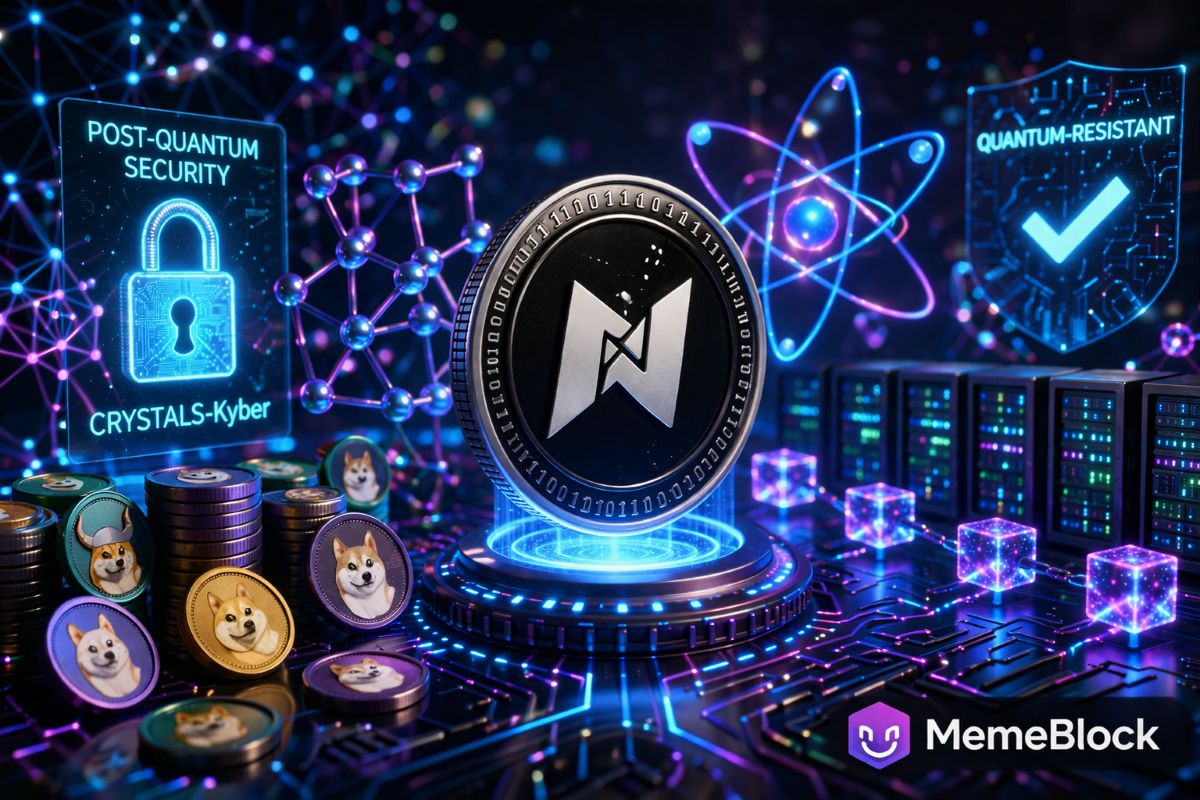
The memecoin market is evolving fast, but projects like Naoris Protocol are pushing beyond hype into real utility. In 2026, this project stands out by combining cybersecurity, blockchain, and post-quantum technology, positioning itself as more than just another speculative token.
What Is Naoris Protocol?
Naoris Protocol is a decentralized cybersecurity and blockchain project designed to protect both Web2 and Web3 ecosystems from future threats, especially quantum computing attacks. Unlike traditional memecoins driven purely by community hype, Naoris introduces a “Sub-Zero Layer 1” blockchain, a foundational infrastructure that operates beneath existing networks.
At its core, the project aims to eliminate single points of failure by transforming devices into active security validators. This approach creates a decentralized “trust mesh,” where every node contributes to real-time protection.
Why Naoris Is Trending in 2026
The biggest catalyst behind Naoris Protocol’s rising attention is its mainnet launch in April 2026, marking its transition from concept to live infrastructure.
This launch comes at a critical time. Experts warn that quantum computing could soon break traditional encryption methods, exposing vulnerabilities in blockchains like Bitcoin and Ethereum.
Naoris positions itself as a solution to this looming “Q-Day” threat by integrating post-quantum cryptography from day one, rather than retrofitting security later.
Key Features That Set It Apart
1. Post-Quantum Security Architecture
Naoris uses NIST-approved cryptographic algorithms such as Dilithium-5 to secure transactions. This ensures resistance against future quantum attacks that could compromise current blockchain systems.
2. dPoSec Consensus Mechanism
Instead of traditional Proof-of-Work or Proof-of-Stake, Naoris introduces Decentralized Proof of Security (dPoSec). This system rewards nodes for detecting threats and validating device integrity in real time.
3. Swarm AI Integration
The protocol uses decentralized AI models working together to detect anomalies across the network. This enhances security through adaptive, real-time threat detection.
4. Massive Testnet Performance
Before launch, the network processed over 100 million transactions and mitigated more than 600 million threats, showing strong scalability and real-world testing.
$NAORIS Token Utility
The native token, $NAORIS, plays a central role in the ecosystem. It is used for:
- Rewarding validators and security nodes
- Staking for network participation
- Governance within the protocol
This creates a utility-driven token economy, unlike many memecoins that lack real-world use cases.
Is Naoris a Memecoin or a Serious Project?
While Naoris is often discussed in memecoin circles due to its market positioning and community hype, it is fundamentally a deep-tech infrastructure project. Its focus on cybersecurity and quantum resistance places it closer to enterprise-grade blockchain solutions than typical meme tokens.
However, like all crypto projects, adoption remains the key factor. Its ambitious goal to secure the entire digital ecosystem will require widespread integration across industries.
Pros and Cons
Pros
- First-mover advantage in the post-quantum blockchain space
- Strong technological foundation with real-world use cases
- Live mainnet adds credibility and potential demand
- Unique consensus model focused on security
Cons
- Early-stage adoption risk
- Complex technology may limit retail understanding
- Token volatility around mainnet and unlock events
Final Verdict
Naoris Protocol is one of the most innovative projects entering the memecoin-adjacent space in 2026. By addressing the quantum threat, a problem many blockchains ignore, it positions itself as a long-term infrastructure play rather than a short-term hype coin.
For investors, Naoris represents a high-risk, high-potential opportunity. If adoption grows and its technology becomes industry-standard, it could redefine blockchain security. If not, it risks being overshadowed by simpler, more market-friendly projects.